
What are the factors that affect s460mc 1.0982 en 10149-2 pickling steel sheet strength
A comprehensive technical analysis of the factors influencing the mechanical strength of S460MC (1.0982) pickling steel, covering chemistry, TMCP, and microstructure.
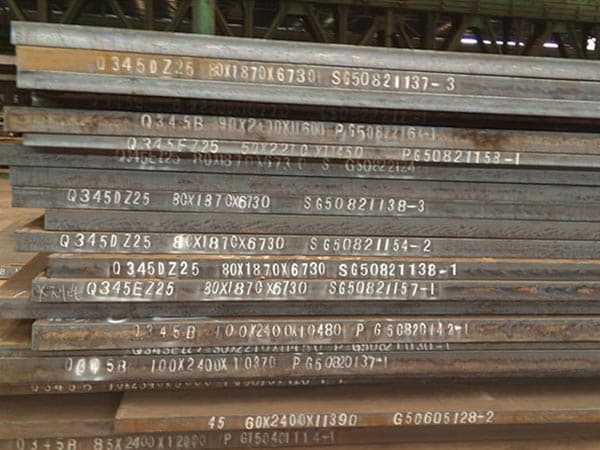
The Core Identity of S460MC 1.0982 High-Yield Steel
S460MC, designated under the material number 1.0982 according to the EN 10149-2 standard, represents a pinnacle of high-yield strength steels designed specifically for cold forming. As a thermomechanically rolled (TMCP) steel, its strength is not merely a result of its chemical makeup but a sophisticated synergy between metallurgical design and precision processing. The 'S' denotes structural steel, '460' signifies a minimum yield strength of 460 MPa, and 'MC' indicates it is suitable for cold forming and produced via thermomechanical rolling. When provided as a pickling steel sheet, the surface oxide scale is removed through a chemical acid bath, leaving a clean, oiled surface that is critical for subsequent manufacturing steps. Understanding the factors that affect its strength requires a deep dive into atomic-level interactions, grain boundary engineering, and the thermal history of the material during production.
Chemical Composition: The Foundation of Precipitation Hardening
The strength of S460MC is fundamentally rooted in its chemical composition. Unlike traditional carbon steels that rely on high carbon content for strength—which often compromises weldability and toughness—S460MC utilizes a Low-Alloy (HSLA) approach. Carbon levels are kept intentionally low (typically below 0.12%) to ensure excellent weldability and ductility. The heavy lifting in terms of strength is performed by micro-alloying elements such as Niobium (Nb), Vanadium (V), and Titanium (Ti).
- Niobium (Nb): This is perhaps the most critical element for S460MC. Niobium increases the recrystallization temperature of austenite. During the rolling process, this allows for 'non-recrystallization zone' rolling, which leads to significant grain refinement. Furthermore, Nb forms fine carbonitrides that pin grain boundaries and provide precipitation hardening.
- Titanium (Ti): Titanium is used primarily for grain growth inhibition at high temperatures. It forms TiN particles that remain stable even near the melting point, preventing the coarsening of austenite grains during the reheating of slabs.
- Manganese (Mn): Acting as a solid solution strengthener, Manganese also lowers the austenite-to-ferrite transformation temperature, which contributes to a finer ferrite grain size.
- Silicon (Si) and Aluminum (Al): These elements are primarily used for deoxidation, but Silicon also provides a degree of solid solution strengthening without significantly reducing ductility.
| Element | Max % (EN 10149-2) | Role in Strength/Processing |
|---|---|---|
| Carbon (C) | 0.12 | Maintains weldability while providing base strength. |
| Manganese (Mn) | 1.60 | Solid solution strengthening and grain refinement. |
| Silicon (Si) | 0.50 | Deoxidation and moderate strengthening. |
| Niobium (Nb) | 0.09 | Grain refinement and precipitation hardening. |
| Titanium (Ti) | 0.15 | High-temperature grain stabilization. |
| Vanadium (V) | 0.20 | Secondary precipitation hardening. |
Thermomechanical Controlled Processing (TMCP) Dynamics
The manufacturing process is the most influential external factor affecting the yield strength of 1.0982 steel. TMCP is not just a rolling method; it is a heat treatment integrated into the rolling mill. The strength of S460MC is highly sensitive to the 'Finish Rolling Temperature' (FRT) and the 'Cooling Rate' after rolling. If the rolling temperature is too high, the grains coarsen, and the yield strength drops. If it is too low, excessive internal stresses can lead to anisotropy, where the steel has different strengths in different directions.
During TMCP, the steel is deformed in the temperature range where austenite does not recrystallize. This creates 'pancaked' austenite grains with a high density of deformation bands. When this deformed austenite transforms into ferrite during cooling, the nucleation sites are significantly increased, resulting in an ultra-fine ferrite grain structure. According to the Hall-Petch relationship, the yield strength is inversely proportional to the square root of the grain diameter. Therefore, the finer the grain, the higher the strength and the better the low-temperature toughness—a rare win-win in metallurgy.
The Role of Microstructure and Grain Refinement
The microstructure of S460MC is predominantly fine-grained ferrite with small amounts of pearlite or bainite. The distribution of micro-alloying precipitates (Nb, Ti)C within the ferrite matrix is a major factor in maintaining the 460 MPa yield threshold. These precipitates are often only a few nanometers in size. They act as obstacles to dislocation movement. When a stress is applied to the steel, dislocations must either climb over or cut through these particles. The energy required for this movement manifests as the macroscopic yield strength of the material.
Furthermore, the uniformity of the microstructure across the width and length of the pickling steel sheet is vital. Variations in the cooling rate across the run-out table can lead to 'hard spots' or 'soft zones'. Modern steel mills use laminar cooling systems with high precision to ensure that the S460MC sheet exhibits consistent mechanical properties, which is essential for automated laser cutting and robotic bending processes.
Pickling Process and Surface Integrity
While pickling is primarily a surface treatment to remove mill scale (iron oxides), it can indirectly influence the perceived strength and performance of S460MC. The pickling process involves passing the hot-rolled coil through hydrochloric acid (HCl). If the pickling parameters—such as acid concentration, temperature, and immersion time—are not strictly controlled, several issues can arise. Hydrogen embrittlement is a theoretical concern, although less common in S460MC than in ultra-high-strength steels (above 1000 MPa). However, excessive pickling can lead to surface pitting, which acts as a stress concentrator.
A clean, pickled surface allows for a more accurate measurement of the material's thickness. Since the load-bearing capacity of a sheet is a function of its cross-sectional area, precise thickness control (often within very tight tolerances for S460MC) ensures that the engineered strength of the component is realized in practice. Moreover, the removal of the hard, brittle scale improves the fatigue strength of the final part, as cracks are less likely to initiate at the surface.
Work Hardening and Cold Forming Impacts
S460MC is designed to be formed. When the steel is bent or stamped, it undergoes work hardening (strain hardening). The dislocations within the crystal lattice multiply and become entangled, increasing the local hardness and strength of the deformed area. For engineers, this means that the finished component may actually have a higher yield strength in the corners or curved sections than the flat sheet. However, the 'Bauschinger Effect' must be considered during complex forming cycles, where the yield strength in one direction might decrease after plastic deformation in the opposite direction.
The high 'yield-to-tensile ratio' of S460MC is another factor. A higher ratio means the material has a narrow window between yielding and fracturing. This requires precise control over the forming tools and springback compensation. If the material is over-strained during forming, micro-voids can coalesce, leading to a reduction in the effective strength of the part.
Environmental and Loading Factors
The strength of 1.0982 steel is not a static value; it fluctuates based on the environment and the nature of the applied load. Temperature is a primary variable. At elevated temperatures, the kinetic energy of atoms increases, making dislocation movement easier and thus reducing yield strength. Conversely, at sub-zero temperatures, S460MC maintains excellent toughness and strength due to its fine grain size, making it suitable for transport equipment in cold climates.
Strain rate also plays a role. In high-speed impact scenarios, such as vehicle collisions, S460MC exhibits 'strain rate sensitivity'. The material's resistance to deformation increases as the speed of the deformation increases. This property is highly valued in the automotive industry for energy-absorbing structures like chassis members and bumper reinforcements. The ability of S460MC to absorb energy while maintaining structural integrity is a direct result of its balanced alloying and TMCP heritage.
Industry-Specific Applications and Strength Requirements
The demand for S460MC 1.0982 is driven by industries that require a balance of high strength and weight reduction. In the heavy machinery sector, it is used for crane booms and chassis of earth-moving equipment. Here, the factor affecting strength is often the welding process. Because S460MC is an HSLA steel, the Heat Affected Zone (HAZ) during welding can undergo grain growth if the heat input is too high, locally reducing the strength to that of a lower-grade steel. Strict adherence to welding procedures (low heat input, controlled interpass temperatures) is necessary to preserve the TMCP-derived strength.
In the automotive sector, S460MC is a staple for longitudinal beams and cross members. The pickling finish is preferred here because it provides a superior surface for E-coating and painting, ensuring that the strength of the steel is protected from corrosion over the vehicle's lifespan. Corrosion is a significant 'strength-reducer' over time, as it reduces the effective thickness of the load-bearing member. Therefore, the pickling and oiling process is the first line of defense in maintaining the long-term structural integrity of S460MC components.
Conclusion on Strength Variability
The strength of S460MC 1.0982 EN 10149-2 pickling steel sheet is a multi-dimensional attribute. It starts with the precise calibration of Niobium and Titanium for precipitation and grain refinement. It is forged through the controlled cooling and rolling schedules of the TMCP process, which dictates the final microscopic grain size. It is refined by the pickling process which ensures surface integrity and dimensional accuracy. Finally, it is modified by the fabricator through cold forming and welding. Each of these steps must be optimized to ensure that the final product consistently meets the 460 MPa yield strength requirement while providing the ductility and toughness needed for demanding industrial applications.
Leave a message