
s460 steel density with low and intermediate tensile strength
Explore the technical specifications of S460 steel, focusing on its density, tensile strength, and mechanical advantages over low-strength structural grades for modern engineering projects.
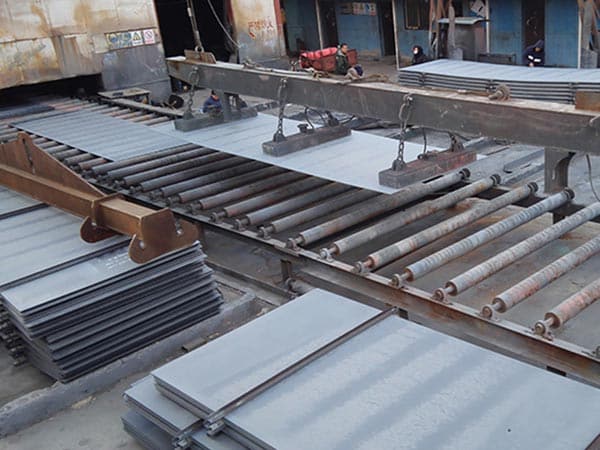
Understanding S460 steel: Density and the Physics of Strength
In the realm of structural engineering, S460 steel represents a significant leap from traditional low-carbon steels. While the physical density of S460 steel remains consistent with most carbon steel grades at approximately 7,850 kg/m³ (or 7.85 g/cm³), its mechanical performance profile is what distinguishes it in high-load applications. This density is a fundamental constant used by engineers to calculate the self-weight of structures, yet the 'strength-to-weight ratio' of S460 is far superior to that of intermediate tensile strength steels like S275 or S355.
The density of S460 steel does not fluctuate significantly with changes in alloying elements because the base matrix remains iron. However, the precision in its chemical composition allows for a much higher yield strength (460 MPa minimum) without increasing the mass of the material. This allows designers to use thinner sections to carry the same loads, effectively reducing the total weight of a structure despite the material having the same volumetric mass as 'heavier' low-strength alternatives.
Mechanical Properties: Beyond Intermediate Tensile Strength
S460 steel is classified under the EN 10025-3 and EN 10025-4 standards, which cover fine-grain structural steels. Unlike low-tensile steels that might offer a range of 360 to 510 MPa, S460 provides a robust tensile strength typically ranging from 520 to 670 MPa, depending on the product thickness. This higher threshold is critical for resisting plastic deformation under extreme stress.
The transition from intermediate grades to S460 involves a sophisticated metallurgical approach. By utilizing thermomechanical rolling (indicated by the 'M' suffix) or normalizing (indicated by the 'N' suffix), the grain structure of the steel is refined. This refinement ensures that even though the steel is harder and stronger, it maintains excellent ductility and toughness, which are often compromised in lower-quality high-strength materials.
| Property | S235 (Low Strength) | S355 (Intermediate) | S460 (High Strength) |
|---|---|---|---|
| Density (kg/m³) | 7850 | 7850 | 7850 |
| Min. Yield Strength (MPa) | 235 | 355 | 460 |
| Tensile Strength (MPa) | 360-510 | 470-630 | 520-670 |
| Elongation (%) | 24-26 | 20-22 | 17-19 |
Chemical Composition and Environmental Adaptability
The secret to achieving S460's performance without altering its density lies in the micro-alloying process. Elements such as Niobium (Nb), Vanadium (V), and Titanium (Ti) are added in minute quantities. these elements form carbides and nitrides that pin grain boundaries during processing, preventing grain growth and enhancing strength through grain refinement rather than simply adding bulk carbon.
Environmental adaptability is another hallmark of S460. For projects in sub-zero environments, grades like S460NL are tested for impact energy at temperatures as low as -50°C. This ensures that the material does not undergo brittle fracture, a common failure mode in standard intermediate steels when exposed to extreme cold. The low carbon equivalent value (CEV) also ensures that the steel remains weldable, a critical factor for on-site assembly of massive infrastructure.
Processing Performance: Welding and Fabrication
Fabricating with S460 requires an understanding of its thermal cycle sensitivity. Because it is a fine-grained steel, excessive heat input during welding can coarsen the grains in the heat-affected zone (HAZ), potentially reducing the local toughness. However, compared to older high-strength steels, modern S460 (especially the 'M' thermomechanically rolled variety) offers excellent weldability with reduced preheating requirements.
- Cold Forming: S460 can be cold-formed, provided the minimum bending radii are respected to prevent cracking in the outer tension fibers.
- Machinability: Due to its higher hardness compared to S235, tool wear is slightly increased, but it remains highly processable with standard carbide tooling.
- Surface Treatment: The dense, uniform surface of S460 provides an excellent substrate for hot-dip galvanizing or high-performance epoxy coatings, ensuring long-term corrosion resistance.
Expanding Applications in Modern Industry
The shift from intermediate tensile strength steels to S460 is driven by the need for efficiency. In the offshore wind industry, the use of S460 in jacket foundations allows for deeper water installations by reducing the weight of the steel structure, which in turn simplifies logistics and installation. In high-rise construction, S460 columns allow for smaller cross-sections, increasing the usable floor space within a building—a direct economic benefit derived from the material's mechanical efficiency.
Bridge engineering also utilizes S460 to achieve longer spans. By reducing the dead load of the girders, more of the bridge's capacity can be dedicated to the live load of traffic. This optimization is impossible with lower-strength steels without significantly increasing the depth of the beams, which would impact vertical clearance and aesthetic requirements.
Strategic Advantages of S460 over Low-Strength Alternatives
Choosing S460 is not merely about meeting a strength requirement; it is about holistic project optimization. When considering the entire lifecycle of a project—from material procurement and transport to fabrication and end-of-life recycling—S460 often proves to be the more sustainable choice. Less steel volume means fewer truckloads for delivery, less welding consumable usage, and a lower overall carbon footprint for the structure.
While the initial cost per ton of S460 may be higher than S355, the reduction in total tonnage required often results in a lower total project cost. This 'less is more' philosophy is the cornerstone of modern sustainable engineering, where material density is leveraged through high-strength properties to create leaner, more resilient infrastructure.
Leave a message