
What is the BBNSteel company cold forming S355MC high-strength steel main products
Explore BBNSteel's S355MC high-strength cold forming steel. This guide covers chemical composition, mechanical properties, weldability, and industrial applications of EN 10149-2 S355MC.
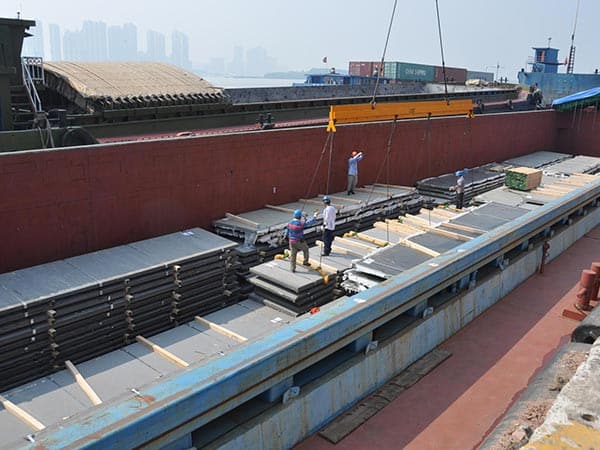
Introduction to BBNSteel S355MC High-Strength Steel
As a leading supplier in the global steel market, BBNSteel specializes in providing S355MC high-strength low-alloy (HSLA) steel, which is governed by the European standard EN 10149-2. This material is specifically designed for cold forming processes, offering a unique combination of high yield strength, excellent ductility, and superior weldability. S355MC is produced using a thermomechanically rolled (TMCP) process, which refines the grain structure without the need for excessive alloying elements, making it an efficient choice for weight-sensitive engineering projects.
The Chemical Composition and Metallurgy of S355MC
The performance of BBNSteel S355MC is rooted in its precise chemical makeup. Unlike traditional structural steels, S355MC utilizes micro-alloying elements such as Niobium (Nb), Titanium (Ti), and Vanadium (V). These elements facilitate grain refinement and precipitation hardening during the thermomechanical rolling process.
| Element | Maximum Content (%) |
|---|---|
| Carbon (C) | 0.12 |
| Manganese (Mn) | 1.50 |
| Silicon (Si) | 0.50 |
| Phosphorus (P) | 0.025 |
| Sulphur (S) | 0.020 |
| Aluminium (Al) | 0.015 (Min) |
| Nb + Ti + V | 0.22 |
By maintaining a low carbon content (typically below 0.12%), S355MC ensures exceptional weldability and prevents the formation of brittle martensite in the heat-affected zone (HAZ). The controlled addition of Manganese enhances strength and toughness, while micro-alloys provide the necessary strength levels without compromising the material's ability to be bent or folded.
Mechanical Properties and Yield Strength Excellence
The '355' in S355MC signifies a minimum yield strength of 355 MPa. This high strength-to-weight ratio allows engineers to reduce the thickness of structural components without sacrificing load-bearing capacity, leading to significant material savings and improved energy efficiency in transport sectors.
| Property | Value Range |
|---|---|
| Yield Strength (Reh) | Min 355 MPa |
| Tensile Strength (Rm) | 430 - 550 MPa |
| Elongation (A5) | Min 23% (for thickness < 3mm) |
| Bending Diameter | 0.5t (for 180° bend) |
One of the standout features of BBNSteel S355MC is its consistent elongation. High elongation values ensure that the steel can undergo severe deformation during cold pressing, stamping, and roll-forming operations without cracking or surface tearing.
Cold Forming Performance and Processability
BBNSteel S355MC is optimized for cold forming. Its fine-grained structure provides isotropic properties, meaning the steel behaves predictably regardless of the direction of the force applied during fabrication. Key advantages in processing include:
- Tight Bending Radii: S355MC can be bent to very small radii, which is critical for complex automotive frames and brackets.
- Low Springback: Compared to other high-strength steels, S355MC exhibits controlled elastic recovery, ensuring dimensional accuracy after forming.
- Excellent Surface Quality: The TMCP process results in a clean surface with minimal scale, which is ideal for subsequent painting, galvanizing, or powder coating.
- Laser Cutting Precision: The low internal stress of BBNSteel S355MC plates ensures that parts remain flat and stable during and after laser or plasma cutting.
Weldability and Joining Technologies
Joining S355MC is straightforward due to its low Carbon Equivalent Value (CEV). It can be welded using all standard methods, including MIG/MAG, TIG, Submerged Arc Welding (SAW), and Laser Welding. Because of the refined grain structure, it is recommended to keep heat input within reasonable limits to avoid excessive grain growth in the weld zone, which could slightly reduce local toughness.
BBNSteel recommends using filler metals that match the strength of the base material. Preheating is generally not required for standard thicknesses, which streamlines production timelines and reduces energy costs for manufacturers.
Environmental Adaptability and Durability
While S355MC is not a weathering steel like Corten, its chemical purity and homogeneous structure provide decent resistance to atmospheric corrosion when properly treated. For applications in harsh environments, BBNSteel provides S355MC with specialized surface treatments or as a base for hot-dip galvanizing. Its performance at low temperatures is also notable; the steel maintains its impact toughness, making it suitable for machinery operating in cold climates.
Core Industrial Applications of BBNSteel S355MC
BBNSteel supplies S355MC to a wide array of industries that demand high structural integrity and weight optimization. Major applications include:
- Automotive Industry: Truck chassis, cross members, side rails, and suspension components where high strength and weight reduction are paramount.
- Agricultural Machinery: Plow frames, trailer bodies, and harvesting equipment components that must withstand high stress and vibrations.
- Construction and Infrastructure: Cold-formed sections, purlins, and specialized profiles used in modular building systems.
- Lifting and Handling: Crane booms, forklift frames, and telescopic handlers where material lightness directly translates to higher lifting capacity.
- Storage Systems: High-density racking and shelving systems that require precision cold-formed profiles.
Why Source S355MC from BBNSteel?
BBNSteel ensures that every batch of S355MC high-strength steel undergoes rigorous testing, including ultrasonic inspection, tensile testing, and chemical analysis, to meet or exceed EN 10149-2 standards. By leveraging advanced thermomechanical rolling technology, BBNSteel provides plates and coils with exceptional flatness and tight thickness tolerances.
The company also offers value-added services such as custom decoiling, precision slitting, and CNC cutting, allowing customers to receive "ready-to-use" components. This reduces waste and optimizes the manufacturing supply chain for global OEMs and fabricators.
Technical Comparison: S355MC vs. s355jr
It is important to distinguish between S355MC and the more common S355JR (EN 10025-2). While both have similar yield strengths, S355MC is a thermomechanically rolled steel designed specifically for cold forming, whereas S355JR is a hot-rolled structural steel. S355MC offers significantly better bendability and a lower carbon content, making it the preferred choice for complex shaped parts and automated welding lines.
| Feature | S355MC (EN 10149-2) | S355JR (EN 10025-2) |
|---|---|---|
| Forming Method | Excellent Cold Forming | Limited Cold Forming |
| Micro-alloying | Nb, Ti, V added | Usually none |
| Surface Finish | Smooth, TMCP finish | Standard Hot Rolled |
| Weight Saving | High (Optimized thickness) | Standard |
Strategic Implementation of High-Strength Steel
Utilizing BBNSteel S355MC allows manufacturers to transition toward more sustainable production. By reducing the mass of vehicles and machinery, fuel consumption is lowered, and the carbon footprint of the final product is reduced. The longevity and recyclability of HSLA steels like S355MC further contribute to a circular economy in the metalworking industry.
BBNSteel continues to support innovation by providing technical consultations for material selection, ensuring that engineers choose the exact grade of high-strength steel that meets their mechanical requirements and processing capabilities.
Leave a message