
How to reduce delamination of DD14 steel for cold forming automobile
A technical guide on mitigating delamination in DD14 hot-rolled steel during automotive cold forming. This article explores chemical optimization, inclusion modification, and advanced rolling strategies to ensure structural integrity in automotive parts.
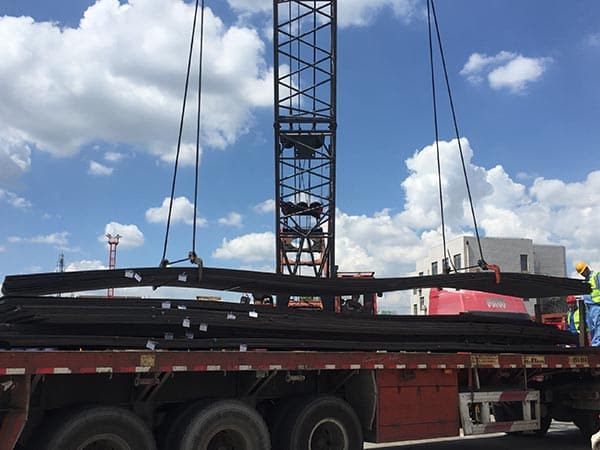
Understanding DD14 Steel Grade and Its Role in Automotive Manufacturing
DD14 steel, governed by the EN 10111 standard, is a hot-rolled low-carbon steel specifically designed for complex cold forming and deep drawing applications. Within the automotive supply chain, DD14 is frequently selected for structural components such as chassis brackets, seat frames, and engine mounts due to its exceptional ductility and relatively low yield strength. The material's ability to undergo significant plastic deformation without fracturing makes it indispensable for modern vehicle weight reduction and safety designs. However, the high strain levels involved in automotive stamping often reveal latent material defects, the most problematic being delamination.
Delamination manifests as the separation of the steel into layers along its thickness during the forming process. This defect not only compromises the structural integrity of the automotive part but also leads to high scrap rates and potential safety risks in the final assembly. To effectively reduce delamination, manufacturers must address the root causes throughout the entire production cycle, from the melting shop to the final cold forming die.
The Phenomenon of Delamination: Root Causes and Microstructural Analysis
Delamination in DD14 steel is rarely a result of the cold forming process alone; it is typically an amplification of internal metallurgical inconsistencies. These inconsistencies are often linked to non-metallic inclusions, centerline segregation, or internal cracks formed during the continuous casting stage. When the steel is subjected to transverse stresses or high-degree bending during automotive part fabrication, these internal weak points act as initiation sites for cracks that propagate parallel to the rolling direction.
Non-metallic inclusions, particularly elongated manganese sulfides (MnS) and clusters of alumina (Al2O3), are the primary culprits. During the hot rolling process, these inclusions are flattened and elongated, creating "planes of weakness" within the steel matrix. Under the intense pressure of cold forming, the bond between the steel and these inclusions fails, leading to the layered separation known as delamination. Furthermore, centerline segregation—the concentration of alloying elements like carbon, manganese, and phosphorus at the center of the slab—can create a brittle core that is prone to cracking during deformation.
Chemical Composition Optimization: Controlling Trace Elements and Inclusions
Reducing delamination begins with ultra-clean steelmaking. For DD14, the chemical composition must be tightly controlled beyond the basic requirements of the EN 10111 standard. Lowering the sulfur (S) content is the most critical step in reducing the volume of MnS inclusions. High-quality DD14 production often aims for sulfur levels below 0.005%, significantly lower than the standard limit of 0.030%.
| Element | Standard Limit (EN 10111) | Optimized Target for Automotive | Impact on Delamination |
|---|---|---|---|
| Carbon (C) | ≤ 0.08% | 0.03% - 0.05% | Reduces hardness and improves ductility |
| Manganese (Mn) | ≤ 0.35% | 0.20% - 0.30% | Controls sulfide morphology |
| Phosphorus (P) | ≤ 0.030% | ≤ 0.015% | Reduces centerline segregation brittleness |
| Sulfur (S) | ≤ 0.030% | ≤ 0.005% | Minimizes MnS inclusion formation |
| Aluminum (Al) | ≥ 0.015% | 0.025% - 0.050% | Ensures deoxidation and grain refinement |
Beyond reducing the quantity of inclusions, inclusion morphology modification is essential. Calcium treatment (Ca-injection) is widely used to transform elongated MnS inclusions into hard, spherical calcium sulfides or complex oxy-sulfides that do not deform during hot rolling. This maintains the isotropic properties of the steel, making it equally resistant to cracking in both the longitudinal and transverse directions.
Advanced Metallurgical Techniques to Improve Internal Soundness
To further eliminate the risk of delamination, the steel must undergo rigorous secondary refining. Processes such as Ladle Furnace (LF) refining and Vacuum Degassing (VD or RH) are employed to remove dissolved gases like hydrogen and nitrogen. Hydrogen, in particular, can cause internal micro-cracking (hydrogen-induced cracking), which serves as a precursor to delamination during cold forming.
In the continuous casting stage, Soft Reduction technology is utilized. By applying controlled mechanical pressure to the strand near the point of final solidification, manufacturers can compensate for solidification shrinkage and significantly reduce centerline segregation. This ensures a more uniform microstructure across the thickness of the DD14 plate, which is vital for parts that require heavy deep drawing or tight-radius bending.
Hot Rolling Parameters and Their Influence on Cold Forming Success
The hot rolling process determines the final grain structure and mechanical properties of DD14. To prevent delamination, the heating temperature of the slab must be high enough to ensure complete dissolution of alloying elements but controlled to prevent excessive grain growth. A typical reheating temperature ranges between 1150°C and 1250°C.
- Finish Rolling Temperature: Maintaining a finish rolling temperature above the Ar3 transformation point (usually >880°C) ensures that the steel is rolled in the austenitic phase, resulting in a fine, equiaxed ferrite grain structure upon cooling.
- Coiling Temperature: For DD14, coiling temperatures are usually kept between 600°C and 680°C. This range promotes the formation of a stable ferrite-pearlite microstructure with minimal internal stress, which is conducive to subsequent cold forming.
- Scale Removal: Effective descaling before and during rolling prevents surface oxides from being pressed into the steel, which could otherwise create surface-initiated delamination or "slivers."
Optimizing Cold Forming Processes to Mitigate Delamination Risks
While metallurgical quality is the foundation, the cold forming process itself must be optimized to handle the specific characteristics of DD14. The design of the stamping dies and the choice of lubricants play a significant role in how stresses are distributed through the material thickness.
Bending Radius: Even though DD14 is highly ductile, using a bending radius that is too sharp can exceed the material's local elongation limits, triggering delamination at the mid-thickness. It is recommended to use a minimum bending radius of at least 0.5 to 1.0 times the material thickness for critical automotive components.
Lubrication and Friction: High-performance synthetic lubricants reduce the friction between the die and the workpiece. High friction can create a "shearing" effect on the surface layers of the steel, promoting the separation of layers if internal inclusions are present. Proper lubrication ensures that the strain is distributed more uniformly throughout the bulk of the material.
Strain Rate Control: In high-speed automotive stamping lines, the strain rate can be very high. DD14 is somewhat sensitive to strain rate; extremely rapid deformation can lead to localized heating and adiabatic shear bands, which can initiate delamination. Optimizing the press speed can help in maintaining a stable deformation front.
Testing and Validation Standards for High-Quality DD14 Components
To ensure that the DD14 steel supplied for automotive production is free from delamination risks, a combination of destructive and non-destructive testing is required. Standard tensile tests provide yield and tensile strength, but they often fail to detect the internal planes of weakness that cause delamination.
Ultrasonic Testing (UT): For critical automotive applications, ultrasonic scanning can detect internal laminations and large inclusion clusters before the steel reaches the stamping press. Microstructural Examination: Regular metallographic checks (according to ASTM E45) are performed to evaluate the inclusion rating and ensure that calcium treatment has effectively modified sulfide shapes. The Z-Direction Tensile Test: This test measures the ductility of the steel in the thickness direction (short transverse). A high reduction in area in the Z-direction is the most reliable indicator that the steel will resist delamination during complex cold forming.
By integrating these metallurgical controls and processing optimizations, automotive manufacturers can fully leverage the high ductility of DD14 steel while virtually eliminating the costly and dangerous issue of delamination. This holistic approach ensures that every stamped component meets the rigorous safety and durability standards required by the modern automotive industry.
Leave a message