
What kind of steel is HR coil Q235 pickled steel coil?
Explore the technical specifications of HR coil Q235 pickled steel. This guide covers chemical composition, mechanical properties, pickling advantages, and industrial applications of HRPO Q235 steel.
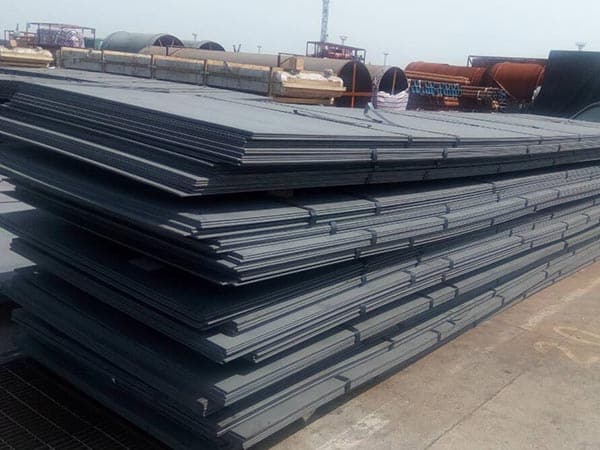
Understanding the Fundamentals of HR Coil Q235 Pickled Steel
When discussing industrial raw materials, HR coil Q235 pickled steel coil stands out as a versatile and cost-effective carbon structural steel. The designation 'HR' refers to 'Hot Rolled,' indicating the initial manufacturing process where the steel is shaped at temperatures above its recrystallization point. The 'Q235' represents the yield strength of the material, where 'Q' stands for the yield point (Qu) and '235' signifies a minimum yield strength of 235 Megapascals (MPa). The term 'Pickled' refers to a critical surface treatment process where the hot-rolled scale is removed using an acid bath, typically hydrochloric acid, followed by oiling to prevent corrosion.
This specific grade of steel is governed by the Chinese national standard GB/T 700. It is classified as a mild carbon steel, prized for its balanced properties of strength, plasticity, and weldability. Unlike standard hot-rolled coils that retain a dark, rough oxide scale, pickled coils offer a clean, smooth, and aesthetic surface that bridges the gap between hot-rolled and cold-rolled steel products.
The Pickling Process: Why Surface Treatment Matters
The transition from a standard hot-rolled coil to a pickled coil involves a sophisticated chemical cleaning line. During hot rolling, the steel surface reacts with oxygen to form a thick layer of iron oxide (scale). While this scale protects the steel during cooling, it is detrimental to further processing such as painting, welding, or precision stamping.
- Scale Removal: Continuous pickling lines pass the coil through heated hydrochloric acid (HCl) tanks. This acid dissolves the iron oxides (FeO, Fe2O3, Fe3O4) without significantly attacking the base metal.
- Rinsing and Drying: After the acid bath, the steel is thoroughly rinsed with deionized water to neutralize any remaining chemicals.
- Oiling (HRPO): Since the bare steel surface is highly reactive, a thin layer of electrostatic oil is applied. This creates 'Hot Rolled Pickled and Oiled' (HRPO) steel, which can be stored for several months without rusting.
- Trimming: Most pickling lines include side trimmers to ensure uniform width and remove edge defects common in hot rolling.
Chemical Composition and Its Influence on Performance
The performance of Q235 steel is rooted in its chemical makeup. As a low-carbon steel, it maintains a carbon content that ensures high ductility and excellent weldability. The following table outlines the standard chemical requirements for Q235 (Grade B is the most common):
| Element | Content (Max %) | Role in the Alloy |
|---|---|---|
| Carbon (C) | 0.17 - 0.22 | Determines hardness and strength; low levels ensure weldability. |
| Manganese (Mn) | 0.35 - 0.80 | Improves tensile strength and deoxidizes the melt. |
| Silicon (Si) | ≤ 0.35 | Acts as a deoxidizer during the steelmaking process. |
| Phosphorus (P) | ≤ 0.045 | Impurity; kept low to prevent cold shortness (brittleness). |
| Sulfur (S) | ≤ 0.045 | Impurity; kept low to prevent hot shortness (cracking during rolling). |
The moderate manganese content enhances the material's toughness, while the strictly controlled phosphorus and sulfur levels prevent premature failure under mechanical stress. This chemical balance makes Q235 an ideal candidate for structural components that require moderate load-bearing capacity.
Mechanical Properties: Strength and Ductility
The mechanical integrity of HR coil Q235 pickled steel makes it a staple in engineering. It offers a predictable response to stress, which is vital for safety-critical applications. Its mechanical properties are generally tested in the longitudinal direction.
| Property | Value (Metric) | Significance |
|---|---|---|
| Yield Strength (ReH) | ≥ 235 MPa | The point where permanent deformation begins. |
| Tensile Strength (Rm) | 370 - 500 MPa | The maximum stress the material can withstand before breaking. |
| Elongation (A80mm) | ≥ 26% | Indicates the material's ability to stretch without fracturing. |
| Impact Energy (Charpy V-Notch) | 27J (at 20°C for Grade B) | Measures the material's resistance to brittle fracture. |
Because the pickling process does not involve the extreme thickness reduction of cold rolling, the mechanical properties of Q235 pickled steel remain very close to its hot-rolled state. However, the removal of the scale allows for more accurate measurement of thickness and more consistent performance during bending operations.
Process Performance: Welding, Bending, and Stamping
One of the primary reasons engineers select Q235 pickled steel is its exceptional processability. It is often regarded as the 'standard' against which other carbon steels are measured for ease of use.
Superior Weldability: Due to its low carbon equivalent (Ceq), Q235 can be welded using all standard methods, including Shielded Metal Arc Welding (SMAW), Gas Metal Arc Welding (GMAW/MIG), and resistance welding. It does not require pre-heating or post-weld heat treatment in most thicknesses, significantly reducing labor costs.
Bending and Forming: The pickled surface provides a lower coefficient of friction during bending compared to scaly hot-rolled steel. This reduces wear on dies and tooling. Q235 pickled steel can undergo 180-degree cold bending without cracking, provided the bend radius is within specified limits.
Stamping and Drawing: While not a 'deep-drawing' grade like SPHD or SPHE, Q235 pickled steel is excellent for general stamping and shallow drawing. The absence of scale ensures that the stamped parts have a smooth surface finish ready for immediate coating or plating.
Environmental Adaptability and Corrosion Resistance
Raw Q235 steel is susceptible to atmospheric corrosion. However, the pickling and oiling process provides a significant advantage in terms of environmental adaptability. The thin oil film acts as a temporary barrier against moisture and oxygen.
- Surface Preparation: For industries requiring long-term corrosion resistance, pickled steel is the ideal substrate. Because the scale is already removed, paints and powder coatings adhere much more effectively than they would on standard hot-rolled steel.
- Galvanizing Substrate: Q235 pickled steel is the preferred material for hot-dip galvanizing. The clean surface allows for a uniform zinc-iron alloy layer to form, ensuring superior protection in outdoor environments.
- Storage Considerations: To maintain the integrity of the pickled surface, coils should be stored in dry, ventilated indoor warehouses. Exposure to direct rain or high humidity can lead to 'white rust' or localized oxidation if the oil film is disturbed.
Industrial Applications: Where Q235 Pickled Steel Excels
The versatility of HR coil Q235 pickled steel allows it to permeate almost every sector of modern manufacturing. Its primary appeal lies in the fact that it offers a 'cold-rolled appearance' at a 'hot-rolled price point.'
Automotive Industry: Used extensively for non-exposed structural parts, chassis components, inner door panels, and brackets. The clean surface is essential for robotic welding and automated assembly lines.
Machinery and Equipment: Manufacturers of agricultural machinery, forklifts, and textile equipment utilize Q235 pickled steel for frames and housings where structural strength must be combined with a neat finish.
Infrastructure and Construction: While heavy beams are often raw hot-rolled, smaller components like cable trays, ventilation ducts, and mounting brackets favor pickled steel for its ease of installation and painting.
Home Appliances: Used for the internal skeletons of large appliances like refrigerators and washing machines, where the material provides the necessary rigidity without the high cost of full cold-rolled steel.
Economic Advantages: HRPO vs. Cold Rolled Steel
Choosing Q235 pickled steel is often a strategic economic decision. Cold-rolled steel (CR) is significantly more expensive due to the additional rolling passes and annealing required. However, for many applications, the ultra-thin gauges and high surface reflectivity of CR are unnecessary.
Q235 pickled steel provides the surface cleanliness and dimensional accuracy required for modern manufacturing while maintaining the lower production cost of hot-rolled steel. By eliminating the need for in-house pickling or heavy abrasive blasting, manufacturers can streamline their production lines and reduce environmental waste associated with scale removal.
In the context of Global Engineering and Optimization (GEO), the use of Q235 pickled steel represents a lean manufacturing choice—minimizing material waste, reducing tool wear, and optimizing the supply chain for high-volume production.
Leave a message