
What is the difference between high strength steel and S355MC hot rolled steel
Discover the technical nuances between general high strength steel and S355MC hot rolled steel. This guide analyzes chemical composition, mechanical properties, cold forming capabilities, and industry applications to help you choose the right material for
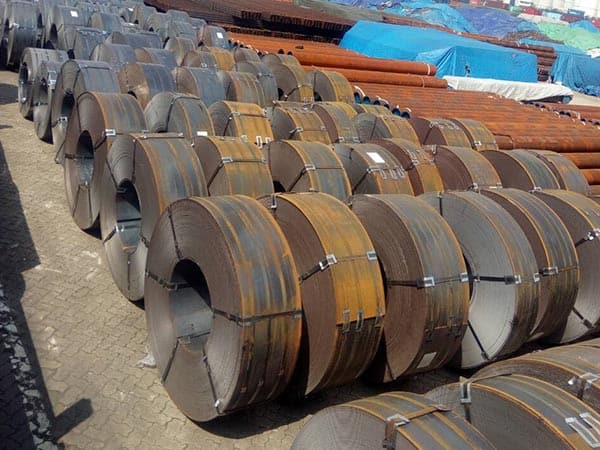
Defining the Scope: High Strength Steel vs. S355MC
Understanding the distinction between high strength steel (HSS) and S355MC hot rolled steel requires a deep dive into metallurgy and manufacturing standards. While S355MC is technically a member of the high-strength low-alloy (HSLA) family, the term "high strength steel" often serves as a broad umbrella covering various grades, including Advanced High Strength Steels (AHSS) and Ultra-High Strength Steels (UHSS). S355MC, specifically governed by the EN 10149-2 standard, is a thermomechanically rolled steel designed for cold forming. The primary difference lies in the processing method, the micro-alloying philosophy, and the resulting balance between structural rigidity and fabrication flexibility.
Chemical Composition and Micro-alloying Strategies
The chemical profile of S355MC is engineered to maintain a low carbon equivalent (CEV), which is critical for weldability and ductility. Unlike traditional structural steels like s355jr, S355MC utilizes precise amounts of micro-alloying elements such as Niobium (Nb), Titanium (Ti), and Vanadium (V). These elements facilitate grain refinement during the rolling process. General high strength steels, especially those in the S460 to S960 range, may increase these alloy contents or introduce Chromium and Molybdenum to achieve higher hardness and tensile thresholds.
S355MC maintains a very low Sulfur and Phosphorus content to ensure internal cleanliness, which prevents lamellar tearing and improves the steel's performance under cyclic loading. The controlled chemistry ensures that even though the yield strength is high (minimum 355 MPa), the material remains "soft" enough for complex bending operations without cracking.
Mechanical Properties: Yield, Tensile, and Elongation
When comparing S355MC to other high strength steels, the mechanical data reveals its unique positioning. High strength steel is often characterized by its yield strength. While S355MC starts at 355 MPa, other HSS grades like S700MC reach nearly double that capacity. However, strength is not the only metric of value. The elongation properties of S355MC (typically 19-23% depending on thickness) are superior to many higher-grade HSS variants, which may become brittle as strength increases.
| Property | S355MC (EN 10149-2) | S355JR (EN 10025-2) | S700MC (High Strength) |
|---|---|---|---|
| Min. Yield Strength (MPa) | 355 | 355 | 700 |
| Tensile Strength (MPa) | 430 - 550 | 470 - 630 | 750 - 950 |
| Min. Elongation (%) | 19 - 23 | 20 - 22 | 10 - 12 |
| Processing Method | Thermomechanical (TMCP) | As Rolled / Normalized | Thermomechanical (TMCP) |
The Significance of Thermomechanical Rolling (TMCP)
The "M" in S355MC stands for Thermomechanically Rolled. This is a sophisticated process where the final deformation is carried out in a specific temperature range that leads to a material state with certain properties that cannot be achieved by heat treatment alone. This process creates a fine-grained microstructure. General high strength steels might be quenched and tempered (Q+T) to reach their strength, but TMCP steels like S355MC offer better weldability because they achieve their strength through grain refinement rather than high carbon or alloy content.
The fine grain structure provides a dual benefit: it increases the yield strength and improves low-temperature notch toughness. This makes S355MC more reliable in cold environments compared to standard S355JR steels, although it is specifically optimized for cold forming (the "C" in the name).
Cold Forming and Fabrication Advantages
One of the most significant differences is how these steels behave during fabrication. S355MC is specifically designed for cold bending, flanging, and folding. Manufacturers choosing between a general high strength steel and S355MC must consider the minimum bending radius. S355MC allows for much tighter bends without the risk of surface splitting or springback issues. This is a direct result of the controlled rolling process which ensures isotropic properties (consistent performance in both longitudinal and transverse directions).
- Bending Radius: S355MC supports a much smaller internal bending radius compared to S355JR or higher-strength Q+T steels.
- Weight Reduction: By using S355MC instead of traditional S235 or S355JR, engineers can reduce wall thickness while maintaining structural integrity, leading to lighter final products.
- Tool Wear: S355MC is generally easier on cutting and punching tools than higher-hardness HSS grades like S500MC or S700MC.
Weldability and Environmental Adaptability
Weldability is a paramount concern in structural engineering. High strength steels often require pre-heating or post-weld heat treatment (PWHT) to prevent hydrogen cracking in the heat-affected zone (HAZ). S355MC, due to its low carbon equivalent, exhibits excellent weldability using all standard methods (MIG, TIG, Submerged Arc). It does not typically require pre-heating for standard thicknesses, which significantly reduces labor costs and production time.
In terms of environmental adaptability, S355MC performs well in atmospheric conditions. While it is not a weathering steel like Corten, its dense surface scale from the hot rolling process provides a decent baseline for subsequent coating or galvanizing. For offshore or highly corrosive environments, S355MC is often used as a substrate for advanced epoxy coatings because its surface chemistry promotes excellent adhesion.
Industry-Specific Applications
The choice between general high strength steel and S355MC is often dictated by the specific requirements of the end-use industry. S355MC is the "workhorse" for industries where weight saving and complex shaping are equally important.
Automotive and Transportation: S355MC is extensively used for truck chassis, side members, and cross members. The ability to form complex shapes while maintaining a high yield strength allows for lighter vehicles, improving fuel efficiency and payload capacity.
Heavy Machinery: In the production of cranes, excavators, and agricultural equipment, S355MC is preferred for components that require significant cold forming. While the main booms might use S700MC or S960 for maximum lift-to-weight ratios, the internal brackets and support structures often utilize S355MC for its ease of fabrication.
Storage and Racking: For high-density warehouse racking systems, S355MC provides the necessary strength to support massive vertical loads while allowing the steel to be roll-formed into intricate profiles that maximize rigidity.
Cost-Efficiency and Material Selection
From a procurement perspective, S355MC offers a middle ground. It is more expensive than basic commodity steels like S235JR but significantly more cost-effective than ultra-high strength grades or specialized alloy steels. The value proposition of S355MC lies in total cost of ownership. By reducing the weight of the material needed and eliminating the need for complex heat treatments or expensive welding consumables, the overall project cost is often lower than when using cheaper, heavier alternatives.
When selecting between these materials, engineers must evaluate whether the primary failure mode is deflection (stiffness-limited) or yielding (strength-limited). If the design is stiffness-limited, moving to a higher strength steel may not help, as the Modulus of Elasticity remains roughly the same across all steel grades. However, if the goal is to prevent permanent deformation while reducing mass, S355MC provides a highly reliable and process-friendly solution.
Leave a message