
S460MC steel for car parts price continues to weaken
An in-depth analysis of S460MC steel price fluctuations in the automotive sector, exploring its mechanical properties, processing advantages, and industry-wide applications.
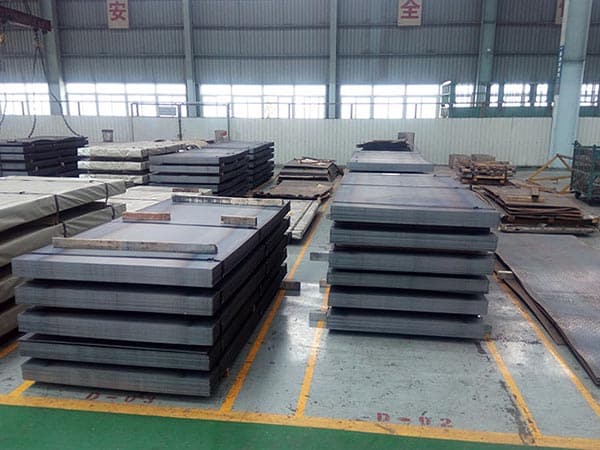
Market Dynamics Affecting S460MC Steel Pricing
The current landscape for S460MC steel within the automotive supply chain is experiencing a notable shift as prices continue to weaken. This downward trend is driven by a combination of increased global production capacity and a strategic realignment of inventory levels among major car manufacturers. S460MC, a high-strength low-alloy (HSLA) steel governed by the EN 10149-2 standard, is a critical material for weight reduction and structural integrity. As the industry moves toward more cost-efficient procurement, understanding the technical value of this material becomes paramount for engineers and purchasing managers alike.
The weakening price does not reflect a decrease in material relevance; rather, it indicates a stabilization of the raw material market, including iron ore and coking coal, which had previously seen volatile spikes. For automotive OEMs (Original Equipment Manufacturers), this price softening presents an opportunity to lock in long-term contracts for chassis components and structural frames where S460MC is indispensable. The demand for lightweighting in both internal combustion engine (ICE) vehicles and electric vehicles (EVs) continues to support the high volume of S460MC usage, even as the unit price faces downward pressure.
Technical Specifications and Chemical Composition
S460MC is characterized by its thermomechanically rolled process, which ensures a fine-grained microstructure. This micro-alloying approach involves the precise addition of elements like Niobium (Nb), Vanadium (V), and Titanium (Ti). These elements facilitate grain refinement and precipitation hardening, allowing the steel to achieve high yield strength without the excessive carbon content that hinders weldability.
| Element | Carbon (C) % | Manganese (Mn) % | Silicon (Si) % | Phosphorus (P) % | Sulfur (S) % | Al (Total) % |
|---|---|---|---|---|---|---|
| Maximum Value | 0.12 | 1.60 | 0.50 | 0.025 | 0.015 | 0.015 |
The low carbon equivalent value (CEV) is a standout feature of S460MC steel. By keeping carbon levels below 0.12%, the material maintains exceptional ductility and toughness. This chemical balance is specifically engineered to prevent cold cracking during welding and to ensure that the material can withstand the rigorous stamping processes required for complex car parts like longitudinal beams and cross members.
Mechanical Performance and Structural Integrity
The primary appeal of S460MC in the automotive sector is its mechanical strength-to-weight ratio. With a minimum yield strength of 460 MPa, it allows designers to use thinner gauges of steel compared to traditional S355 grades, resulting in a significant reduction in vehicle curb weight. This is essential for meeting stringent carbon emission targets and extending the range of battery-powered vehicles.
| Property | Yield Strength (ReH MPa) | Tensile Strength (Rm MPa) | Elongation (A50mm %) | Bending Radius (180°) |
|---|---|---|---|---|
| Specification | min 460 | 520 - 670 | min 14 (t < 3mm) | 0.8t - 1.0t |
Beyond simple strength, the impact toughness of S460MC at low temperatures is a critical safety factor. Automotive components must perform reliably in diverse climates, from extreme heat to sub-zero environments. The fine-grained structure resulting from thermomechanical rolling ensures that the material does not become brittle, maintaining its ability to absorb energy during a collision. This energy absorption capacity is what makes S460MC a preferred choice for crash-relevant structures.
Superior Cold Forming and Processing Capabilities
One of the most significant advantages of S460MC is its excellent cold forming behavior. Despite its high strength, the material exhibits low springback, which is a common challenge when working with high-strength steels. This allows for high precision in the manufacturing of complex geometries, such as those found in modern car chassis and suspension systems.
- Bending: S460MC can be bent to tight radii without cracking, provided the grain direction is considered during the layout phase.
- Punching and Cutting: The material is well-suited for high-speed laser cutting and mechanical punching, showing minimal burr formation and edge hardening.
- Deep Drawing: While primarily a structural steel, its elongation properties allow for moderate deep drawing, enabling the creation of integrated components that reduce the need for multiple sub-assemblies.
Manufacturers benefit from the consistency of S460MC. The tight control over mechanical properties across different batches ensures that automated stamping lines can run with minimal adjustments, reducing downtime and scrap rates. As the price of S460MC weakens, the total cost of ownership for these parts becomes even more attractive when factoring in these processing efficiencies.
Welding Performance in Automated Production
In the high-volume world of automotive manufacturing, welding speed and quality are non-negotiable. S460MC is designed for all standard welding processes, including Metal Active Gas (MAG) welding, laser welding, and resistance spot welding. Because of its low alloy content, it does not require pre-heating or post-weld heat treatment in most applications.
The Heat Affected Zone (HAZ) in S460MC remains stable, with minimal softening compared to other high-strength steels. This ensures that the welded joint retains a high percentage of the base metal's strength, which is vital for the structural integrity of the vehicle's frame. Engineers often specify S460MC for components that undergo significant fatigue loading, as the clean steel chemistry reduces the presence of inclusions that could act as stress concentrators or crack initiators.
Expanding Applications in the Automotive Industry
The use of S460MC extends far beyond basic structural plates. It is now a staple in the production of heavy-duty truck frames, where the load-bearing requirements are extreme. By utilizing S460MC, truck manufacturers can increase payload capacity by reducing the dead weight of the chassis. In passenger vehicles, it is frequently found in:
- Seat Rails: Providing strength and safety for passenger restraint systems.
- Bumper Beams: Absorbing kinetic energy during low-speed impacts.
- Chassis Cross Members: Maintaining torsional rigidity of the vehicle body.
- Suspension Arms: Offering durability under constant dynamic stress.
The environmental adaptability of S460MC also makes it suitable for underbody components that are exposed to road salts and moisture. While it is typically coated or galvanized for corrosion protection, the base metal's inherent uniformity provides an excellent substrate for modern E-coating processes, ensuring long-term aesthetic and structural durability.
Strategic Procurement Amidst Price Weakening
With the price of S460MC currently in a weakening phase, procurement departments are re-evaluating their sourcing strategies. It is essential to distinguish between market-driven price drops and quality compromises. Reliable suppliers who adhere strictly to the EN 10149-2 standards provide the necessary certification and traceability that automotive safety standards demand.
Current market conditions suggest that this is an opportune time for manufacturers to upgrade from lower-strength steels like S355MC to S460MC. The narrowing price gap between these grades allows for product improvements—specifically weight reduction and enhanced safety—at a lower incremental cost than in previous years. Furthermore, the global availability of S460MC ensures that supply chain risks are minimized, as multiple Tier 1 and Tier 2 mills have mastered the production of this specific grade.
Looking at the broader economic picture, the weakening price of S460MC may also be linked to the transition toward green steel production. As mills invest in hydrogen-based reduction and electric arc furnaces, the traditional cost structures are evolving. Buyers should stay informed about the carbon footprint of their S460MC supply, as "green" versions of this high-strength steel are becoming increasingly available, aligning with the sustainability goals of the global automotive industry.
In the context of long-term engineering trends, S460MC remains a benchmark for reliability. Its balance of high yield strength, ease of processing, and now, more competitive pricing, solidifies its position as a cornerstone of modern automotive metallurgy. Whether for the main rails of a heavy-duty trailer or the intricate structural parts of a compact EV, S460MC provides the technical performance required to meet the challenges of 21st-century mobility.
Leave a message