
S700MC steel for cranes structure price is suspected to enter the cold winter
An in-depth analysis of S700MC high-strength steel for crane structures, covering mechanical properties, welding processes, and environmental adaptability, alongside a critical look at current market price trends.
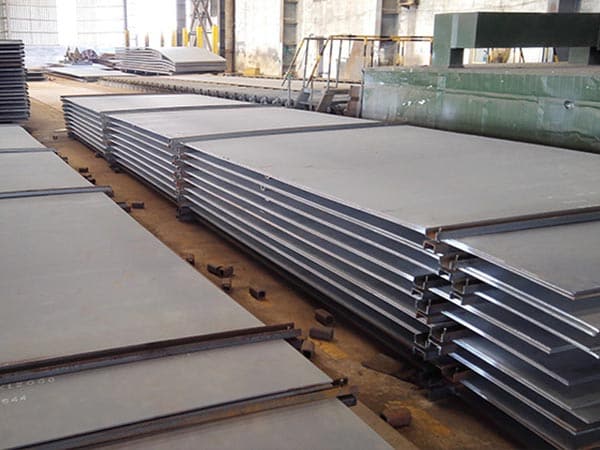
The Technical Evolution of S700MC in Heavy Lifting Equipment
The global crane manufacturing industry is undergoing a significant shift towards lightweight, high-capacity designs. At the heart of this transformation is S700MC high-strength steel, a thermomechanically rolled material governed by the EN 10149-2 standard. As market whispers suggest the price of S700MC for crane structures might be entering a 'cold winter,' it is crucial for engineers and procurement specialists to look beyond the ticker tape and understand the intrinsic value this material provides to modern engineering.
S700MC is not merely a commodity; it is a sophisticated metallurgical solution designed to solve the paradox of increasing lifting capacity while reducing the dead weight of the equipment. This balance is achieved through precise micro-alloying and controlled rolling processes, resulting in a fine-grained microstructure that traditional hot-rolled steels cannot match.
Mechanical Properties: The Foundation of Structural Integrity
The primary appeal of S700MC lies in its exceptional yield strength. With a minimum yield strength of 700 MPa, it allows designers to use thinner plates without compromising the structural safety of crane booms, chassis, or outriggers. This reduction in thickness directly translates to a lower total weight of the crane, enhancing fuel efficiency and allowing for higher payloads on transport vehicles.
| Property | Value (Thickness ≤ 8mm) | Value (Thickness > 8mm) |
|---|---|---|
| Minimum Yield Strength (ReH MPa) | 700 | 700 |
| Tensile Strength (Rm MPa) | 750 - 950 | 750 - 950 |
| Minimum Elongation (A50 %) | 12 | 12 |
| Minimum Elongation (A80 %) | 10 | - |
Beyond simple strength, the tensile-to-yield ratio of S700MC is carefully optimized. This ensures that the material provides sufficient warning through plastic deformation before any catastrophic failure occurs, a critical safety feature for mobile and crawler cranes operating under dynamic loads.
Advanced Processing Performance: Bending and Welding
For crane manufacturers, the workability of the steel is as important as its strength. S700MC excels in cold forming. Despite its high strength, the fine-grain structure allows for tight bending radii, which is essential for creating the complex U-shaped or hexagonal telescopic boom sections. Typically, for a plate thickness (t), the minimum recommended bending radius is as low as 1.0t to 1.5t, depending on the orientation relative to the rolling direction.
Welding S700MC requires a deep understanding of its thermomechanical history. Because the strength is derived from the rolling process rather than high alloy content, the Carbon Equivalent (CEV) remains remarkably low (typically around 0.30% to 0.40%). This low CEV significantly reduces the risk of cold cracking and often eliminates the need for preheating, even when welding thick sections. However, it is vital to control the heat input (t8/5 time) to prevent excessive grain growth in the Heat Affected Zone (HAZ), which could lead to a localized drop in strength.
- Low Carbon Equivalent: Enhances weldability and reduces fabrication costs.
- Excellent Surface Quality: The thermomechanical process results in a clean surface, ideal for high-quality painting and coating.
- Precision Cutting: S700MC is highly compatible with laser and plasma cutting, maintaining edge integrity.
Environmental Adaptability and Low-Temperature Toughness
Cranes often operate in extreme environments, from the scorching heat of deserts to the sub-zero temperatures of Arctic mining sites. S700MC is engineered to maintain its ductility and impact resistance even in these harsh conditions. The standard specifies impact energy requirements at -20°C, but many premium producers offer S700MC with guaranteed toughness at -40°C or even -60°C.
This environmental resilience is achieved through ultra-low sulfur and phosphorus levels, which minimize inclusions that could act as crack initiation sites. For crane structures, this means a lower risk of brittle fracture, extending the service life of the equipment and reducing the frequency of structural inspections.
Industry Application Expansion: Beyond the Main Boom
While the telescopic boom is the most visible application, S700MC is increasingly utilized in other critical components of the crane's anatomy. The chassis and sub-frames of truck-mounted cranes benefit immensely from the weight savings, allowing for more axles or larger fuel tanks within road weight limits.
Furthermore, the outrigger boxes—which must withstand immense localized pressure during lifting operations—rely on the high yield strength of S700MC to prevent buckling. In the tower crane sector, the use of S700MC in the mast sections allows for taller configurations with smaller footprints, a vital advantage in congested urban construction sites.
Analyzing the 'Cold Winter' Price Sentiment
The suggestion that S700MC prices are entering a 'cold winter' stems from a combination of macroeconomic factors and industry-specific cycles. A slowdown in global infrastructure projects and a temporary surplus in high-strength steel production capacity have indeed put downward pressure on spot prices. However, viewing this as a 'winter' may be a narrow perspective.
For savvy manufacturers, this price correction represents an opportunity. The cost-to-performance ratio of S700MC is currently at its most attractive point in years. When factoring in the weight savings—where using 1 ton of S700MC can often replace 1.5 to 1.8 tons of conventional S355 steel—the total project cost often decreases despite the higher price per ton of the raw material.
Strategic procurement during this period allows manufacturers to upgrade their product lines to higher strength classes, positioning themselves ahead of the curve when the market demand inevitably rebounds. The 'cold winter' of pricing is, in reality, a period of consolidation where only the most efficient and technically advanced materials will maintain their market share.
Future Trends: The Path to S960MC and Beyond
As S700MC becomes the industry standard, the frontier is moving toward even higher grades like S900MC and S960MC. These materials push the boundaries of metallurgy further, offering yield strengths nearly triple that of standard structural steel. However, S700MC remains the 'sweet spot' for the majority of crane applications, offering the best balance between extreme strength, ease of processing, and economic viability.
The integration of digital twin technology and advanced FEA (Finite Element Analysis) in crane design is also driving the demand for more consistent material properties. S700MC, with its tight tolerances on thickness and flatness, provides the predictable performance required for these digital design workflows.
The perceived 'cold winter' in S700MC pricing is a temporary market fluctuation that does not reflect the material's growing importance. Its role in enabling the next generation of efficient, safe, and powerful lifting machinery is more secure than ever. Manufacturers who focus on the technical advantages—superior yield strength, excellent weldability, and environmental durability—will find that S700MC is an indispensable asset in their engineering toolkit, regardless of short-term price cycles.
Leave a message