
What are the top 10 S900MC automobile frame steel hot rolled plates mills in Iran
An in-depth guide to S900MC automobile frame steel mills in Iran. Explore technical specifications, mechanical properties, and the leading suppliers for high-strength hot rolled plates used in the automotive sector.
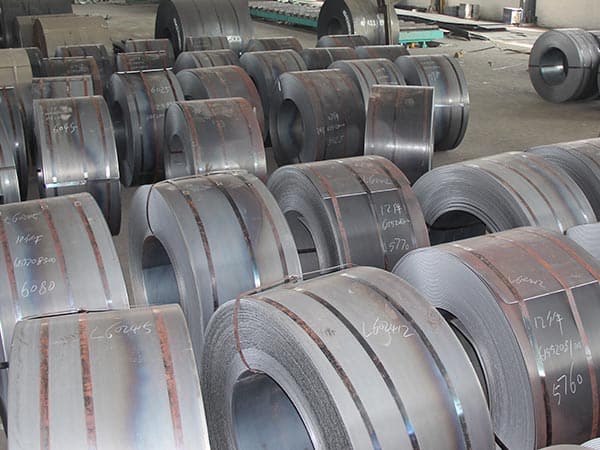
The Evolution of High-Strength Steel in the Iranian Automotive Sector
The demand for lightweighting in the automotive industry has pushed material science to its limits. Among the elite class of High-Strength Low-Alloy (HSLA) steels, S900MC stands out as a critical material for modern vehicle architecture. In Iran, the steel industry has undergone a massive transformation, moving from basic structural grades to sophisticated thermomechanically rolled steels designed for heavy-duty truck frames and specialized automotive components. S900MC, characterized by a minimum yield strength of 900 MPa, allows for significant weight reduction without compromising structural integrity or safety.
Finding the right mill or supplier in Iran requires an understanding of the local manufacturing capabilities. While the Iranian steel market is dominated by a few giants, the production of S900MC requires advanced thermomechanical controlled processing (TMCP) facilities, which are only available at specific high-end installations. This article examines the landscape of S900MC production and supply within the Iranian borders, focusing on quality, technical attributes, and industrial application.
Technical Attributes and Mechanical Performance of S900MC
S900MC is not just about raw strength; it is about the balance between tensile performance and formability. This grade is produced through a process of thermomechanical rolling, where the rolling temperature and cooling rates are precisely controlled to create a fine-grained microstructure. This process results in a steel that is significantly stronger than standard structural steels like S355, yet retains the ability to be cold-formed into complex shapes.
For automobile frames, the mechanical properties are paramount. The high yield strength ensures that the frame can withstand extreme loads during operation, while the elongation properties allow for energy absorption in the event of a collision. Below is a detailed look at the typical mechanical specifications of S900MC plates:
| Property | Value (Typical) |
|---|---|
| Yield Strength (ReH) | Min 900 MPa |
| Tensile Strength (Rm) | 930 - 1200 MPa |
| Elongation (A5) | Min 7% |
| Bending Radius (180°) | 3.0 x t (thickness) |
| Impact Energy (at -20°C) | Min 27J (if specified) |
Top Mills and Suppliers for S900MC in Iran
The Iranian steel industry is one of the largest in the Middle East. When looking for S900MC automobile frame steel, the following mills and entities are the primary players involved in production, distribution, or the technological development of high-strength plates:
- Mobarakeh Steel Company (MSC): As the largest steel producer in Iran and the MENA region, MSC is the primary source for automotive-grade hot rolled coils. Their advanced hot rolling mills are capable of producing high-strength steels that meet international standards, catering to major car manufacturers like IKCO and Saipa.
- Oxin Steel Khuzestan: Specialized in heavy plates, Oxin Steel is the go-to mill for high-strength plates exceeding standard thicknesses. Their API and HSLA production lines are capable of reaching the metallurgical requirements of S900MC for heavy vehicle chassis.
- Kavian Steel: Another significant player in the Khuzestan province, Kavian focuses on thick plates and has the technical capability to process high-alloy slabs into structural plates used in heavy machinery and truck frames.
- Khuzestan Steel Company (KSC): While primarily a slab and bloom producer, KSC provides the high-quality feedstock (slabs) necessary for other mills to roll S900MC grade plates. Their control over chemical purity is essential for HSLA grades.
- Esfahan Steel Company (ESCO): Known for long products, ESCO’s metallurgical expertise contributes to the overall ecosystem of high-strength steel development in the Isfahan region.
- Foolad Hormozgan: A modern facility providing high-quality slabs that are often used by domestic rolling mills to produce high-grade automotive sheets.
- Iranian Steel Service Centers (ISSC): These centers play a crucial role in the supply chain by providing precision leveling, cutting, and distribution of S900MC plates imported or locally sourced.
- Ahvaz Rolling and Pipe Mills (ARPCO): While focused on pipes, their rolling capabilities are often utilized for specific high-strength sheet requirements in the automotive supply chain.
- Bafgh Steel: A growing private sector player that has invested in modern rolling technology to compete in the high-end structural steel market.
- Specialized Importers/Stockists: Due to the extreme technical requirements of S900MC, several Iranian companies specialize in importing European or Chinese S900MC (e.g., from SSAB or Baosteel) to supplement local production for ultra-high-performance applications.
Manufacturing Challenges and Processing S900MC
Working with S900MC requires specialized knowledge. Because of its high yield strength, the "springback" effect during bending is much more pronounced than with lower-grade steels. Manufacturers in Iran’s automotive sector must use heavy-duty hydraulic presses and precision tooling to ensure the final frame dimensions remain within tolerance.
Welding S900MC: Welding is another critical area. To maintain the mechanical properties of the thermomechanically rolled steel, the heat input must be strictly controlled. Excessive heat can lead to softening in the Heat Affected Zone (HAZ), reducing the overall strength of the frame. Low-hydrogen welding consumables are mandatory to prevent cold cracking, a common risk in high-strength materials.
Cutting and Machining: Laser cutting is the preferred method for S900MC to minimize the thermal impact on the edges. When mechanical shearing is used, the equipment must be rated for the high shear strength of the material, which is significantly higher than that of mild steel.
Environmental Adaptability and Longevity
Iran's diverse climate—ranging from the humid Caspian coast to the arid central plateaus—requires materials that can withstand various environmental stresses. S900MC, while not a weathering steel by definition, offers improved fatigue resistance compared to traditional grades. Its high strength allows for thinner sections, which can be more easily protected by modern galvanizing or E-coating processes used in the Iranian automotive industry.
The fatigue life of an S900MC frame is superior because the fine-grained microstructure resists crack initiation. In the heavy-duty transport sector, where trucks must navigate the rugged terrain of the Zagros mountains, the durability of S900MC ensures a longer service life and lower maintenance costs for fleet operators.
Application Beyond the Automobile Frame
While the primary use case is the longitudinal and transverse members of truck chassis, S900MC's versatility extends to other high-stress environments. In the Iranian market, this steel is increasingly used in:
- Mobile Cranes: For boom construction where weight-to-strength ratio is critical for lifting capacity.
- Agricultural Equipment: High-stress components in harvesters and plows that require durability without excessive weight.
- Mining Machinery: Structural components for conveyors and heavy dump bodies.
- Renewable Energy: Support structures for solar trackers that must withstand high wind loads with minimal material usage.
The Economic Impact of S900MC Implementation
For Iranian manufacturers, the transition to S900MC is an economic imperative. By reducing the weight of a truck chassis by up to 30%, fuel efficiency is significantly improved. This not only reduces the carbon footprint of the logistics sector but also allows for higher payloads, directly impacting the profitability of transport companies. Furthermore, as Iran seeks to increase its automotive exports to neighboring markets, aligning with international material standards like S900MC is essential for global competitiveness.
The investment in TMCP technology by mills like Mobarakeh and Oxin demonstrates a commitment to high-value-added products. By producing these grades domestically, Iran reduces its reliance on expensive imports and fosters a local supply chain capable of supporting advanced engineering projects.
Chemical Composition and Metallurgy
The secret to S900MC's performance lies in its chemistry. It is a low-carbon steel, which ensures excellent weldability. The strength is achieved through micro-alloying with elements like Niobium (Nb), Vanadium (V), and Titanium (Ti). These elements form carbides and nitrides that pin grain boundaries during the rolling process, preventing grain growth and resulting in the characteristic fine-grained structure.
| Element | Maximum Content (%) |
|---|---|
| Carbon (C) | 0.20 |
| Manganese (Mn) | 2.20 |
| Silicon (Si) | 0.60 |
| Phosphorus (P) | 0.025 |
| Sulfur (S) | 0.010 |
| Aluminium (Al) | 0.015 |
This chemical balance ensures that the material remains ductile enough for complex forming operations while maintaining the 900 MPa yield threshold. For engineers in Iran, specifying S900MC means selecting a material that has been engineered at the molecular level for performance.
Leave a message