
What is the S960MC automobile wheels steel surface test
A comprehensive guide to S960MC steel surface testing for automobile wheels. Explore NDT methods, surface integrity standards, mechanical properties, and the impact of surface quality on high-strength wheel durability.
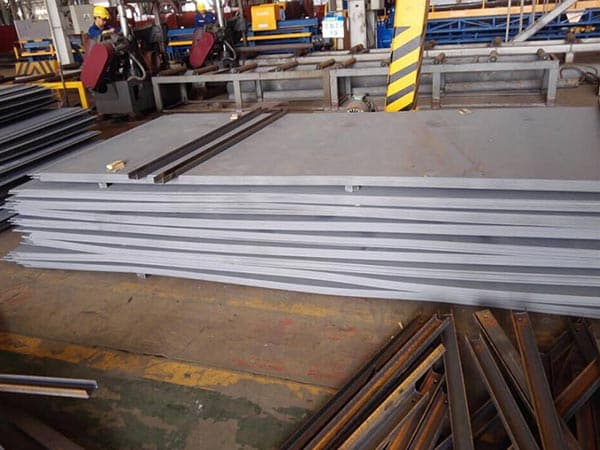
The Critical Role of Surface Integrity in S960MC High-Strength Steel
S960MC is a thermomechanically rolled, ultra-high-strength steel designed specifically for cold forming applications where weight reduction and high load-bearing capacity are paramount. In the context of automobile wheels, particularly for heavy-duty commercial vehicles and specialized transport, the surface quality of S960MC is not merely a cosmetic concern; it is a fundamental requirement for structural safety. The S960MC automobile wheels steel surface test encompasses a series of rigorous evaluations designed to detect micro-defects, measure decarburization, and ensure the material can withstand the cyclic stresses inherent in vehicular motion.
As automotive manufacturers push for lighter unsprung mass to improve fuel efficiency and battery range in electric vehicles, the thickness of wheel components decreases while the stress levels increase. This shift makes the surface of the steel the primary site for fatigue crack initiation. Therefore, understanding the nuances of surface testing for S960MC is essential for engineers and procurement specialists alike.
Chemical Composition and Its Impact on Surface Quality
The surface characteristics of S960MC are deeply rooted in its chemical metallurgy. Unlike traditional structural steels, S960MC utilizes a precise balance of micro-alloying elements such as Niobium (Nb), Vanadium (V), and Titanium (Ti) to achieve grain refinement during the thermomechanical rolling process.
| Element | Maximum Content (%) | Influence on Surface and Performance |
|---|---|---|
| Carbon (C) | 0.20 | Ensures hardness while maintaining weldability. |
| Manganese (Mn) | 2.20 | Improves hardenability and surface toughness. |
| Silicon (Si) | 0.60 | Prevents oxidation during rolling but affects scale adhesion. |
| Aluminum (Al) | 0.015 | Deoxidizer that helps in maintaining a clean surface matrix. |
| Nb + V + Ti | 0.22 | Grain refinement to prevent surface cracking during forming. |
Low impurity levels of Phosphorus (P) and Sulfur (S) are strictly controlled to prevent the formation of non-metallic inclusions. These inclusions, if present near the surface, act as stress concentrators that can lead to premature failure during the high-pressure forming of wheel rims and discs.
Comprehensive Surface Testing Protocols for S960MC
The surface test for S960MC is divided into several specialized categories, each targeting a specific type of potential failure mode. These tests ensure that the steel plate delivered to the wheel manufacturer is free from defects that could be exacerbated by stamping, spinning, or welding.
1. Non-Destructive Testing (NDT) Methods
For ultra-high-strength steels like S960MC, visual inspection is insufficient. Advanced NDT methods are employed to identify internal and sub-surface discontinuities:
- Magnetic Particle Inspection (MPI): Used to detect surface and near-surface flaws such as seams, laps, or cooling cracks. Given the ferromagnetic nature of S960MC, MPI is highly effective at highlighting linear defects that could propagate under fatigue loading.
- Eddy Current Testing: This is often used in automated production lines to scan the surface of the steel coils. It is particularly sensitive to changes in surface conductivity caused by micro-cracks or localized heat-affected zones.
- Ultrasonic Testing (UT): While primarily used for internal soundness, high-frequency UT can detect laminations near the surface that might cause delamination during the wheel-spinning process.
2. Surface Roughness and Topography
The surface roughness (Ra) of S960MC is critical for the subsequent coating processes. Automobile wheels are subjected to harsh environments, including salt spray and road debris. A surface that is too rough may lead to uneven paint application, while a surface that is too smooth may suffer from poor adhesion. Testing involves profilometer measurements to ensure the Rz and Ra values stay within the narrow tolerances required for high-performance automotive primers.
3. Decarburization Depth Analysis
Decarburization occurs when carbon is lost from the surface layer of the steel during high-temperature processing. For S960MC, a decarburized layer significantly reduces the surface hardness and fatigue strength. The surface test involves metallographic examination of cross-sections to ensure the total decarburization depth does not exceed the limits specified in standards like EN 10149-2. A soft surface layer on a 960 MPa yield strength core creates a dangerous gradient that invites crack initiation.
Mechanical Performance and Surface Integrity Interaction
The mechanical properties of S960MC are world-class, but they are highly sensitive to surface condition. Any surface notch or scratch acts as a multiplier for the high operational stresses found in wheel applications.
| Property | Value (Typical) | Surface Sensitivity Factor |
|---|---|---|
| Yield Strength (ReH) | Min 960 MPa | High: Surface defects reduce effective load area. |
| Tensile Strength (Rm) | 980 - 1250 MPa | Moderate: Controlled by bulk chemistry. | Min 7% | Critical: Surface cracks lead to necking instability. |
| Impact Energy (-20°C) | Min 27 J | Very High: Surface notches trigger brittle transition. |
The bendability of S960MC is another critical factor. During the manufacturing of a wheel rim, the steel undergoes severe cold deformation. Surface tests must confirm that the material can be bent 180 degrees over a specific mandrel radius without showing signs of surface fissuring or "orange peel" texture, which indicates coarse grain structure near the surface.
Processing Performance: Welding and Forming
When S960MC is used for wheels, it is almost always subjected to welding (either flash butt welding for rims or arc welding for discs). The surface test must ensure the absence of oil, rust, or heavy scale, which could introduce hydrogen embrittlement or porosity into the weld pool.
Furthermore, the Cold Forming performance of S960MC is exceptional for its strength level. However, this requires the steel to have a very clean surface. During the stamping of wheel discs, the friction between the die and the steel surface can reach extreme levels. If the surface oxide layer (scale) is not tightly adherent or is too thick, it can break off, causing abrasive wear on the tooling and creating surface depressions on the finished part.
Environmental Adaptability and Fatigue Life
Automobile wheels are safety-critical components that must survive millions of cycles of stress. S960MC's surface quality directly dictates its fatigue limit. In high-cycle fatigue, the crack usually starts at the surface. Therefore, the surface test includes evaluating the resistance to atmospheric corrosion. Even minor pitting corrosion on the surface of an S960MC wheel can reduce its fatigue life by over 50%.
The thermomechanical rolling process creates a fine-grained ferritic-bainitic microstructure that provides a natural barrier to crack propagation. However, this benefit is only realized if the surface remains intact. Modern surface testing protocols for S960MC now often include salt spray testing on pre-stressed samples to simulate the real-world conditions of a wheel operating in wintry, salted road environments.
Advanced Applications in the Automotive Industry
The demand for S960MC is surging in the heavy truck industry and the burgeoning electric vehicle (EV) sector. For heavy trucks, replacing traditional S355 or S460 wheels with S960MC allows for a significant reduction in wall thickness, translating to hundreds of kilograms of weight savings across a multi-axle vehicle. This increases payload capacity and reduces fuel consumption.
In the EV sector, the battery weight necessitates lightweighting in every other possible component. S960MC wheels provide the necessary strength to handle the high torque of electric motors while keeping the weight low. The surface test ensures that these thinner, high-stress components remain reliable throughout the vehicle's lifespan, even under the increased weight of the battery pack.
Strict adherence to surface testing standards ensures that S960MC remains a reliable material for the next generation of automotive engineering. By identifying defects at the raw material stage, manufacturers can avoid costly recalls and ensure the safety of road users worldwide. The integration of digital scanning and AI-driven defect recognition is the next frontier in S960MC surface testing, promising even higher levels of precision and reliability in the years to come.
Leave a message