
What is the mechanical properties of S500MC steel for car shell?
Detailed exploration of S500MC steel mechanical properties for automotive shells. Learn about its yield strength, elongation, formability, and welding performance in modern vehicle manufacturing.
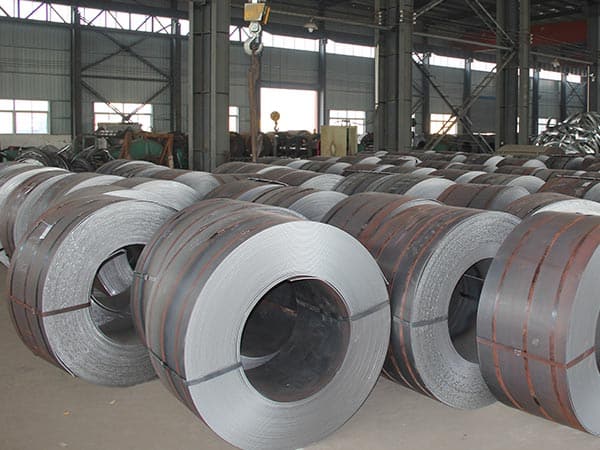
Introduction to S500MC: The Backbone of Modern Automotive Structural Integrity
S500MC is a high-yield-strength, cold-forming steel produced via a thermomechanically rolled process, primarily governed by the EN 10149-2 standard. In the context of automotive engineering, particularly for car shells, chassis, and structural reinforcements, this material represents a critical balance between weight reduction and structural safety. As vehicle manufacturers face increasing pressure to improve fuel efficiency while meeting stringent crash-test standards, S500MC has emerged as a preferred High-Strength Low-Alloy (HSLA) grade.
The 'S' in S500MC stands for structural steel, '500' refers to the minimum yield strength of 500 MPa, 'M' indicates its thermomechanical rolling condition, and 'C' signifies its suitability for cold forming. Unlike traditional carbon steels, S500MC achieves its superior mechanical profile through precise micro-alloying and controlled cooling rates, making it indispensable for the complex geometries required in modern automotive designs.
The Core Mechanical Properties of S500MC
The mechanical performance of S500MC is defined by its ability to withstand significant loads while maintaining enough ductility to be shaped into intricate car shell components. The following table outlines the standard mechanical requirements as per EN 10149-2:
| Property | Value Range | Unit |
|---|---|---|
| Yield Strength (ReH) | Min 500 | MPa |
| Tensile Strength (Rm) | 550 - 700 | MPa |
| Elongation (A80mm) | Min 12 (t < 3mm) | % |
| Elongation (A5) | Min 14 (t ≥ 3mm) | % |
| Bending Radius (180°) | 0.5t to 1.0t | mm |
Yield Strength: The 500 MPa yield threshold ensures that the car shell can resist permanent deformation under operational stresses. This high yield-to-tensile ratio allows engineers to use thinner gauges of steel without compromising the structural integrity of the vehicle frame, leading to significant mass savings.
Tensile Strength: With a range of 550 to 700 MPa, S500MC provides a robust safety margin. In the event of a collision, the car shell must absorb kinetic energy through controlled deformation. The tensile properties of S500MC ensure that the material dissipates energy effectively before reaching its fracture point.
Ductility and Elongation: Despite its high strength, S500MC maintains an elongation of at least 12-14%. This ductility is vital for the stamping and deep-drawing processes used to manufacture car shells. It prevents the formation of micro-cracks during the high-speed deformation common in automotive production lines.
Micro-Alloying and Its Influence on Performance
The exceptional mechanical properties of S500MC are not accidental. They are the result of a carefully curated chemical composition. By keeping the carbon content low (typically below 0.12%) and adding micro-alloying elements such as Niobium (Nb), Vanadium (V), and Titanium (Ti), the steel achieves a fine-grained microstructure.
- Grain Refinement: Niobium and Titanium impede grain growth during the rolling process. Finer grains lead to a simultaneous increase in both strength and toughness, a rare combination in metallurgy.
- Precipitation Hardening: Micro-alloys form carbonitride precipitates that further strengthen the ferrite matrix, allowing the steel to reach 500 MPa yield strength without the brittleness associated with high carbon levels.
- Low Carbon Equivalent (Ceq): The low alloy content ensures a low carbon equivalent, which is the primary factor behind S500MC’s excellent weldability.
Processability: Cold Forming and Bending
For a car shell, the ability to be formed into complex shapes like A-pillars, B-pillars, and cross-members is as important as the strength itself. S500MC is specifically designed for cold forming.
The material exhibits excellent cold-bending properties. For thicknesses less than 3mm, it can often be bent 180 degrees with a radius as small as 0.5 times the thickness (0.5t). This allows for tight radii in structural components, maximizing space efficiency within the vehicle layout. Furthermore, the consistent mechanical properties across the coil ensure predictable springback during stamping, which is crucial for maintaining dimensional tolerances in automated assembly.
Welding Performance in Automotive Assembly
Automotive shells are rarely single pieces; they are assemblies of hundreds of stamped parts joined primarily through spot welding, laser welding, or arc welding. S500MC excels in these environments because its low carbon content minimizes the risk of cold cracking in the Heat Affected Zone (HAZ).
When welding S500MC, the fine-grained structure remains relatively stable. Unlike some high-carbon quenched and tempered steels, S500MC does not suffer from significant softening in the HAZ, provided that the heat input is controlled. This ensures that the welded joints are nearly as strong as the base metal, maintaining the safety of the vehicle's "safety cage."
Environmental Adaptability and Fatigue Resistance
Car shells are subjected to diverse environmental conditions, from sub-zero temperatures to humid, corrosive coastal air. S500MC’s fine-grained structure provides superior low-temperature impact toughness compared to standard structural steels. This is critical for vehicles operating in cold climates, where brittle fracture could be catastrophic during an impact.
Furthermore, the fatigue resistance of S500MC is a major advantage. Automotive components undergo millions of vibration cycles during their lifespan. The homogenous microstructure of S500MC reduces the number of internal stress concentrators, thereby extending the fatigue life of the chassis and shell components. When combined with modern coating technologies like galvanization, S500MC provides a durable, long-lasting solution for the automotive industry.
Expanding the Application Horizon
While the car shell is a primary application, the mechanical prowess of S500MC extends its utility to various other high-stress sectors:
- Commercial Vehicles: Used in truck longitudinal beams and cross-members where high load-bearing capacity is required.
- Heavy Machinery: Crane arms and excavator components benefit from the weight-to-strength ratio of S500MC.
- Cold-Pressed Parts: Any structural component requiring a balance of high strength and excellent formability.
- Energy Sector: Support structures for solar panels and wind turbine internal components.
Strategic Advantages for Manufacturers
Choosing S500MC for car shell production offers a dual benefit: technical superiority and economic efficiency. By utilizing the 500 MPa yield strength, manufacturers can reduce the thickness of steel sheets by 15-25% compared to S355MC grades. This weight reduction directly translates to lower fuel consumption and reduced CO2 emissions, helping manufacturers meet global environmental regulations.
Moreover, the ease of processing S500MC reduces tool wear compared to ultra-high-strength steels (UHSS), lowering the total cost of ownership in the production cycle. Its reliable performance across different batches ensures that the automated welding and stamping robots can operate with minimal adjustments, maximizing throughput and reducing scrap rates.
Understanding the mechanical properties of S500MC is not just about knowing the numbers; it is about recognizing how those numbers enable safer, lighter, and more efficient vehicles. From its micro-alloyed chemistry to its exceptional cold-forming capabilities, S500MC remains a cornerstone material in the evolution of automotive architecture.
Leave a message