
What is the plate BS700MC cold forming steel beveling
Explore the technical intricacies of BS700MC cold forming steel beveling. This comprehensive guide covers mechanical properties, advanced beveling techniques, and high-strength applications in heavy industry to optimize your fabrication process.
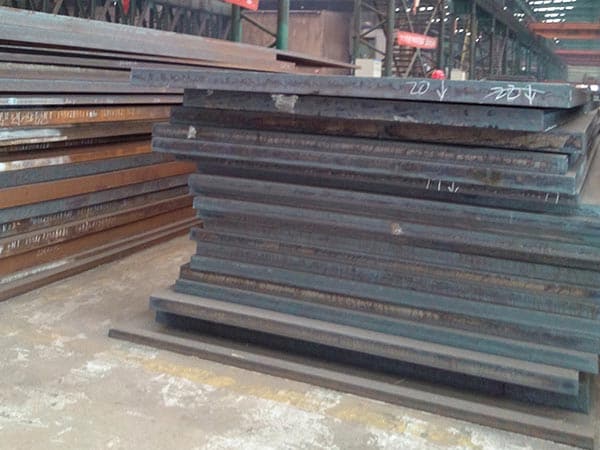
Understanding the Essence of BS700MC High-Strength Steel
BS700MC is a high-strength, thermomechanically rolled steel specifically designed for cold forming processes. This material belongs to the category of High Strength Low Alloy (HSLA) steels, governed by standards such as EN 10149-2. The "700" in its designation refers to its minimum yield strength of 700 MPa, a characteristic that allows for significant weight reduction in structural components without compromising safety or integrity. The "MC" suffix denotes its thermomechanical rolling process and its suitability for cold forming (C). Understanding what BS700MC plate beveling entails requires a deep dive into how this material reacts to edge preparation and how its unique microstructure influences subsequent manufacturing steps.
The manufacturing process of BS700MC involves controlled rolling and rapid cooling, which creates a fine-grained ferrite-pearlite or bainitic microstructure. This grain refinement is the secret behind its exceptional strength-to-weight ratio and its ability to be bent or folded at tight radii despite its high hardness. When we discuss beveling this specific grade, we are addressing the preparation of the plate edges for welding, a process critical for ensuring full penetration and structural reliability in heavy-duty applications.
The Technical Significance of Beveling BS700MC Plates
Beveling is the process of creating an angled edge on a steel plate. For a material as robust as BS700MC, beveling is not merely a geometric adjustment; it is a critical metallurgical preparation. The goal is to facilitate high-quality weld joints that can match the base metal's 700 MPa yield strength. Because BS700MC is often used in thinner sections to save weight, the precision of the bevel determines the heat input required during welding. Excess heat can lead to grain growth in the heat-affected zone (HAZ), which potentially reduces the local yield strength below the specified 700 MPa.
Common bevel profiles for BS700MC include V-grooves, X-grooves, and J-grooves. The choice depends on the plate thickness and the welding process (e.g., MAG, SAW, or Laser). Given the high strength of the material, mechanical beveling methods like milling are often preferred over thermal cutting to minimize the initial thermal impact on the edge before the actual welding takes place.
Chemical Composition and Its Influence on Processability
The performance of BS700MC during beveling and subsequent welding is dictated by its precise chemical balance. Unlike traditional carbon steels, BS700MC utilizes micro-alloying elements to achieve its properties.
| Element | Maximum Content (%) | Functional Role |
|---|---|---|
| Carbon (C) | 0.12 | Ensures weldability and reduces brittleness. |
| Manganese (Mn) | 2.10 | Enhances strength and hardenability. |
| Silicon (Si) | 0.50 | Acts as a deoxidizer and solid solution strengthener. |
| Niobium (Nb) | 0.09 | Promotes grain refinement during rolling. |
| Titanium (Ti) | 0.22 | Stabilizes nitrogen and prevents grain growth. |
| Vanadium (V) | 0.20 | Provides precipitation hardening. |
This low carbon equivalent (CEV) is what makes BS700MC exceptionally friendly to cold forming and welding. When beveling, the low carbon content ensures that the edge does not transform into hard, brittle martensite even if a thermal cutting process is used, though caution is still advised regarding the cooling rate.
Mechanical Properties: Why 700 MPa Matters
The mechanical profile of BS700MC is what sets it apart in the engineering world. It provides a balance of high yield strength, adequate elongation, and superior low-temperature toughness.
| Property | Value | Unit |
|---|---|---|
| Yield Strength (ReH) | Min 700 | MPa |
| Tensile Strength (Rm) | 750 - 950 | MPa |
| Elongation (A5) | Min 10 - 12 | % |
| Impact Energy (-20°C) | Min 40 (Typical) | J |
During the beveling process, the high tensile strength means that mechanical cutting tools (like milling inserts) experience higher wear rates compared to S355 or S235 grades. Fabricators must use high-performance carbide tools and optimize cutting speeds to maintain edge quality and dimensional accuracy.
Advanced Beveling Methods for BS700MC
Selecting the right beveling method is crucial for maintaining the integrity of the BS700MC plate. Each method has its pros and cons regarding speed, cost, and metallurgical impact.
- Mechanical Milling: This is the "gold standard" for BS700MC. It produces a clean, precise bevel without any heat-affected zone. Since the material's properties are derived from its thermomechanical history, avoiding heat during edge prep preserves the original microstructure.
- Plasma Beveling: A common industrial choice for speed. High-definition plasma can produce excellent results, but it leaves a thin oxide layer and a small HAZ. For BS700MC, the edges should be cleaned of oxides before welding to prevent inclusions.
- Laser Beveling: Ideal for thinner BS700MC plates. The concentrated energy source minimizes the HAZ significantly compared to plasma. Laser-cut edges are often ready for welding with minimal post-processing.
- Flame (Oxy-Fuel) Beveling: Generally discouraged for HSLA steels like BS700MC unless the plate is very thick. The high heat input can significantly alter the grain structure at the edge, leading to potential cracking during cold forming if the bevel is on a bend line.
Cold Forming Characteristics Post-Beveling
One of the primary reasons for choosing BS700MC is its cold forming capability. However, the condition of the beveled edge plays a vital role here. If a bevel is roughly cut or contains micro-cracks from a thermal process, these can act as stress concentrators during bending.
When bending BS700MC, the minimum bending radius is typically 2.0 to 2.5 times the plate thickness, depending on the orientation relative to the rolling direction. Beveling the edges helps distribute the stress during the folding of complex shapes, such as U-profiles for truck chassis. A smooth, beveled edge reduces the risk of edge cracking, which is a common failure mode in high-strength steel fabrication.
Applications in Heavy Industry
The synergy between BS700MC's strength and its processing versatility makes it indispensable in sectors where weight reduction is a priority.
- Mobile Cranes and Lifting Equipment: Telescopic booms require materials that can withstand immense stress while remaining light enough to be extended. Beveled BS700MC plates are welded into hexagonal or octagonal sections to provide maximum rigidity.
- Automotive and Transportation: Truck chassis frames, cross members, and side beams utilize BS700MC to increase payload capacity. The ability to bevel and weld these components into complex assemblies is a key design advantage.
- Agricultural Machinery: Modern farm equipment needs to be durable yet efficient. BS700MC is used in soil-working tools and structural frames where impact resistance and high strength are required.
- Construction Equipment: Earthmovers and excavators use BS700MC in structural areas to improve the durability of the machine's skeleton while reducing fuel consumption through lower overall weight.
Environmental Adaptability and Durability
BS700MC is engineered to perform in harsh environments. Its fine-grained structure provides excellent resistance to fatigue, which is critical for vehicles and machinery subjected to cyclic loading. Furthermore, its performance at low temperatures is superior to standard structural steels. While standard carbon steels might become brittle at sub-zero temperatures, BS700MC maintains its toughness, making it suitable for equipment operating in arctic or high-altitude conditions.
In terms of corrosion resistance, while BS700MC is not a weathering steel like Corten, its dense surface and uniform chemistry provide a good base for modern coating systems. Proper beveling ensures that welds are smooth and free of crevices, which are common starting points for localized corrosion.
Optimizing the Fabrication Workflow
To get the most out of BS700MC, fabricators should view beveling as part of a holistic system. Starting with high-quality plates from reputable mills ensures that the thermomechanical properties are consistent across the entire surface. During the beveling phase, utilizing CNC-controlled equipment ensures that the angles are precise, which is vital for automated welding processes like robotic MAG welding.
Post-beveling inspection is also recommended. Using dye penetrant or magnetic particle testing on the beveled edges can identify any surface discontinuities before they are buried in a weld bead. This proactive approach is especially important for BS700MC because repairing a weld in 700 MPa steel is significantly more complex than in mild steel, often requiring specialized preheating and strictly controlled cooling to avoid hydrogen cracking.
The successful integration of BS700MC into a project depends on respecting the material's limits while exploiting its strengths. By mastering the beveling process, engineers and fabricators can unlock the full potential of this high-performance steel, creating structures that are lighter, stronger, and more durable than ever before.
Leave a message