
What is the difference between S420MC pickled steel sheet and medium thick plate
A comprehensive comparison between S420MC pickled steel sheets and medium-thick plates, detailing their mechanical properties, surface quality, and industrial applications.
Understanding the Core Identity of S420MC Steel
S420MC is a high-yield-strength, thermomechanically rolled steel specifically designed for cold forming. According to the EN 10149-2 standard, the "S" denotes structural steel, "420" indicates a minimum yield strength of 420 MPa, and "MC" signifies its thermomechanically rolled condition (M) and suitability for cold forming (C). While the chemical composition remains consistent across different formats, the physical manifestations—specifically pickled sheets versus medium-thick plates—offer distinct advantages depending on the engineering requirements. Choosing between them involves evaluating surface integrity, dimensional precision, and the specific stresses the final component will endure.
Surface Quality and Aesthetic Differences
The most immediate difference lies in the surface finish. S420MC pickled steel sheet undergoes a chemical process where hot-rolled coils are passed through an acid bath (usually hydrochloric acid) to remove the iron oxide scale (the "black skin") formed during the high-temperature rolling process. This results in a clean, silver-grey, and smooth surface. Pickled sheets are typically oiled to prevent flash rusting. This smooth surface is ideal for subsequent processes like painting, powder coating, or electroplating, as it provides superior adhesion without the need for intensive mechanical descaling.
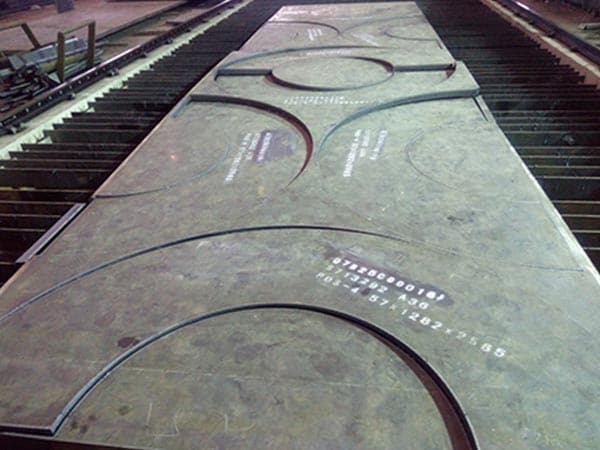
In contrast, S420MC medium thick plate is often supplied in its hot-rolled state unless specifically ordered as pickled. The hot-rolled surface is covered with a dark, tenacious oxide layer. While this layer provides a degree of natural protection against atmospheric corrosion, it is abrasive to tooling and can interfere with high-precision laser cutting or welding. For heavy structural applications where the plate will be sandblasted or primed after fabrication, the presence of mill scale is less of a concern than it is for precision automotive components.
Dimensional Range and Tolerance Precision
Thickness is a primary differentiator. S420MC pickled sheets are generally produced in thicknesses ranging from 1.5mm to 6.0mm, though some specialized mills can produce them up to 8.0mm. These are typically processed from coils. Because they are processed through continuous pickling lines and leveling machines, they exhibit excellent flatness and tight thickness tolerances.
Medium thick plates of S420MC usually refer to thicknesses exceeding 6.0mm, often reaching up to 20mm or more. These plates are frequently produced via discrete plate mills or cut from heavy-gauge coils. While they maintain the high strength of the S420MC grade, the dimensional tolerances for plates are generally wider than those for pickled sheets. For engineers, this means that a pickled sheet offers more predictable performance in automated robotic welding cells where fit-up precision is critical.
Mechanical Properties and Internal Stress
Both formats share the same fundamental mechanical requirements, but the production route influences their internal stress profiles. The thermomechanical rolling process ensures a fine-grained microstructure, which is essential for achieving high yield strength while maintaining ductility.
| Property | S420MC Specification |
|---|---|
| Yield Strength (MPa) | Min 420 MPa |
| Tensile Strength (MPa) | 480 - 620 MPa |
| Elongation (A5, %) | Min 16% (Thickness < 3mm) / Min 19% (Thickness ≥ 3mm) |
| 180° Bending (Mandrel Diameter) | 0.5t to 1.5t (depending on thickness) |
Pickled sheets often undergo a "skin-pass" or leveling process after pickling, which helps to eliminate the yield point elongation and improves the flatness. This process can slightly increase the surface hardness but results in a more stable material for deep drawing or complex bending. Medium thick plates, due to their mass, retain more residual thermal stress from the cooling process, which might lead to slight warping during intensive machining or asymmetrical laser cutting.
Processing Performance: Laser Cutting and Welding
For manufacturers utilizing fiber laser cutting technology, the difference is significant. S420MC pickled sheets are the preferred choice for high-speed laser cutting. The absence of scale allows the laser beam to penetrate the metal consistently without the "popping" or beam reflection caused by uneven oxide layers. This results in a cleaner edge with minimal dross, often eliminating the need for secondary grinding.
When working with S420MC medium thick plate, the mill scale can act as an insulator or cause turbulence in the molten pool during cutting. While modern oxygen-assisted laser cutting can handle scale, it often requires slower speeds and higher power settings. In terms of welding, pickled surfaces require less preparation. Welding directly over mill scale on thick plates can introduce inclusions and porosity into the weld bead, necessitating pre-weld grinding of the joint area to ensure structural integrity.
Environmental Adaptability and Storage
The environmental suitability of these two formats depends on the storage conditions and the intended lifecycle of the part. Pickled and oiled S420MC sheets are sensitive to moisture; if the oil film is compromised, they will rust quickly. They must be stored in climate-controlled, dry environments. However, once fabricated and cleaned, they are the perfect substrate for high-performance coatings.
Medium thick plates with mill scale are more robust during outdoor transport and temporary storage. The scale acts as a sacrificial barrier. However, for long-term durability in heavy machinery or transport vehicles, the plate must eventually be descaled (usually via shot blasting) before painting. If the end-use environment is highly corrosive, the superior surface cleanliness of a pickled product ensures that protective coatings can reach their maximum service life without the risk of sub-film corrosion originating from trapped scale.
Industry-Specific Applications
The choice between pickled sheet and thick plate is often dictated by the industry. In the automotive sector, S420MC pickled sheets are ubiquitous for chassis components, suspension towers, and cross-members where weight reduction (lightweighting) and high-precision forming are paramount. The clean surface is essential for the high-volume cathodic dip painting (KTL/ED-coat) used in car manufacturing.
In the heavy machinery and construction equipment industry—such as the manufacturing of crane booms, excavator frames, and truck trailers—S420MC medium thick plates are the standard. These components require the sheer sectional modulus provided by thicker material to handle massive structural loads. In these cases, the raw strength of the 420 MPa yield point is more critical than the surface finish, as these large structures are typically shot-blasted in their entirety after assembly.
- Automotive: Chassis, brackets, and structural reinforcements (Pickled Sheet).
- Transportation: Truck frames, side rails, and cross beams (Both).
- Lifting Equipment: Crane arms and telescopic sections (Medium Thick Plate).
- Agricultural Machinery: Plow frames and harvester supports (Medium Thick Plate).
- Storage Systems: High-strength racking and shelving (Pickled Sheet).
Conclusion on Selection Criteria
When deciding between S420MC pickled sheet and medium thick plate, the engineer must balance the cost of the raw material against the cost of processing. Pickled steel carries a price premium due to the additional acid treatment and oiling, but it significantly reduces costs in laser cutting, welding preparation, and final painting. Medium thick plate is more economical for heavy-duty structural parts where thickness is the primary requirement and surface aesthetics are secondary. Understanding these nuances ensures that the selected material not only meets the safety factors of the design but also optimizes the efficiency of the manufacturing floor.
Leave a message