
What are the mechanical properties of S355MC engineering car steel coil
A comprehensive guide to the mechanical properties, chemical composition, and processing performance of S355MC engineering car steel coil for automotive and heavy machinery industries.
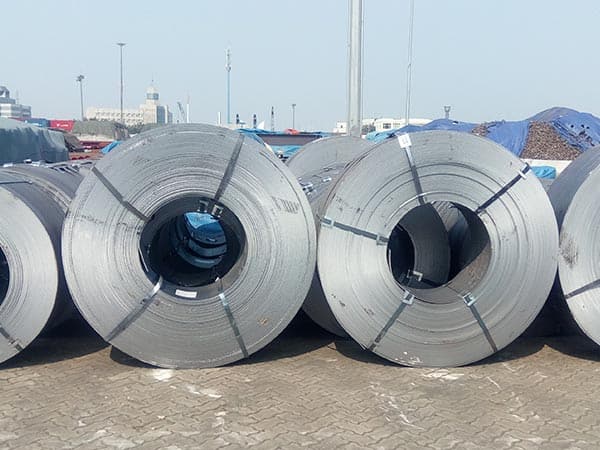
Defining S355MC: The High-Strength Cold-Forming Specialist
S355MC is a high-yield strength, thermomechanically rolled steel specifically designed for cold forming. Governed by the EN 10149-2 standard, this material represents a significant leap in metallurgy for the automotive and engineering sectors. The "S" denotes structural steel, "355" indicates a minimum yield strength of 355 MPa, and "MC" signifies that the material is thermomechanically rolled (M) and intended for cold forming (C). This combination of properties makes it a cornerstone for manufacturers seeking to reduce vehicle weight without compromising structural integrity.
The Core Mechanical Properties of S355MC
The mechanical profile of S355MC is engineered to balance extreme strength with the flexibility required for complex shaping. Unlike traditional structural steels, S355MC maintains its performance even when subjected to intense cold-working processes.
| Property | Value (Thickness ≤ 16mm) |
|---|---|
| Yield Strength (ReH) | Minimum 355 MPa |
| Tensile Strength (Rm) | 430 - 550 MPa |
| Elongation (A80mm) | ≥ 19% (for thickness < 3mm) |
| Elongation (A5) | ≥ 23% (for thickness ≥ 3mm) |
Yield Strength: The 355 MPa threshold ensures that the steel can withstand significant loads before permanent deformation occurs. This is critical for automotive frames that must endure constant stress and vibration.
Tensile Strength: Ranging from 430 to 550 MPa, the tensile strength provides a safety margin against catastrophic failure. The relatively narrow range between yield and tensile strength indicates a material that is highly predictable during engineering calculations.
Ductility and Elongation: With elongation values reaching 23% for thicker plates, S355MC exhibits remarkable plasticity. This allows the steel to be bent, stretched, and formed into intricate automotive components without cracking or localized thinning.
Chemical Composition and Micro-Alloying Strategy
The superior mechanical properties of S355MC are a direct result of its refined chemical makeup. By utilizing a low-carbon design and incorporating micro-alloying elements, steelmakers achieve a fine-grained microstructure that traditional hot-rolled steels cannot match.
| Element | Maximum Percentage (%) |
|---|---|
| Carbon (C) | 0.12 |
| Manganese (Mn) | 1.50 |
| Silicon (Si) | 0.50 |
| Phosphorus (P) | 0.025 |
| Sulfur (S) | 0.020 |
| Aluminum (Al) | 0.015 (min) |
| Niobium (Nb) / Titanium (Ti) | 0.09 (combined) |
Low Carbon Content: At a maximum of 0.12%, the low carbon content is the primary driver behind the material's exceptional weldability. It prevents the formation of brittle martensite in the heat-affected zone (HAZ), ensuring that welded joints remain as tough as the base metal.
Micro-Alloying (Nb, V, Ti): The addition of Niobium, Vanadium, or Titanium facilitates grain refinement during the thermomechanical rolling process. Smaller grains result in higher strength and better low-temperature toughness, a phenomenon described by the Hall-Petch relationship.
Exceptional Processing Performance
Engineering car steel coils must do more than just hold weight; they must be easy to manufacture. S355MC excels in several key processing areas:
- Cold Bending and Folding: S355MC is specifically optimized for tight bending radii. It can be bent to 180 degrees over a mandrel with a radius as small as 0.5 to 1.5 times the material thickness (depending on orientation), making it ideal for U-beams and complex brackets.
- Advanced Weldability: Due to its low Carbon Equivalent (CEV), S355MC can be welded using all standard methods, including MIG, TIG, and submerged arc welding. Preheating is generally unnecessary for standard thicknesses, which significantly reduces production time.
- Laser and Plasma Cutting: The clean chemical composition and consistent thickness of S355MC coils ensure high-quality edges during thermal cutting. The low sulfur content minimizes the risk of edge cracking during subsequent forming.
Environmental Adaptability and Fatigue Resistance
Vehicles and engineering machinery operate in harsh environments, from sub-zero temperatures to high-vibration construction sites. S355MC provides a robust solution for these challenges.
Impact Toughness: While the "MC" designation does not always mandate a specific Charpy V-notch test unless requested, the fine-grained structure inherently improves low-temperature performance. This prevents brittle fractures in cold climates, a vital safety feature for transport trucks and cranes.
Fatigue Strength: The consistency of the thermomechanical rolling process ensures that the steel has fewer internal defects. This uniformity translates to superior fatigue resistance, allowing components like truck chassis to withstand millions of cycles of loading and unloading without developing stress cracks.
Comparative Advantage: S355MC vs. s355jr
A common point of confusion is the difference between S355MC and S355JR. While both share a 355 MPa yield strength, their applications differ vastly. S355JR is a standard hot-rolled structural steel used in buildings and bridges. It has higher carbon content and lower ductility. S355MC, conversely, is a high-tech evolution. It is thinner, lighter, and much more capable of being cold-formed into complex shapes. For automotive engineering, S355MC is the preferred choice because it allows for weight reduction (down-gauging) while maintaining the same structural safety levels.
Broad Industry Applications
The mechanical versatility of S355MC has led to its widespread adoption across multiple high-stakes industries:
- Automotive Manufacturing: Used extensively for chassis frames, longitudinal beams, cross members, and cold-pressed structural parts for passenger cars and commercial trucks.
- Heavy Machinery: Essential for the booms of mobile cranes, components of earth-moving equipment, and agricultural machinery where high strength-to-weight ratios are critical.
- Transportation Infrastructure: Utilized in the construction of trailers, semi-trailers, and specialized transport containers that require high payload capacities.
- Storage Solutions: High-load racking systems and cold-formed profiles for industrial warehouses benefit from the material's predictability and strength.
Technical Considerations for Procurement
When sourcing S355MC engineering car steel coil, it is vital to verify the surface finish and dimensional tolerances. Most automotive applications require a pickled and oiled (P&O) surface to ensure the steel is free of mill scale, which protects tooling during the stamping process and provides a clean surface for painting or galvanizing. Furthermore, ensuring the coil adheres to EN 10149-2 guarantees that the mechanical properties are consistent throughout the entire length of the coil, preventing springback issues during automated production lines.
By leveraging the high yield strength and excellent formability of S355MC, engineers can push the boundaries of modern design, creating vehicles and machines that are lighter, more efficient, and incredibly durable.
Leave a message