
Top ten alloy steel S700MC steel exporters in Brunei
Explore the technical excellence and market dynamics of S700MC high-strength steel in Brunei. This guide covers mechanical properties, processing techniques, and sourcing strategies from top exporters.
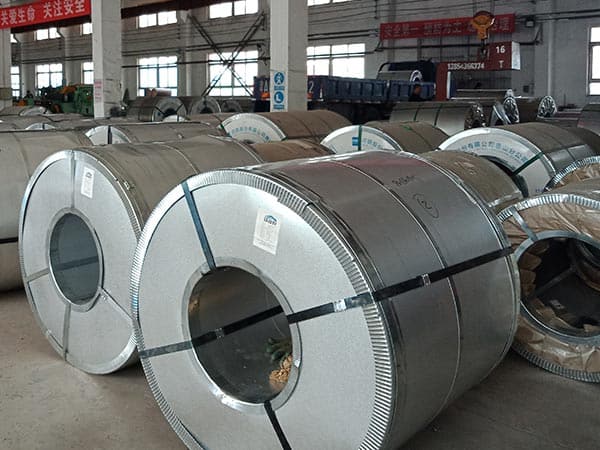
The Evolution of High-Strength Steel: Understanding S700MC
S700MC is a high-strength, low-alloy (HSLA) steel that has redefined the possibilities of modern structural engineering. Classified under the EN 10149-2 standard, this thermomechanically rolled steel is designed for cold forming, offering a minimum yield strength of 700 MPa. The "MC" suffix denotes its thermomechanical rolling process (M) and its suitability for cold forming (C). For industries in Brunei, ranging from offshore oil and gas infrastructure to heavy-duty transport, S700MC provides an unparalleled strength-to-weight ratio that facilitates the design of lighter, more efficient structures without sacrificing safety or durability.
The manufacturing process of S700MC involves precise temperature control during rolling, which creates a fine-grained microstructure. This grain refinement is the secret behind its exceptional toughness and weldability. Unlike traditional quenched and tempered steels, S700MC achieves its strength through micro-alloying elements such as Niobium (Nb), Vanadium (V), and Titanium (Ti). These elements form carbides and nitrides that pin grain boundaries, preventing grain growth and ensuring a uniform, high-performance material. This makes it a preferred choice for Brunei's demanding industrial landscape, where reliability is non-negotiable.
Mechanical Properties and Performance Benchmarks
When evaluating S700MC, the primary focus is often its yield strength, but its utility extends far beyond simple load-bearing capacity. The material exhibits a tensile strength between 750 and 950 MPa, providing a significant safety margin for dynamic loads. Furthermore, its elongation properties (typically 10% to 12% depending on thickness) allow for complex bending and shaping, which is critical for manufacturing chassis components and crane arms.
| Property | Value (Metric) | Significance for Brunei Projects |
|---|---|---|
| Minimum Yield Strength | 700 MPa | Allows for thinner sections and weight reduction. |
| Tensile Strength | 750 - 950 MPa | Ensures structural integrity under extreme stress. |
| Minimum Elongation (A5) | 12% (t < 3mm) | Facilitates precise cold forming and bending. |
| Impact Strength | 40J at -20°C | Critical for safety in varying environmental conditions. |
The impact toughness of S700MC is particularly noteworthy. While Brunei is a tropical region, many of the components manufactured using S700MC, such as shipping containers or offshore equipment, may be exported to colder climates or subjected to cryogenic stresses in liquefied natural gas (LNG) processing. The ability of S700MC to maintain ductility at sub-zero temperatures ensures that structures do not suffer from brittle fracture, a common failure mode in lower-grade steels.
Advanced Processing: Welding and Cold Forming
One of the most significant advantages of S700MC is its excellent weldability. Due to its low carbon equivalent (CEV), the steel is less susceptible to cold cracking in the heat-affected zone (HAZ). For exporters supplying the Brunei market, providing technical guidance on welding parameters is essential. Using low-hydrogen welding consumables and maintaining controlled heat input ensures that the fine-grained structure of the base metal is preserved, maintaining the integrity of the joint.
- Cold Forming: S700MC can be bent to very tight radii. For plates under 3mm, a minimum bending radius of 1.0 times the thickness (1.0t) is often achievable, provided the bending is performed transverse to the rolling direction.
- Cutting: The material is highly responsive to laser, plasma, and waterjet cutting. Its clean surface and uniform composition result in minimal dross and high-precision edges.
- Surface Treatment: While S700MC has moderate atmospheric corrosion resistance, it is frequently galvanized or painted for use in Brunei's humid, saline maritime environment.
Fabricators in Brunei must account for "springback" when cold forming S700MC. Because of its high yield strength, the material tends to return toward its original shape more than mild steel. This requires sophisticated CNC press brakes and experienced operators to ensure dimensional accuracy. Top exporters often provide springback charts and forming simulations to assist their Bruneian partners in optimizing their production lines.
Sourcing Strategy: Identifying Top Exporters for Brunei
Brunei's strategic location in Southeast Asia makes it a hub for high-quality steel imports. When identifying the top ten alloy steel S700MC exporters for this market, several factors come into play: logistical efficiency, certification standards, and technical support. The top tier of exporters typically includes global giants and specialized stockholders who can manage the complexities of international trade and Brunei's specific customs requirements.
Key exporters often hail from regions with advanced metallurgical industries, such as Western Europe (Germany, Sweden), East Asia (Japan, South Korea, China), and neighboring ASEAN partners. These exporters distinguish themselves by offering EN 10204 3.1 or 3.2 certification, ensuring full traceability from the melt shop to the final delivery at Muara Port. For a Brunei-based procurement officer, the "top ten" list is not just about price; it is about the reliability of the supply chain and the metallurgical consistency of the S700MC plates.
Environmental Adaptability in Tropical Climates
Brunei's climate is characterized by high humidity and constant exposure to salt spray in coastal areas. While S700MC is primarily valued for its mechanical strength, its performance in these conditions is a critical consideration. The low impurity content (low sulfur and phosphorus) in S700MC reduces the number of initiation sites for localized corrosion, such as pitting. However, for long-term exposure, protective coatings are mandatory.
The interaction between high-strength steel and protective coatings is a specialized area of knowledge. S700MC's fine surface finish, resulting from the thermomechanical rolling process, provides an excellent substrate for epoxy primers and zinc-rich coatings. This synergy ensures that the structural components of a crane or a bridge in Bandar Seri Begawan remain corrosion-free for decades, maximizing the return on investment for infrastructure projects. Exporters who understand these environmental nuances provide significant value-add to their Bruneian clients.
Applications Driving Demand in Brunei
The demand for S700MC in Brunei is driven by the nation's push for industrial diversification and infrastructure modernization. The oil and gas sector remains the largest consumer, utilizing S700MC for the construction of offshore support vessels, modular skids, and transport racks. The high strength of the material allows for the design of lighter equipment, which is easier to lift and transport via sea, directly reducing operational costs.
Beyond energy, the logistics and transportation sector in Brunei is increasingly adopting S700MC for trailer chassis and heavy-duty truck bodies. By replacing S355MC with S700MC, manufacturers can reduce the weight of a trailer frame by up to 30%. This weight saving translates directly into higher payloads or improved fuel efficiency, aligning with global trends toward sustainable transport. Additionally, the construction of large-scale infrastructure, such as bridges and high-rise industrial complexes, benefits from the reduced material volume required when using 700 MPa steel, simplifying foundation requirements and lowering overall carbon footprints.
Strategic Procurement Insights
Navigating the global market for S700MC requires a deep understanding of market cycles and regional manufacturing capacities. For Bruneian businesses, establishing long-term relationships with reputable exporters is more beneficial than spot-market purchasing. This ensures a steady supply of material that meets consistent quality standards, which is vital for maintaining production schedules in complex engineering projects.
Technical documentation is another cornerstone of strategic procurement. A top-tier exporter will provide comprehensive data sheets, including cooling rate curves and CCT diagrams, which are invaluable for welding engineers. Furthermore, as Brunei moves toward more digitalized construction workflows (BIM), having accurate material property data for S700MC allows for more precise structural modeling and finite element analysis (FEA). This level of technical integration is what separates the leading exporters from mere commodity traders.
As the global steel industry shifts toward "Green Steel," many top exporters are now offering S700MC produced via Electric Arc Furnaces (EAF) powered by renewable energy. For Brunei, a nation committed to environmental stewardship, sourcing low-carbon S700MC can help meet national sustainability goals. This adds another layer to the selection criteria for exporters, as the carbon footprint of the steel becomes as important as its yield strength.
Leave a message