
What are the advantages of high strength en 10149-2 s700mc equivalent
Discover the technical advantages of EN 10149-2 S700MC equivalent steels. This guide covers mechanical properties, cold forming, welding, and industry applications for high-strength steel.
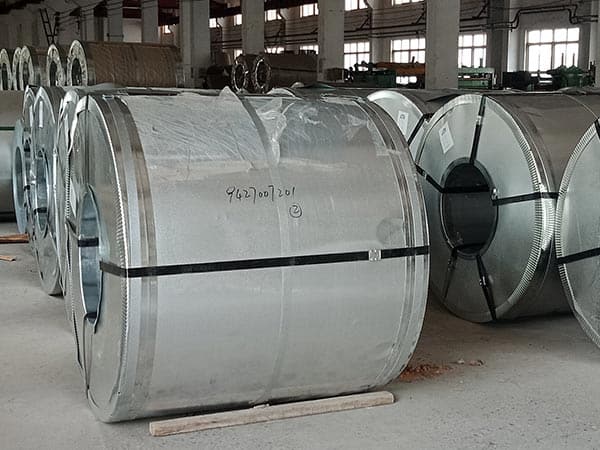
Defining the Superiority of S700MC High-Strength Steel
In the modern engineering landscape, the drive for efficiency, weight reduction, and structural integrity has positioned EN 10149-2 S700MC as a cornerstone material. S700MC is a thermomechanically rolled, high-yield-strength steel designed specifically for cold forming. The "S" denotes structural steel, "700" represents the minimum yield strength of 700 MPa, and "MC" indicates its thermomechanical processing history. Understanding the advantages of S700MC and its equivalents requires a deep dive into its metallurgical composition and its performance under rigorous industrial conditions.
The primary appeal of S700MC equivalents lies in their ability to replace traditional structural steels while significantly reducing the thickness of the material without compromising safety. This transition is not merely a material swap; it is a fundamental shift in design philosophy that impacts fuel efficiency, payload capacity, and manufacturing costs.
Exceptional Mechanical Properties and Weight Optimization
The most immediate advantage of S700MC equivalent steels is the high strength-to-weight ratio. With a minimum yield strength of 700 MPa, these steels are nearly double the strength of conventional S355 structural steel. This allows engineers to design thinner sections that can withstand the same or higher loads.
- Yield Strength: Minimum 700 MPa for thicknesses up to 16mm, ensuring high resistance to permanent deformation.
- Tensile Strength: Ranges between 750 and 950 MPa, providing a robust safety margin for structural components.
- Elongation: Despite its high strength, S700MC maintains a minimum elongation of 10-12% (depending on thickness), which is critical for absorbing energy during impacts.
By utilizing these properties, manufacturers in the transportation and crane industries can reduce the dead weight of vehicles and equipment by up to 30-40%. This weight reduction translates directly into lower CO2 emissions and higher operational profitability.
Advanced Cold Forming and Fabrication Versatility
A common misconception is that higher strength leads to poor formability. However, EN 10149-2 S700MC is engineered specifically for cold forming. Its low carbon content and fine-grained microstructure, achieved through thermomechanical rolling, allow for tight bending radii without cracking.
The material's consistency in thickness and surface quality ensures that automated bending and laser cutting processes remain stable. This predictability is vital for high-volume production lines where downtime due to material variance is costly. S700MC equivalents exhibit minimal spring-back compared to other high-strength materials, allowing for tighter tolerances in complex geometries like chassis rails and boom sections.
| Property | S700MC (EN 10149-2) | ASTM A1011 Grade 100 (Equivalent) | Q700D (GB/T 1591 Equivalent) |
|---|---|---|---|
| Yield Strength (min) | 700 MPa | 690 MPa | 700 MPa | Tensile Strength | 750-950 MPa | 760 MPa (min) | 750-920 MPa | Elongation (min) | 12% (t < 3mm) | 12% | 12% | Impact Energy (-20°C) | 40 J (optional) | N/A | 40 J |
Superior Weldability and Joining Efficiency
The chemical composition of S700MC is carefully controlled, featuring low Carbon Equivalent (CEV) values. This makes it exceptionally weldable using standard methods such as MIG/MAG, submerged arc welding, and laser welding. Unlike older generations of high-strength steels, S700MC does not typically require pre-heating, which significantly reduces fabrication time and energy costs.
The fine-grained structure is maintained even in the Heat Affected Zone (HAZ), provided that the heat input is controlled within recommended limits. This ensures that the welded joint retains the high strength and toughness of the base metal, preventing brittle failures in critical structural junctions.
Environmental Adaptability and Low-Temperature Toughness
High-strength steels must often perform in harsh environments, from the freezing temperatures of arctic mining sites to the vibration-heavy conditions of off-road construction. S700MC equivalent steels are often specified with guaranteed impact toughness at -20°C or even -40°C. This ensures that the material remains ductile and resists cleavage fracture even under dynamic loading in extreme cold.
Furthermore, the fine-grained microstructure provides better resistance to atmospheric corrosion compared to standard carbon steels, although protective coatings are still recommended for long-term exposure. The durability of S700MC ensures a long service life for equipment, reducing the frequency of repairs and replacements.
Strategic Industry Applications
The advantages of S700MC equivalent steels are leveraged across multiple high-stakes industries where performance and weight are critical. These include:
- Automotive and Transportation: Long-haul truck chassis, trailers, and side-impact beams benefit from the weight savings, allowing for higher payloads.
- Lifting and Handling: Telescopic cranes, mobile cranes, and aerial platforms utilize S700MC to achieve greater reach and lifting capacity without increasing the weight of the base vehicle.
- Agricultural Machinery: Lightening the frame of large harvesters and seeders reduces soil compaction while maintaining the rigidity needed for heavy-duty farming.
- Mining and Construction: Earthmoving equipment and dump truck bodies use high-strength steel to resist the abrasive and high-impact forces of daily operations.
Economic and Life-Cycle Benefits
While the per-ton price of S700MC may be higher than S355, the total cost of ownership is often lower. Because less steel is required to achieve the same structural performance, the total weight of purchased material decreases. Additionally, reduced welding volumes (due to thinner plates) and the elimination of pre-heating contribute to lower labor and consumable costs.
From a sustainability perspective, the use of S700MC supports the circular economy. Thinner, lighter structures require less energy to produce, transport, and operate. At the end of the product's life cycle, S700MC is fully recyclable, maintaining its value as high-quality scrap for future steel production.
Key Considerations for Material Selection
When selecting an S700MC equivalent, it is essential to verify that the substitute meets the specific requirements of the application, particularly regarding impact toughness and bendability. Standards like ASTM A1011 or GB/T 1591 offer similar yield strengths, but the thermomechanical processing parameters may vary, affecting the material's behavior during complex forming operations. Consulting with a technical steel expert ensures that the chosen grade aligns with the specific welding procedures and design codes of your project.
The evolution of EN 10149-2 S700MC represents a peak in metallurgical engineering, offering a perfect balance of strength, ductility, and processability. By integrating these high-strength steels into modern designs, industries can achieve unprecedented levels of efficiency and durability, meeting the rigorous demands of today's global market.
Leave a message