
What are the equivalent steel grades of en 10149-2 hot rolled pickled and oiled steel coil?
A comprehensive technical guide on EN 10149-2 hot rolled pickled and oiled steel coil equivalents, covering mechanical properties, chemical composition, and global standards like ASTM, JIS, and GB.
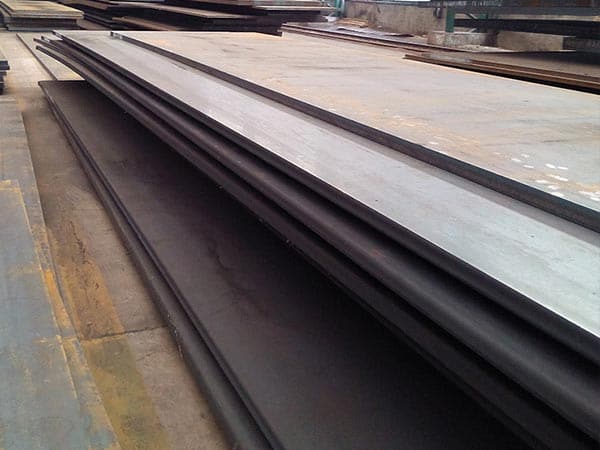
Understanding the EN 10149-2 Standard for High Yield Strength Steels
EN 10149-2 specifies the technical delivery conditions for flat products made of high yield strength steels for cold forming. These steels are specifically produced using a thermomechanical rolling (TMCP) process, which allows for a fine-grained microstructure that combines high strength with excellent toughness and formability. The "MC" designation in grades like S355MC or S700MC indicates that the steel is thermomechanically rolled (M) and is intended for cold forming (C). When these coils undergo the pickling and oiling process (HRPO), the surface scale is removed via an acid bath, and a thin layer of oil is applied to prevent oxidation, making them ideal for precision laser cutting and automated welding lines.
The significance of EN 10149-2 lies in its ability to offer weight reduction without compromising structural integrity. By utilizing higher yield strengths, manufacturers can use thinner gauges of steel to achieve the same load-bearing capacity as thicker, conventional structural steels like S235JR or s355jr. This transition is critical for the automotive and heavy machinery industries where fuel efficiency and payload capacity are paramount.
The Significance of Pickling and Oiling (HRPO) for EN 10149-2 Coils
Hot rolled steel naturally develops a dark, flaky oxide layer known as mill scale. For high-precision applications, this scale is problematic as it can damage tooling, impede high-quality welding, and result in a poor surface finish for painting or coating. The pickling process involves passing the steel through a series of hydrochloric acid tanks to chemically dissolve the scale, revealing a clean, greyish metallic surface.Pickled and oiled steel (HRPO) provides a superior substrate for subsequent processing. The oiling step is essential because the freshly cleaned steel is highly reactive and would rust almost immediately if exposed to atmospheric moisture. This oil layer acts as a temporary rust inhibitor and also serves as a lubricant during light stamping or forming operations.
Detailed Analysis of EN 10149-2 Steel Grades
The standard covers a wide range of yield strengths, starting from 315 MPa up to 700 MPa. Each grade is designed to meet specific engineering requirements.
- S315MC: The entry-level high strength grade, offering a minimum yield strength of 315 MPa. It provides excellent weldability and is often used for simple structural components.
- S355MC: Perhaps the most widely used grade in the series. It bridges the gap between standard structural steel and high-performance alloys, offering a minimum yield of 355 MPa with high ductility.
- S420MC: Often used in the manufacturing of chassis components and heavy-duty frames where a higher strength-to-weight ratio is required.
- S500MC & S550MC: These grades are utilized in more demanding environments, such as crane booms and trailer frames, where reducing dead weight is a primary design goal.
- S700MC: The pinnacle of the EN 10149-2 series, offering a minimum yield strength of 700 MPa. Despite its extreme strength, it maintains surprising cold-forming capabilities due to its ultra-fine grain structure achieved through precise micro-alloying with Niobium, Vanadium, and Titanium.
Global Equivalent Steel Grades for EN 10149-2
Identifying equivalents is essential for global procurement and engineering. While different standards (ASTM, JIS, GB, ISO) have slightly different chemical and mechanical requirements, several grades are considered functionally equivalent for most applications.
| EN 10149-2 Grade | ASTM (USA) | JIS (Japan) | GB/T (China) | ISO 6930 |
|---|---|---|---|---|
| S315MC | A1011 HSLAS Gr 45 Cl 1 | SPFH 490 | Q315MC | HSE 315 |
| S355MC | A1011 HSLAS Gr 50 Cl 1 | SPFH 540 | Q355MC / Q345D | HSE 355 |
| S420MC | A1011 HSLAS Gr 60 Cl 1 | SPFH 590 | Q420MC | HSE 420 |
| S460MC | A1011 HSLAS Gr 65 Cl 1 | - | Q460MC | HSE 460 |
| S500MC | A1011 HSLAS Gr 70 Cl 1 | - | Q500MC | HSE 500 |
| S550MC | A1011 HSLAS Gr 80 Cl 1 | - | Q550MC | HSE 550 |
| S700MC | A1011 HSLAS Gr 100 | - | Q700MC | HSE 700 |
When substituting grades, it is vital to check the impact energy requirements (often specified in EN 10149-3 for normalized steels, but relevant for TMCP steels at low temperatures) and the specific elongation values required for the forming process.
Chemical Composition and Micro-Alloying Strategy
The secret to the high performance of EN 10149-2 steels lies in their low carbon content and the strategic use of micro-alloying elements. Unlike traditional carbon steels that rely on high carbon for strength (which reduces weldability), these steels use Niobium (Nb), Vanadium (V), and Titanium (Ti) to achieve grain refinement and precipitation hardening.
Low carbon levels (typically below 0.12%) ensure that the steel remains highly weldable without the need for extensive preheating. The addition of Manganese (up to 2.0% in higher grades) helps in solid solution strengthening, while Silicon is kept low to ensure superior surface quality after pickling. Phosphorus and Sulfur levels are strictly controlled to extremely low levels (often <0.025% and <0.015% respectively) to prevent brittleness and improve the internal cleanliness of the steel, which is critical for preventing cracking during tight-radius bending.
Mechanical Properties and Performance Metrics
The mechanical properties of EN 10149-2 HRPO coils are tested longitudinal to the rolling direction. The yield strength (Reh) is the primary defining characteristic, but tensile strength (Rm) and elongation (A) are equally important for engineering calculations.
| Grade | Min. Yield Strength (MPa) | Tensile Strength (MPa) | Min. Elongation (%) | Min. Bending Radius (180°) |
|---|---|---|---|---|
| S315MC | 315 | 390-510 | 20-24 | 0.25t |
| S355MC | 355 | 430-550 | 19-23 | 0.5t |
| S420MC | 420 | 480-620 | 16-19 | 0.5t |
| S500MC | 500 | 550-700 | 12-14 | 1.0t |
| S700MC | 700 | 750-950 | 10-12 | 2.0t |
Note: Elongation values vary based on the thickness of the material. Thinner sheets generally exhibit lower percentage elongation than thicker ones. The bending radius is expressed as a multiple of the thickness (t), highlighting the exceptional cold-forming capability of even the S700MC grade.
Processing Advantages: Laser Cutting and Welding
One of the primary reasons engineers specify EN 10149-2 HRPO coils is their behavior during modern fabrication processes. The removal of mill scale through pickling makes these coils perfect for fiber laser cutting. Without the scale, the laser beam can penetrate the steel more consistently, allowing for higher cutting speeds and much cleaner edges that require no secondary finishing.
In terms of welding, the low carbon equivalent (CEV) of these steels makes them compatible with almost all standard welding techniques, including MIG/MAG, TIG, and submerged arc welding. Because the strength is derived from the TMCP process rather than heat treatment, care must be taken to manage the heat input during welding to avoid excessive grain growth in the heat-affected zone (HAZ), which could locally reduce the yield strength. However, for most structural applications, the high-strength properties remain well-preserved across the joint.
Application Industries for EN 10149-2 HRPO Steel
The unique combination of high strength and excellent surface quality makes EN 10149-2 HRPO coils indispensable in several high-tech sectors.
- Automotive Industry: Used for longitudinal beams, cross members, and chassis frames where weight reduction directly translates to better fuel economy or increased battery range in electric vehicles.
- Heavy Machinery: Essential for the manufacturing of telescopic cranes, agricultural equipment, and earthmoving machinery. The S700MC grade is particularly popular for crane booms that require maximum lifting capacity with minimum self-weight.
- Transport and Logistics: Trailer manufacturers use these steels to build lighter, stronger trailers and semi-trailers, allowing for higher legal payloads.
- Storage and Racking: High-rise automated warehouse racking systems utilize the high yield strength of S355MC and S420MC to support massive vertical loads with slim profiles.
Environmental Adaptability and Longevity
While EN 10149-2 steels are not inherently "weathering steels" like Corten, their chemical purity and fine grain structure provide a consistent base for protective coatings. The HRPO surface ensures that galvanizing or powder coating adheres perfectly, preventing the delamination often seen with hot-rolled black steel. In environments where corrosion is a concern, the ability of these steels to be easily coated ensures a long service life. Furthermore, the high toughness of these steels at low temperatures (especially when specified with impact testing) makes them suitable for use in cold climates where traditional steels might suffer from brittle fracture.
Strategic Procurement: Choosing the Right Equivalent
When sourcing equivalents for EN 10149-2, it is not enough to simply match the yield strength. Procurement professionals must consider the "cold forming" requirement. For instance, a standard structural steel like Q345B might have a similar yield strength to S355MC, but its formability and internal cleanliness may not be sufficient for complex bending operations. Always request a Mill Test Certificate (MTC) to verify that the chemical composition and mechanical properties align with the intended application. Using a thermomechanically rolled grade is non-negotiable if the design relies on the specific ductility and grain structure defined by the EN 10149-2 standard.
Leave a message