
How to distinguish the normal floating rust and rusting of auto steel S420MC, S500MC, S700MC
A professional guide on distinguishing floating rust from deep corrosion in high-strength automotive steels S420MC, S500MC, and S700MC, focusing on mechanical safety and processing impacts.
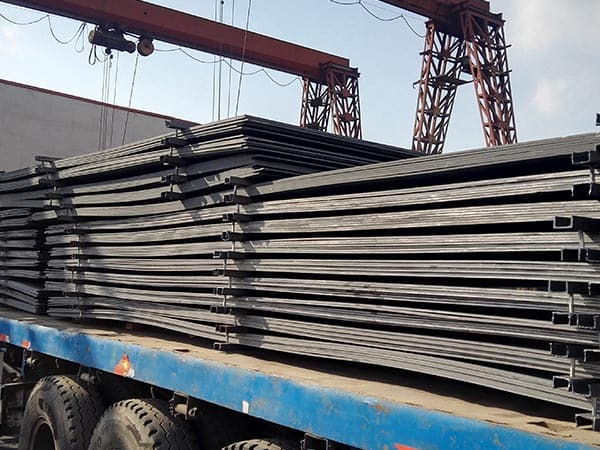
Understanding the Surface Dynamics of High-Strength Automotive Steels
In the high-stakes world of automotive manufacturing and heavy machinery fabrication, the surface condition of thermomechanically rolled steels such as S420MC, S500MC, and S700MC is a frequent point of contention between suppliers and quality control departments. These high-strength low-alloy (HSLA) steels, governed by the EN 10149-2 standard, are prized for their exceptional yield strength and cold-forming capabilities. However, their relatively low alloy content compared to stainless steels makes them susceptible to surface oxidation during transport and storage. Distinguishing between harmless floating rust and structural-threatening corrosion is vital for maintaining the integrity of vehicle frames, crane arms, and chassis components.
What is Floating Rust on S420MC and S500MC?
Floating rust, often referred to as 'flash rust' or 'yellow rust,' is a superficial layer of iron oxide that forms when the steel surface is exposed to moisture and oxygen. For grades like S420MC and S500MC, this usually manifests as a light yellowish or orange powdery coating. It is important to recognize that this is a surface-level chemical reaction that does not penetrate the metal substrate. Underneath this thin film, the original metallic luster or the smooth gray finish of the thermomechanical rolling process remains intact.
The primary cause of floating rust is the 'dew point' effect. When steel coils or sheets are moved from a cold environment to a warmer, humid warehouse, condensation forms on the surface. Because S420MC and S500MC are often supplied in a pickled or lightly oiled condition, any break in the oil film allows this moisture to react with the iron. Crucially, floating rust can be wiped away with a dry cloth or a light solvent, leaving no visible pits or 'craters' on the steel surface.
The Characteristics of Destructive Rusting in S700MC
As we move up the strength scale to S700MC, the implications of surface oxidation become more severe. Destructive rusting, or 'deep corrosion,' involves the penetration of oxidation into the grain boundaries of the steel. Unlike floating rust, this form of corrosion is characterized by a dark brown or blackish color and a gritty, flaky texture. When the rust is removed, the underlying surface is no longer smooth; it exhibits 'pitting,' which are small indentations where the iron has been physically consumed by the oxidation process.
For a high-performance material like S700MC, which boasts a minimum yield strength of 700 MPa, these pits act as stress concentrators. In dynamic applications such as truck chassis or lifting equipment, these microscopic pits can become the initiation points for fatigue cracks. Therefore, while floating rust is an aesthetic issue, deep rusting is a structural failure waiting to happen.
Technical Comparison: Mechanical Properties and Surface Sensitivity
| Steel Grade | Yield Strength (MPa) | Tensile Strength (MPa) | Elongation (A5 %) | Surface Sensitivity Risk |
|---|---|---|---|---|
| S420MC | Min. 420 | 480 - 620 | Min. 16 | Moderate - Primarily aesthetic |
| S500MC | Min. 500 | 550 - 700 | Min. 12 | High - Impact on weld quality |
| S700MC | Min. 700 | 750 - 950 | Min. 10 | Critical - Risk of fatigue failure |
Practical Methods to Distinguish Rust Types
To accurately assess the condition of your S420MC or S700MC stock, several field tests can be employed by quality assurance teams:
- The Wipe Test: Use a clean white cloth to wipe a small area. If the rust comes off easily as a fine powder and the metal underneath is reflective and smooth, it is floating rust.
- The Scratch Test: Use a plastic scraper or a fingernail to gently probe the rusted area. If the rust flakes off in layers and reveals a darkened, uneven surface, it is deep corrosion.
- The Solvent Test: Apply a mild acidic cleaner or a specialized rust remover. Floating rust will dissolve almost instantly, whereas deep corrosion will require significant dwell time and may still leave a visible 'scar' on the metal.
- Ultrasonic Thickness Measurement: For heavy plates, using an ultrasonic gauge can determine if there has been any measurable loss in the base metal thickness, though this is usually reserved for extreme cases of corrosion.
Impact on Manufacturing Processes
The presence of oxidation, even floating rust, can influence the efficiency of downstream processing. When laser cutting S500MC, surface rust can interfere with the laser beam's absorption, leading to inconsistent cut edges or excessive dross. In automated welding environments, any form of iron oxide acts as a contaminant. Rust contains hydrogen and oxygen; during the welding of S700MC, these elements can be trapped in the weld pool, leading to porosity or hydrogen-induced cracking, which is particularly dangerous in high-strength applications.
Furthermore, for companies applying powder coating or wet paint, floating rust must be removed. While it might not compromise the steel's strength, it will compromise the adhesion of the coating, leading to premature peeling and localized corrosion under the paint film. Most automotive standards require a surface cleanliness level of Sa 2.5 or higher before coating, necessitating a shot-blasting or pickling stage if rust is present.
Environmental Adaptability and Storage Best Practices
S420MC, S500MC, and S700MC are designed for strength and formability, not for atmospheric corrosion resistance. Unlike weathering steels (like Corten), they do not form a protective patina. To prevent the transition from floating rust to deep corrosion, storage conditions must be strictly controlled. Maintaining a constant temperature to avoid condensation and keeping the relative humidity below 60% are the most effective strategies.
During maritime transport, these steels are often exposed to salt spray. The chloride ions in salt significantly accelerate the corrosion rate, turning what would be simple floating rust into aggressive pitting within days. It is imperative that materials arriving from overseas are inspected immediately upon de-vanning. If 'white rust' (from galvanized coatings) or 'red rust' is found, it must be neutralized immediately to prevent permanent damage to the S700MC substrate.
Optimizing Material Longevity
Managing the surface quality of high-strength automotive steels requires a proactive approach. By training personnel to identify the subtle differences between a harmless surface blush and the beginning of structural decay, manufacturers can reduce waste and ensure the safety of the final product. Whether you are forming a complex bracket from S420MC or a critical structural member from S700MC, the rule remains the same: clean, dry, and protected surfaces are the foundation of engineering excellence. Proper oiling and vapor corrosion inhibitor (VCI) packaging remain the gold standard for preserving the 'mill-fresh' condition of these high-performance materials.
Leave a message