
What are the precautions during the processing of S355MC composition
Explore the critical precautions for processing S355MC high-strength steel. This guide covers chemical composition impacts, welding strategies, cold forming limits, and industrial application secrets for EN 10149-2 standards.
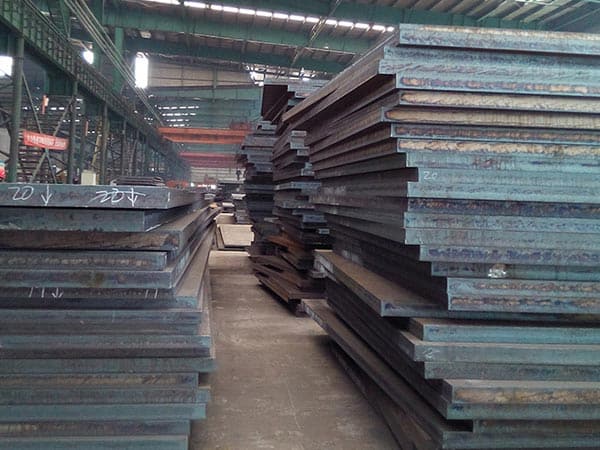
Understanding the Core Essence of S355MC Composition
S355MC is a high-strength, hot-rolled, thermomechanically rolled steel specifically designed for cold forming. Governed by the EN 10149-2 standard, its reputation stems from a meticulously balanced chemical composition. Unlike traditional structural steels, S355MC utilizes micro-alloying elements such as Niobium (Nb), Vanadium (V), and Titanium (Ti) to achieve a fine-grained microstructure. This metallurgical profile allows for a significant reduction in weight while maintaining structural integrity. However, the very elements that grant it strength also dictate specific precautions during fabrication. If the processing parameters ignore the thermomechanical history of the steel, the risk of micro-cracking or loss of yield strength becomes a reality.
Chemical Composition and Its Impact on Fabricability
The chemical blueprint of S355MC is engineered for weldability and formability. A low carbon content (typically ≤ 0.12%) and a low carbon equivalent value (CEV) are its primary advantages. This reduces the risk of cold cracking in the heat-affected zone (HAZ) during welding. The presence of Manganese (Mn) ensures hardenability, while the micro-alloying elements refine the grain structure. When processing this material, it is vital to recognize that these elements are sensitive to excessive heat exposure, which can lead to grain growth and subsequent embrittlement.
| Element | Maximum Percentage (%) | Role in Processing |
|---|---|---|
| Carbon (C) | 0.12 | Ensures excellent weldability and prevents hardening. |
| Manganese (Mn) | 1.50 | Improves strength and toughness. |
| Silicon (Si) | 0.50 | Deoxidizer, enhances tensile strength. |
| Niobium (Nb) | 0.09 | Grain refinement; critical for thermomechanical properties. |
| Sulfur (S) | 0.02 | Kept low to improve transverse ductility. |
Precautions During Cold Forming and Bending
S355MC is favored for its exceptional cold-forming capabilities, but it is not immune to the laws of physics. One of the most critical precautions involves the minimum bending radius. Because S355MC is a thermomechanically rolled product, its ductility is superior, yet the bending radius must be strictly observed to prevent surface tension cracks.
- Grain Direction Sensitivity: Always attempt to bend transverse to the rolling direction. If bending parallel to the rolling direction is unavoidable, a larger internal radius must be used to compensate for reduced longitudinal ductility.
- Springback Management: Due to its higher yield strength compared to standard S235 or s355jr grades, S355MC exhibits greater springback. Tooling must be adjusted to over-bend the material slightly to achieve the desired final angle.
- Surface Integrity: Ensure that the bending dies are smooth. Scratches or surface defects on the steel can act as stress concentrators, leading to premature failure during the forming process.
- Temperature Considerations: Cold forming should ideally be performed at room temperature. Heating the material above 580°C to facilitate forming will destroy the fine-grained structure achieved through thermomechanical rolling, drastically reducing its mechanical properties.
Advanced Welding Strategies for S355MC
Welding S355MC requires a departure from standard mild steel practices. The primary goal is to maintain the integrity of the fine-grained structure in the heat-affected zone (HAZ). Because of the low carbon content, preheating is generally not required for thicknesses under 20mm, which is a significant cost advantage. However, the cooling rate must be carefully controlled.
Excessive heat input can cause grain coarsening, which leads to a localized loss of yield strength and toughness. Use low-hydrogen welding processes (such as GMAW or GTAW) to minimize the risk of hydrogen-induced cracking. When selecting filler materials, ensure they match the yield strength of S355MC while offering sufficient low-temperature impact toughness. The cooling time (t8/5)—the time it takes for the weld to cool from 800°C to 500°C—should be kept within the range recommended by the manufacturer to ensure an optimal balance between hardness and ductility.
Cutting and Edge Preparation Precautions
Whether using laser, plasma, or oxy-fuel cutting, the edges of S355MC react to thermal cycles. Laser cutting is generally preferred for S355MC because it produces a narrow HAZ and high precision. However, if the cut edges are to be subsequently bent, the "hardened" edge resulting from thermal cutting must be addressed.
- Mechanical Deburring: Always remove burrs and sharp edges before bending. A clean edge significantly reduces the risk of edge cracking.
- Heat-Affected Zone Removal: In critical structural components, it is advisable to grind the thermally cut edges to remove the brittle martensitic layer before welding or forming.
- Shearing Limits: When shearing S355MC, the blade clearance must be precisely set for the specific thickness. Improper clearance can lead to excessive edge deformation or micro-fractures that propagate during service.
Environmental Adaptability and Surface Treatment
S355MC performs admirably in various environments, but its corrosion resistance is similar to that of standard carbon steel. Therefore, surface protection is mandatory for outdoor or corrosive industrial applications. Hot-dip galvanizing is a common choice, but the "Pickling" process must be monitored to avoid hydrogen embrittlement, although this is less of a concern for S355MC than for ultra-high-strength grades (above 700MPa).
For painting or powder coating, the surface must be free of mill scale. Shot blasting to a Sa 2.5 standard is recommended to ensure coating adhesion. The fine surface finish of S355MC, typical of high-quality hot-rolled strips, makes it an excellent candidate for high-aesthetic-quality finishes in the automotive and machinery sectors.
Expanding Industry Applications
The unique properties of S355MC make it a staple in industries where "lightweighting" is the primary objective. In the automotive sector, it is used for chassis components, cross members, and longitudinal beams. By switching from S355JR to S355MC, engineers can often reduce thickness without sacrificing safety, leading to improved fuel efficiency.
In the agricultural and construction machinery sector, S355MC is utilized for crane booms, excavator frames, and trailer chassis. Its ability to withstand dynamic loads and its excellent fatigue resistance (provided the processing precautions mentioned above are followed) makes it superior to traditional structural steels. Furthermore, in the renewable energy sector, it is increasingly used for brackets and support structures for solar arrays, where ease of fabrication and high strength-to-weight ratios are paramount.
Final Technical Insights
Processing S355MC is a balance of respecting its metallurgical heritage while leveraging its mechanical advantages. The key takeaway for any fabricator is the avoidance of excessive heat. Whether through welding, cutting, or forming, preserving the thermomechanically refined grain structure is the only way to ensure the final component meets the design specifications. By strictly adhering to minimum bending radii, controlling weld heat input, and ensuring meticulous edge preparation, manufacturers can fully exploit the potential of S355MC to create leaner, stronger, and more efficient structures.
Leave a message