
How to correct the tortuosity of en 10149-2 s355mc technical data
Master the techniques for correcting tortuosity in EN 10149-2 S355MC steel. This guide covers technical data, mechanical properties, and precision leveling methods for high-yield cold forming steel.
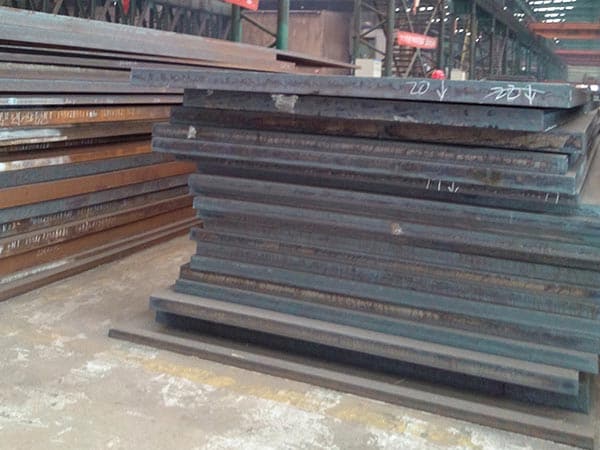
Technical Foundation of EN 10149-2 S355MC Steel
EN 10149-2 S355MC is a high-yield strength, thermomechanically rolled (TMCP) steel designed specifically for cold forming. The 'S' denotes structural steel, '355' represents the minimum yield strength in MPa, and 'MC' indicates it is suitable for cold forming and produced through thermomechanical rolling. This material is favored in industries requiring high load-bearing capacity combined with weight reduction, such as automotive chassis, crane booms, and heavy machinery frames.
The thermomechanical rolling process is critical to its performance. Unlike traditional normalized steels, S355MC achieves its strength through a combination of controlled rolling and rapid cooling. This creates a fine-grained microstructure that offers superior toughness and weldability. However, this same process introduces internal residual stresses that can manifest as tortuosity (warping or lack of straightness) during subsequent processing like slitting or laser cutting.
Understanding Tortuosity and Residual Stress in S355MC
Tortuosity in S355MC is rarely a result of poor chemistry; rather, it is a physical manifestation of unbalanced internal stresses. When the steel is rolled, the temperature gradients across the width and thickness of the coil can lead to uneven cooling. Furthermore, the high yield-to-tensile ratio of S355MC means that once a deformation occurs, the material requires significant force to be brought back into a state of equilibrium.
When a manufacturer slits an S355MC coil into strips, the release of these internal stresses often causes the material to 'bow' or 'camber.' This is particularly problematic for automated welding lines or precision CNC punching, where a deviation of even a few millimeters per meter can lead to catastrophic assembly failures.
Technical Specifications: Chemical Composition and Mechanical Attributes
| Element/Property | Value (Max % or Range) | Mechanical Property | Value (Min) |
|---|---|---|---|
| Carbon (C) | 0.12% | Yield Strength (Reh) | 355 MPa |
| Manganese (Mn) | 1.50% | Tensile Strength (Rm) | 430 - 550 MPa |
| Silicon (Si) | 0.03% | Elongation (A80mm) | 19% (t < 3mm) |
| Phosphorus (P) | 0.025% | Bending Radius (90°) | 0.5 x Thickness |
| Sulfur (S) | 0.020% | Impact Energy (KV) | 40J at -20°C (Optional) |
The low carbon content ensures excellent weldability, while the addition of micro-alloying elements like Niobium (Nb), Vanadium (V), and Titanium (Ti) facilitates the fine-grain structure during TMCP. Understanding these values is essential for calculating the pressure required for correction.
Advanced Strategies for Correcting Tortuosity
Correcting the tortuosity of S355MC requires a deep understanding of the Bauschinger effect and the material's elastic-plastic behavior. Standard flattening rollers often fail to achieve permanent flatness because they do not exceed the material's yield point across the entire cross-section.
- Precision Roller Leveling: This is the most effective method for S355MC. A multi-roll leveler subjects the steel to a series of alternating bends. By decreasing the entry gap and increasing the exit gap, the material is stretched beyond its yield point at the entry, 'resetting' the internal stress state, and then gradually stabilized as it exits.
- Tension Leveling: For thinner gauges of S355MC, tension leveling combines mechanical bending with longitudinal tension. This ensures that every fiber of the steel is elongated simultaneously, effectively eliminating longitudinal bow and cross-bow.
- Thermal Stress Relief (Caution Required): While heating can reduce stress, it must be performed below the transformation temperature. For S355MC, exceeding 580°C can degrade the fine-grained structure created by the TMCP process, leading to a significant drop in yield strength.
- Induction Straightening: Localized heating can be used for structural components like crane arms. By heating specific 'zones' on the convex side of a warp, the subsequent cooling and contraction pull the material back into alignment.
Impact of Processing on Material Geometry
The method of cutting S355MC significantly influences its straightness. Laser cutting, while precise, introduces a Heat Affected Zone (HAZ) that can cause localized warping. For high-precision parts, it is recommended to use oxygen-free laser cutting or waterjet cutting to minimize thermal input. When slitting, using sharp knives and maintaining correct horizontal clearance is vital to prevent edge burrs, which can create 'false' tortuosity by preventing the sheet from laying flat.
Cold forming behavior is another critical attribute. S355MC has exceptional bendability. However, the 'springback' effect is more pronounced than in mild steel. When correcting tortuosity through bending, operators must over-compensate based on the material's actual yield strength rather than the nominal 355 MPa value.
Environmental Adaptability and Industrial Application
S355MC is engineered for durability. Its fine-grain structure provides excellent resistance to atmospheric corrosion compared to standard hot-rolled plates, although it still requires coating for long-term exposure. In cold climates, its low-temperature impact toughness makes it a primary choice for transport equipment operating in sub-zero conditions.
In the heavy lifting industry, S355MC's flatness is paramount. A boom section that is not perfectly straight will experience eccentric loading, significantly reducing the crane's safe lifting capacity. Therefore, the correction of tortuosity is not merely an aesthetic requirement but a critical safety factor. Similarly, in the automotive sector, the move toward 'lightweighting' relies on S355MC's ability to be formed into complex, flat shapes that integrate seamlessly into robot-welded assemblies.
Operational Best Practices for Maintaining Straightness
To ensure S355MC remains straight throughout the production cycle, several logistical steps should be taken. Storage is often overlooked; coils should be stored vertically on padded cradles to prevent 'flat spots' or 'coil set' from gravity. Sheets should be stacked on level ground with sufficient support points to prevent sagging.
When dealing with high-precision requirements, implementing a flatness measurement system (such as laser scanning) post-leveling provides the necessary data to validate the correction process. This data-driven approach allows for real-time adjustment of leveling parameters, ensuring that the S355MC technical data for straightness meets or exceeds the EN 10051 tolerances.
Leave a message