
What are the top ten S315MC steel for boom supplier in Singapore
Explore the comprehensive guide on S315MC steel for boom manufacturing in Singapore. Learn about mechanical properties, processing advantages, and how to identify top-tier suppliers for high-performance lifting equipment.
The Critical Role of S315MC Steel in Singapore's Lifting Industry
Singapore stands as a global hub for maritime, logistics, and advanced construction. The demand for high-performance lifting equipment, specifically crane booms and telescopic arms, has driven the industry toward materials that offer a perfect balance between weight reduction and structural integrity. S315MC steel, governed by the EN 10149-2 standard, has emerged as a primary choice for engineers designing booms that require high yield strength and exceptional cold-forming capabilities.
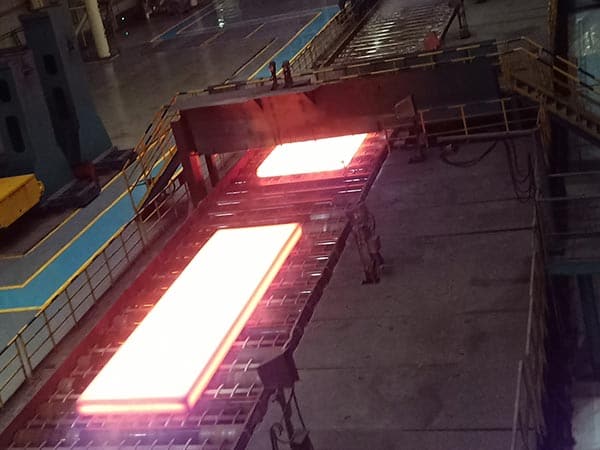
This thermomechanically rolled steel is engineered to provide a minimum yield strength of 315 MPa. Unlike traditional hot-rolled structural steels, S315MC undergoes a controlled cooling process that refines its grain structure, making it significantly more ductile and easier to weld. For the Singaporean market, where offshore and port environments demand rigorous safety standards, sourcing this material from reputable suppliers is not just a matter of procurement, but a critical safety decision.
Technical Attributes: Why S315MC Dominates Boom Manufacturing
The structural boom of a crane is subject to immense dynamic loads and fatigue. S315MC steel is specifically designed to handle these stresses through its unique metallurgical composition. By utilizing micro-alloying elements such as Niobium (Nb), Vanadium (V), and Titanium (Ti), manufacturers achieve a fine-grained structure that enhances toughness without the need for excessive carbon content.
Mechanical Properties of S315MC:
| Property | Value (Thickness ≤ 16mm) |
|---|---|
| Minimum Yield Strength (ReH MPa) | 315 |
| Tensile Strength (Rm MPa) | 390 - 510 |
| Minimum Elongation (A80mm %) | 20 - 24 (depending on thickness) |
| Bending Radius (180°) | 0.5t to 1.0t |
These properties allow for the fabrication of booms that are lighter than those made from standard S235 or S355 steels while maintaining the necessary load-bearing capacity. Lightweighting is essential for mobile cranes and knuckle boom cranes used in Singapore's busy ports, as it increases the crane's reach and lifting capacity relative to its own weight.
Processing Performance: Bending, Cutting, and Welding
One of the standout features of S315MC is its superior cold-forming capacity. In boom manufacturing, plates are often bent into complex hexagonal or octagonal shapes to maximize geometric stiffness. S315MC allows for tight bending radii without the risk of surface cracking or edge delamination. This is particularly beneficial for Singaporean fabricators who utilize high-precision CNC press brakes.
Welding Integrity: Because of its low carbon equivalent (CEV), S315MC exhibits excellent weldability. It does not typically require pre-heating, which streamlines the production process in local workshops. The Heat Affected Zone (HAZ) remains stable, ensuring that the welded joints of the boom do not become brittle points of failure under cyclic loading.
Laser and Plasma Cutting: The clean surface finish and consistent chemical composition of S315MC make it ideal for automated laser cutting. This ensures that the components of the boom assembly fit together with minimal tolerances, reducing the need for extensive post-weld grinding and finishing.
Environmental Adaptation in Tropical Maritime Climates
Singapore's climate is characterized by high humidity and high salinity, which are catalysts for accelerated corrosion. While S315MC is not a stainless steel, its fine-grained structure provides a more uniform surface for protective coatings. When paired with advanced galvanization or marine-grade epoxy painting systems, S315MC booms demonstrate remarkable longevity in the humid environments of Jurong Port or the Tuas Mega Port construction sites.
Furthermore, the impact toughness of S315MC is tested at low temperatures (often down to -20°C or -40°C upon request), which provides a safety buffer even in tropical regions where unexpected structural shocks or high-speed loading might occur. This "reserve ductility" is a key reason why international certification bodies like DNV and ABS often approve S315MC for marine lifting components.
Identifying the Top Ten S315MC Steel Suppliers in Singapore
Selecting a supplier in Singapore requires looking beyond the price per ton. The "top" suppliers are those who offer full traceability, mill test certificates (MTCs), and value-added processing services. Here is a breakdown of the types of entities that dominate the S315MC supply chain in the region:
- Global Steel Conglomerates (Direct Offices): Companies like Thyssenkrupp Materials and ArcelorMittal maintain a strong presence in Singapore, providing direct access to European-standard S315MC with guaranteed quality.
- Specialized High-Strength Steel Distributors: Suppliers such as Leong Jin Corporation and BBN Steel focus specifically on high-yield and wear-resistant plates, stocking a wide range of S315MC thicknesses.
- Regional Stockholders: Large-scale stockholders in the Jurong industrial estate often carry S315MC alongside other EN 10149 grades like S420MC and S700MC to cater to the diverse needs of the machinery sector.
- Integrated Service Centers: These suppliers don't just sell plates; they offer precision cutting, beveling, and even preliminary bending, allowing boom manufacturers to receive "ready-to-weld" components.
- Niche Marine Steel Traders: Given Singapore's maritime focus, certain traders specialize in steels that meet specific offshore class requirements, ensuring S315MC batches meet stringent impact test standards.
When evaluating these suppliers, it is essential to verify their ISO 9001 certification and their ability to provide EN 10204 3.1 or 3.2 certification. A top-tier supplier will also provide data on the steel's flatness and surface quality, which are vital for the aesthetic and functional requirements of telescopic booms.
The Economic Impact of S315MC on Singaporean Projects
Using S315MC steel contributes to the overall sustainability of construction projects in Singapore. By reducing the weight of the boom, the fuel consumption of the crane's prime mover is lowered, and the carbon footprint of the manufacturing process is reduced. This aligns with the Singapore Green Plan 2030, encouraging industries to adopt more efficient materials and processes.
Moreover, the durability of S315MC reduces the maintenance lifecycle costs. Booms made from high-quality S315MC are less prone to fatigue cracking, meaning fewer inspections and repairs are needed over the machine's 20-year lifespan. This reliability is a significant selling point for Singaporean equipment exporters who ship their machinery across Southeast Asia and Australia.
Strategic Procurement: Ensuring Quality in the Supply Chain
To ensure you are getting genuine S315MC, it is advisable to perform independent chemical analysis and mechanical testing on sample batches, especially for large-scale infrastructure projects. Top suppliers in Singapore often collaborate with third-party labs like SETSCO or TUV SUD to verify material properties.
Key Chemical Composition Limits for S315MC:
| Element | Max % (Ladle Analysis) |
|---|---|
| Carbon (C) | 0.12 |
| Manganese (Mn) | 1.30 |
| Silicon (Si) | 0.50 | 0.025 |
| Sulfur (S) | 0.020 |
Maintaining these low levels of impurities is what allows the steel to remain ductile while achieving its strength. Suppliers who can demonstrate consistent adherence to these chemical limits across different heats are the ones that should be prioritized for long-term partnerships.
In the competitive landscape of Singapore's engineering sector, the choice of S315MC steel represents a commitment to innovation and safety. By partnering with suppliers who understand the technical nuances of thermomechanically rolled steels, manufacturers can continue to push the boundaries of what is possible in crane design and heavy-lift operations.
Leave a message