
What is the S355MC hot-rolled pickled strip machining
Explore the technical specifications and machining capabilities of S355MC hot-rolled pickled strip. Learn about its mechanical properties, chemical composition, and industrial applications.
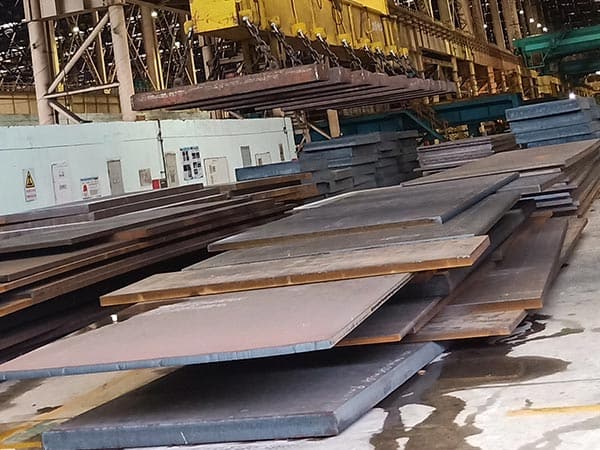
Understanding the Essence of S355MC Hot-Rolled Pickled Strip
S355MC is a high-yield strength, thermomechanically rolled steel specifically designed for cold forming. According to the EN 10149-2 standard, the 'S' denotes structural steel, '355' indicates a minimum yield strength of 355 MPa, and 'MC' signifies that the material is suitable for cold forming and has been thermomechanically processed. When we discuss the hot-rolled pickled strip variant, we are referring to a product that has undergone an acid bath to remove the surface scale (iron oxides) formed during the hot-rolling process. This results in a cleaner, smoother surface that is critical for precision machining and high-quality finishing.
The machining of S355MC is a sophisticated balance between leveraging its high strength and managing its excellent ductility. Unlike traditional structural steels, S355MC offers a refined grain structure achieved through micro-alloying elements like Niobium (Nb), Vanadium (V), and Titanium (Ti). These elements allow the steel to maintain high strength without the brittleness typically associated with high-carbon alloys, making it a preferred choice for complex geometries in automotive and heavy machinery industries.
Chemical Composition and Its Impact on Machinability
The chemical makeup of S355MC is engineered to facilitate superior weldability and formability. By keeping the carbon content low and utilizing micro-alloying, the steel achieves a low carbon equivalent (CEV), which is a primary factor in its machining behavior. Below is a breakdown of the typical chemical composition:
| Element | Maximum Percentage (%) |
|---|---|
| Carbon (C) | 0.12 |
| Manganese (Mn) | 1.50 |
| Silicon (Si) | 0.50 |
| Phosphorus (P) | 0.025 |
| Sulfur (S) | 0.020 |
| Aluminum (Al) | 0.015 |
The low carbon content (max 0.12%) ensures that the material does not harden excessively during thermal cutting processes like laser or plasma cutting. This reduces the risk of edge cracking during subsequent bending operations. The addition of Manganese enhances the hardenability and tensile strength, while Silicon acts as a deoxidizer, ensuring a clean internal structure that prevents tool chatter during milling or drilling.
Mechanical Properties: The Foundation of Processing
The mechanical performance of S355MC is what defines its role in modern engineering. It provides a significant weight reduction potential compared to standard S235 or s355jr steels because thinner sections can carry the same loads. This is particularly useful in the transport sector where reducing dead weight is essential for fuel efficiency.
| Property | Value Range |
|---|---|
| Yield Strength (ReH) | Min 355 MPa |
| Tensile Strength (Rm) | 430 - 550 MPa |
| Elongation (A80mm) | Min 19% (thickness < 3mm) |
| Bending Radius (90°) | 0.5t to 1.5t (depending on thickness) |
The high elongation values indicate that the material can undergo significant deformation before failure. This is a critical attribute for cold forming and deep drawing. During machining, this ductility means the chips produced are typically long and continuous, requiring efficient chip-breaker geometries on cutting tools to prevent entanglement and surface damage.
The Advantages of the Pickling Process in Machining
Pickling is not merely a cleaning step; it is a fundamental surface preparation that directly influences the efficiency of machining operations. Hot-rolled steel naturally develops a hard, abrasive layer of magnetite and hematite scale. If left untreated, this scale acts like a grinding medium, rapidly wearing down carbide inserts and drill bits.
- Extended Tool Life: By removing the abrasive scale, pickling significantly reduces the friction between the tool and the workpiece, extending the life of cutting tools by up to 30-50%.
- Improved Laser Cutting Quality: Scale can cause beam reflection and inconsistent absorption during laser cutting. Pickled S355MC allows for a stable cutting process, resulting in cleaner edges with minimal dross.
- Enhanced Surface Adhesion: For parts that require subsequent painting, powder coating, or galvanizing, the pickled surface provides a superior substrate for chemical bonding.
- Dimensional Accuracy: The removal of scale allows for more precise measurements during the initial stages of machining, ensuring that tight tolerances are maintained throughout the production cycle.
Advanced Machining Techniques for S355MC
When working with S355MC, several machining and fabrication techniques are commonly employed, each benefiting from the material's unique properties. Because it is a thermomechanically rolled steel, it possesses a very fine-grained microstructure, which translates to uniform properties across the entire strip.
1. Laser and Plasma Cutting: S355MC is highly compatible with automated thermal cutting. Due to its low impurity levels (low P and S), the heat-affected zone (HAZ) remains relatively soft. This is vital for components that will be subjected to fatigue loading, as a hard, brittle edge could become a site for crack initiation.
2. Cold Bending and Folding: One of the primary uses of S355MC is in parts that require tight bends. Unlike S355JR, which may crack if bent too sharply, S355MC can often be bent with a radius equal to half its thickness. Machinists must account for springback, which is slightly higher than in lower-strength steels due to the higher yield point. CNC press brakes with angle sensors are ideal for achieving precision in these operations.
3. Welding Operations: The low carbon equivalent makes S355MC exceptionally easy to weld using MAG, MIG, or TIG processes. No preheating is required for standard thicknesses, and the fine-grained structure resists grain growth in the HAZ, maintaining the strength of the joint. This is a major advantage in the assembly of large structural frames.
4. Punching and Blanking: The uniformity of the pickled strip ensures consistent shear resistance. This leads to cleaner holes and less burr formation during high-speed punching. It also reduces the maintenance frequency for punching dies.
Environmental Adaptability and Long-term Durability
While S355MC is not a stainless steel, its refined chemistry provides a degree of atmospheric corrosion resistance that is slightly better than basic carbon steels. However, its real strength lies in its response to protective coatings. The pickled surface is ideal for hot-dip galvanizing. The controlled Silicon and Phosphorus content ensures a predictable and uniform zinc layer thickness, avoiding the brittle, thick coatings often seen in steels with poor chemistry control (the Sandelin effect).
In environments subject to vibration or cyclic loading, such as truck chassis or crane arms, the high fatigue strength of S355MC ensures a long service life. The absence of surface pits (thanks to pickling) removes potential stress concentrators, further enhancing the material's durability in harsh operating conditions.
Expanding Industry Applications
The versatility of S355MC hot-rolled pickled strip has led to its widespread adoption across various high-performance sectors. It is no longer limited to simple structural components but is now a staple in precision engineering.
- Automotive Industry: Used for longitudinal beams, cross members, and chassis components where weight saving and crash safety are paramount.
- Lifting and Handling: Telescopic booms for cranes and forklift frames benefit from the high strength-to-weight ratio.
- Agricultural Machinery: Plow frames, trailer chassis, and harvester components utilize the material's toughness and resistance to impact.
- Storage Solutions: High-load racking systems and cold-formed profiles for industrial warehouses.
By choosing S355MC, manufacturers can optimize their production lines. The consistency of the material means that once a machining program is set—whether for a CNC mill or a laser cutter—the results remain stable across different batches of steel. This reliability is the cornerstone of lean manufacturing and cost-effective production in today's competitive landscape.
The integration of S355MC into a project requires an understanding of both its metallurgical strengths and its processing characteristics. By leveraging the benefits of a pickled surface and the inherent toughness of the thermomechanical rolling process, engineers can create products that are lighter, stronger, and more durable than ever before. The machining of S355MC is not just about cutting metal; it is about utilizing a high-tech material to its fullest potential.
Leave a message