
What are the uses of S355MC steel complete specifications
Discover the comprehensive guide to S355MC steel, covering its chemical composition, mechanical properties, processing advantages, and diverse industrial applications for weight reduction and structural integrity.
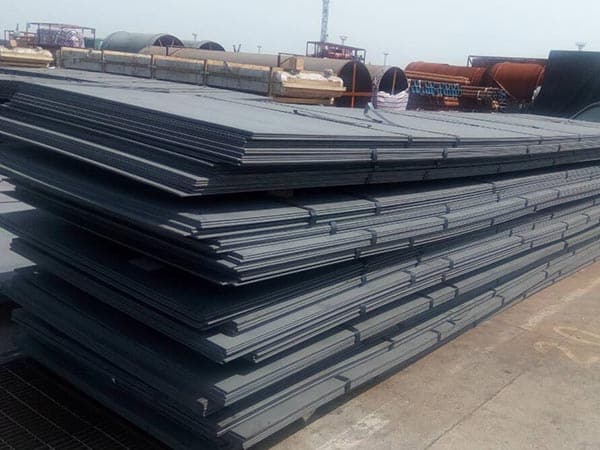
Understanding the Core Essence of S355MC Steel
S355MC steel is a high-strength, low-alloy (HSLA) structural steel specifically designed for cold forming operations. Governed by the European standard EN 10149-2, this material is produced through a thermomechanically rolled process. The designation "S" signifies structural steel, "355" represents the minimum yield strength of 355 MPa, and "MC" indicates that the steel is thermomechanically rolled (M) and intended for cold forming (C). Unlike traditional hot-rolled structural steels, S355MC offers a unique combination of high strength, excellent ductility, and superior weldability, making it a cornerstone in modern engineering where weight reduction is a priority.
Chemical Composition and Its Impact on Performance
The performance of S355MC is rooted in its precise chemical makeup. By utilizing micro-alloying elements such as Niobium (Nb), Vanadium (V), and Titanium (Ti), manufacturers can achieve a fine-grained microstructure without the need for high carbon content. This low carbon equivalent is crucial for maintaining weldability while pushing the limits of strength.
| Element | Max Content (%) |
|---|---|
| Carbon (C) | 0.12 |
| Manganese (Mn) | 1.50 |
| Silicon (Si) | 0.50 |
| Phosphorus (P) | 0.025 |
| Sulfur (S) | 0.020 |
| Aluminum (Al) | 0.015 |
The restricted carbon levels ensure that the material remains highly ductile during cold bending and pressing. The addition of Manganese enhances hardenability and strength, while the micro-alloying elements refine the grain size, which is the primary mechanism for increasing both yield strength and toughness simultaneously.
Mechanical Properties and Structural Reliability
Mechanical reliability is the primary reason engineers select S355MC. Its high yield-to-tensile ratio allows for the design of components that can withstand significant loads while remaining lightweight. The material's elongation properties ensure that it can undergo substantial deformation before failure, providing a safety buffer in structural applications.
| Property | Value (Thickness ≤ 3mm) | Value (Thickness > 3mm) |
|---|---|---|
| Yield Strength (MPa) | Min 355 | Min 355 |
| Tensile Strength (MPa) | 430 - 550 | 430 - 550 |
| Elongation A80mm (%) | Min 19 | Min 23 (A5) |
One of the standout features of S355MC is its consistent performance across different batches. The thermomechanical rolling process ensures uniform grain structure, which translates to predictable behavior during fabrication and service. This predictability is vital for automated manufacturing processes where variations in material properties can lead to production downtime or part failure.
Superior Processing Performance: Bending and Welding
The "MC" suffix highlights the material's aptitude for cold forming. S355MC can be bent to tight radii without cracking, a feat that traditional s355jr steels often struggle with. This allows for the creation of complex geometries that reduce the number of welded joints in a structure, thereby increasing overall integrity and reducing labor costs.
- Cold Bending: S355MC supports a minimum bending radius of 0.5 to 1.5 times the thickness, depending on the orientation (transverse or longitudinal).
- Weldability: Due to its low carbon equivalent (CEV), S355MC can be welded using all standard methods, including MAG, TIG, and laser welding, without the need for preheating in most thickness ranges.
- Laser Cutting: The clean, fine-grained surface and controlled chemical composition make it an ideal candidate for high-speed laser cutting, resulting in smooth edges and minimal heat-affected zones.
Diverse Applications Across Modern Industries
The versatility of S355MC allows it to penetrate various sectors where the balance between strength and weight is critical. By replacing thicker, lower-grade steels with thinner S355MC, companies can achieve weight savings of up to 20-30%, leading to lower material costs and improved energy efficiency in mobile applications.
Automotive and Transportation Logistics
In the automotive sector, S355MC is used extensively for chassis components, cross members, and longitudinal beams. The high strength-to-weight ratio is essential for heavy-duty trucks and trailers, where reducing the curb weight directly increases the payload capacity. Furthermore, its excellent impact toughness ensures that these components can absorb energy during a collision, enhancing vehicle safety.
Heavy Machinery and Lifting Equipment
Crane booms, excavator arms, and agricultural machinery rely on S355MC to handle dynamic loads. The material's ability to withstand fatigue while maintaining a slim profile allows for the design of longer reach booms and more efficient lifting mechanisms. Its environmental adaptability ensures that machinery operating in cold climates remains ductile and resistant to brittle fracture.
Cold-Formed Sections and Structural Profiles
The construction and infrastructure sectors utilize S355MC for manufacturing cold-formed C-sections, Z-sections, and custom profiles. These profiles are used in solar panel mounting systems, warehouse racking, and light-gauge steel framing. The precision of cold forming, combined with the strength of S355MC, results in structures that are both easy to assemble and exceptionally durable.
Environmental Adaptability and Sustainability
Modern engineering increasingly focuses on the lifecycle impact of materials. S355MC contributes to sustainability goals in two primary ways. First, the weight reduction achieved through its high strength reduces the fuel consumption and CO2 emissions of transport vehicles. Second, the thermomechanical rolling process is more energy-efficient than traditional quenching and tempering cycles. The steel is also 100% recyclable, fitting perfectly into the circular economy model of the global steel industry.
Comparative Advantage: S355MC vs. S355JR
While both steels share a minimum yield strength of 355 MPa, they are fundamentally different. S355JR is a standard hot-rolled structural steel often used in static buildings. S355MC, however, is refined for manufacturing. S355MC offers much tighter tolerances, a cleaner surface finish, and significantly better cold-forming capabilities. For any application involving bending, pressing, or weight-sensitive design, S355MC is the superior technical choice.
Optimizing Material Selection for Future Projects
Choosing S355MC involves more than just looking at the yield strength. Engineers must consider the grain direction during bending and the specific welding parameters to maintain the integrity of the thermomechanically treated structure. By leveraging the complete specifications of S355MC, manufacturers can push the boundaries of what is possible in structural design, creating products that are stronger, lighter, and more cost-effective. The continued evolution of HSLA steels like S355MC ensures they will remain a vital asset in the transition toward more efficient and sustainable industrial practices.
Leave a message