
What asdvantages does 1.0986 weldable structural steel have
Discover the technical advantages of 1.0986 (S700MC) weldable structural steel. This guide covers its mechanical properties, TMCP processing, weldability, and industrial applications.
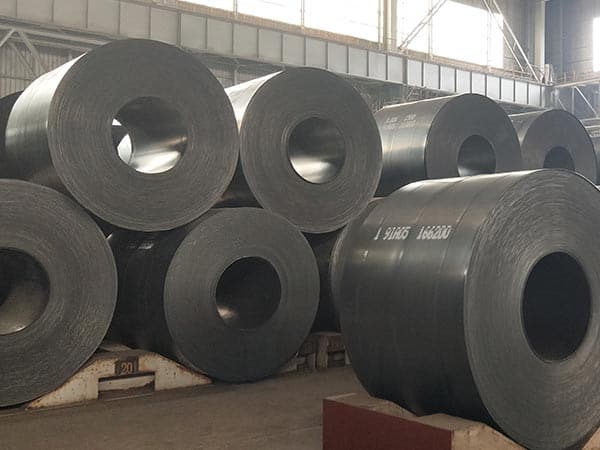
Understanding 1.0986: The Engineering Excellence of S700MC
1.0986, commercially recognized as S700MC, is a high-strength, thermomechanically rolled structural steel that has redefined the possibilities of modern engineering. Governed by the EN 10149-2 standard, this material is designed for cold-forming applications where weight reduction and high load-bearing capacity are paramount. Unlike conventional structural steels, 1.0986 achieves its remarkable strength through a sophisticated combination of micro-alloying and controlled rolling processes, rather than simply increasing carbon content. This fundamental difference in metallurgy provides a suite of advantages that make it a preferred choice for heavy-duty machinery, transport systems, and complex structural frameworks.
The Science of Thermomechanical Control Processing (TMCP)
The primary advantage of 1.0986 lies in its manufacturing process. Thermomechanical Control Processing (TMCP) involves precise temperature and deformation control during rolling. By rolling the steel at temperatures where recrystallization is inhibited, the microstructure is refined to an ultra-fine grain size. This grain refinement is the only strengthening mechanism that increases both yield strength and toughness simultaneously. For the end-user, this means 1.0986 offers a yield strength of at least 700 MPa, while maintaining the ductility required for complex fabrication. The fine-grained structure also provides a more uniform distribution of properties throughout the plate, ensuring reliability in critical structural components.
Chemical Composition and the Micro-Alloying Advantage
The chemical profile of 1.0986 is meticulously balanced to ensure superior weldability and formability. By keeping the carbon content exceptionally low (typically below 0.12%), the steel avoids the formation of brittle phases during welding. Instead, strength is derived from micro-alloying elements such as Niobium (Nb), Vanadium (V), and Titanium (Ti). These elements form stable carbonitrides that pin grain boundaries during processing, preventing grain growth and ensuring a fine-grained final product. This low-carbon approach results in a very low Carbon Equivalent Value (CEV), which is critical for preventing cold cracking in the heat-affected zone (HAZ) of welds.
| Element | C (max) | Si (max) | Mn (max) | P (max) | S (max) | Al (min) | Nb (max) | V (max) | Ti (max) |
|---|---|---|---|---|---|---|---|---|---|
| Value (%) | 0.12 | 0.50 | 2.10 | 0.025 | 0.015 | 0.015 | 0.09 | 0.20 | 0.22 |
Superior Mechanical Performance and Weight Optimization
The high yield strength of 1.0986 allows engineers to design structures with significantly thinner sections without compromising safety or integrity. This weight optimization is perhaps the most tangible advantage in mobile applications. When compared to standard S355 structural steel, 1.0986 offers nearly double the yield strength. This allows for a theoretical weight reduction of up to 40% in certain components. Reducing the dead weight of a vehicle or crane directly translates to higher payloads, lower fuel consumption, and a reduced environmental footprint over the equipment's lifecycle.
- Yield Strength: Minimum 700 MPa, providing immense resistance to permanent deformation.
- Tensile Strength: Ranges between 750 and 950 MPa, ensuring high ultimate load capacity.
- Elongation: Minimum 12-14% (depending on thickness), allowing for energy absorption and safety margins.
- Impact Toughness: Excellent performance even at low temperatures (typically tested at -20°C or -40°C), making it suitable for Arctic environments.
Exceptional Weldability and Fabrication Efficiency
One of the most significant advantages of 1.0986 is its weldability. Traditional high-strength steels often require extensive preheating and post-weld heat treatment (PWHT) to manage the risk of hydrogen-induced cracking. Because 1.0986 has a low carbon equivalent, it can often be welded at room temperature using standard processes such as MAG (Metal Active Gas), MIG (Metal Inert Gas), or laser welding. This eliminates the energy costs and time associated with preheating. Furthermore, the fine-grained structure is relatively stable during the welding thermal cycle, meaning the softening of the heat-affected zone is minimized compared to quenched and tempered steels of similar strength.
Precision in Cold Forming and Bending
Despite its high strength, 1.0986 exhibits remarkable cold-forming characteristics. The fine-grained microstructure allows for tight bending radii without the risk of surface cracking or edge tearing. This is particularly advantageous for manufacturing complex profiles like U-channels, C-sections, and telescopic boom segments. Fabricators can achieve precise geometries that would be impossible with less ductile high-strength materials. It is recommended to use a bending radius of approximately 1.5 to 2.0 times the material thickness, depending on the orientation relative to the rolling direction. This formability reduces the need for multiple welded joints, as complex shapes can be created from a single plate, further enhancing structural reliability.
Extended Service Life and Fatigue Resistance
Structures built with 1.0986 benefit from superior fatigue resistance. The clean steelmaking process (low sulfur and phosphorus content) and the uniform fine-grained structure reduce the number of internal inclusions that act as stress concentrators. In dynamic loading environments, such as truck chassis or crane arms, this translates to a longer service life and lower maintenance costs. Additionally, the material's excellent toughness ensures that even if a crack does initiate, it is less likely to propagate catastrophically, providing a "fail-safe" characteristic that is vital for safety-critical applications.
Economic and Environmental Impact
The adoption of 1.0986 structural steel provides a dual benefit: economic efficiency and environmental sustainability. From a manufacturing perspective, the reduction in material volume leads to lower shipping costs, less welding filler metal required, and faster processing times. From an environmental standpoint, the reduction in vehicle weight significantly lowers CO2 emissions during operation. As global regulations on carbon footprints become stricter, the transition to high-strength steels like 1.0986 is no longer just an engineering choice but a strategic business necessity.
Diverse Industrial Applications
The versatility of 1.0986 has led to its widespread adoption across various sectors. Its unique blend of strength and processability makes it ideal for components that face extreme mechanical stress. Some of the most common applications include:
- Transport Industry: Truck chassis, trailer frames, and container side walls where weight is a critical factor.
- Lifting Equipment: Telescopic booms for mobile cranes, aerial work platforms, and loader cranes.
- Agricultural Machinery: High-stress components in harvesters, plows, and trailers that require durability in harsh environments.
- Construction and Mining: Support structures for heavy-duty conveyors, mining trucks, and specialized building frameworks.
Comparative Analysis: 1.0986 vs. Traditional Grades
When comparing 1.0986 to traditional structural steels like S355J2, the advantages become even more apparent. While S355 is a versatile workhorse, it lacks the strength-to-weight ratio needed for modern high-performance designs. On the other hand, compared to quenched and tempered steels (like S690QL), 1.0986 offers better cold-forming properties and a more cost-effective production route due to the TMCP process. It sits in the "sweet spot" of the metallurgical spectrum, providing the high strength of specialty steels with the ease of processing associated with standard structural grades. This makes 1.0986 an unparalleled solution for engineers looking to push the boundaries of efficiency and performance in structural design.
Leave a message