
Is 1.0982 thermomechanically rolled steels hot or cold rolled?
A comprehensive analysis of 1.0982 (S460MC) steel, explaining the thermomechanical rolling process, its mechanical properties, and industrial applications.
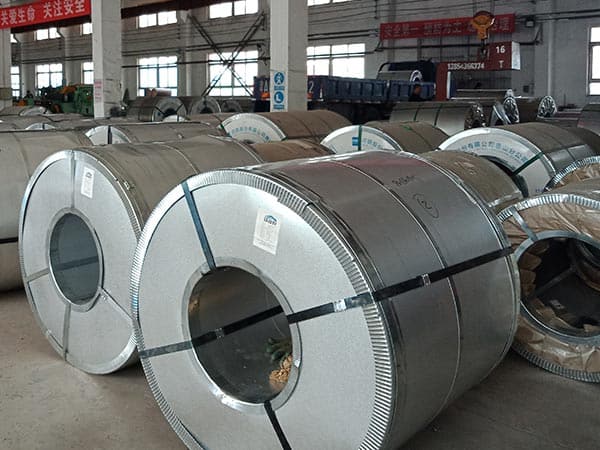
Defining the Nature of 1.0982: The Hot Rolling Paradox
When engineers and procurement specialists encounter the material number 1.0982, also known by its designation S460MC under the EN 10149-2 standard, the most frequent question arises: is this steel hot rolled or cold rolled? To answer this definitively: 1.0982 is a hot-rolled product, but it is produced using a specialized process known as thermomechanical rolling (TMCP). Unlike conventional hot rolling, which focuses primarily on achieving the desired thickness and shape, thermomechanical rolling is a sophisticated metallurgical strategy that manipulates the steel's microstructure during the rolling process itself.
The confusion often stems from the 'C' suffix in S460MC, which stands for 'cold forming.' This does not mean the steel is cold rolled; rather, it indicates that the hot-rolled plate or strip is specifically designed to undergo severe cold deformation, such as bending, flanging, or folding, without cracking. 1.0982 represents a class of high-yield-strength steels that bridge the gap between traditional structural steels and high-performance alloys, offering a unique combination of strength, ductility, and weldability.
The Science of Thermomechanical Rolling (TMCP)
Thermomechanical rolling is not merely a heating and pressing operation. It is a precision-controlled process where the temperature and the degree of deformation are strictly monitored at every stage. In conventional hot rolling, the steel is rolled at high temperatures where recrystallization occurs freely, resulting in a relatively coarse grain structure. In contrast, the production of 1.0982 involves rolling at lower temperatures, specifically in the non-recrystallization zone of austenite.
By applying heavy deformation at these lower temperatures, the austenite grains become 'pancaked' or elongated, creating a high density of nucleation sites for the subsequent transformation into ferrite. This results in an extremely fine-grained microstructure. The benefits of this fine grain size are twofold: it significantly increases the yield strength of the material (Hall-Petch relationship) and simultaneously improves its low-temperature toughness. Because the strength is derived from grain refinement rather than high carbon content, 1.0982 maintains excellent weldability.
Chemical Composition and Micro-Alloying Strategy
The superior properties of 1.0982 are supported by a carefully balanced chemical composition. To achieve a minimum yield strength of 460 MPa without compromising ductility, manufacturers utilize micro-alloying elements such as Niobium (Nb), Vanadium (V), and Titanium (Ti). These elements form fine carbonitride precipitates that pin grain boundaries and prevent grain growth during the rolling process.
| Element | Maximum Content (%) |
|---|---|
| Carbon (C) | 0.12 |
| Manganese (Mn) | 1.60 |
| Silicon (Si) | 0.50 |
| Phosphorus (P) | 0.025 |
| Sulfur (S) | 0.015 |
| Aluminium (Al) | 0.015 (min) |
| Nb + V + Ti | 0.22 |
The low carbon content (typically below 0.12%) is a critical feature. It ensures that the steel does not form brittle martensite in the heat-affected zone (HAZ) during welding, which is a common issue with traditional high-strength steels. This low carbon equivalent (CEV) makes 1.0982 an ideal candidate for complex fabrications where structural integrity is paramount.
Mechanical Performance and Yield Strength Advantages
The primary reason for selecting 1.0982 over standard structural grades like S355 is the significant weight reduction potential. With a minimum yield strength of 460 MPa, designers can use thinner sections to carry the same loads, leading to lighter structures, reduced fuel consumption in transport applications, and lower overall material costs.
| Property | Value (Thickness ≤ 16mm) |
|---|---|
| Min. Yield Strength (ReH) | 460 MPa |
| Tensile Strength (Rm) | 520 - 670 MPa |
| Min. Elongation (A80mm) | 14% |
| Min. Elongation (A5) | 17% |
Beyond the static strength, 1.0982 exhibits remarkable fatigue resistance. The fine-grained structure inhibits the initiation and propagation of micro-cracks, making it suitable for dynamic loading environments. This is particularly relevant in the manufacturing of chassis components for heavy-duty trucks and earthmoving equipment.
Cold Forming Capabilities: The "C" in S460MC
As mentioned, the 'C' designation highlights the steel's suitability for cold forming. 1.0982 is engineered to be bent and shaped at room temperature. This is achieved through strict control of inclusion morphology. By using calcium treatment or other ladle metallurgy techniques, manufacturers ensure that sulfides are spherical rather than elongated. This 'inclusion shape control' prevents the steel from splitting during tight-radius bending.
- Bending Radius: For thicknesses up to 3mm, a minimum internal bending radius of 0.25 times the thickness is often achievable.
- Springback: Due to its higher yield strength compared to S355, 1.0982 exhibits more springback. Fabricators must adjust their tooling and over-bend angles accordingly.
- Surface Quality: The hot-rolled surface of 1.0982 is typically covered with a tight, protective scale. For high-precision laser cutting or painting, pickled and oiled (P&O) versions are frequently specified.
Welding and Fabrication Best Practices
The weldability of 1.0982 is exceptional for a steel of its strength level. Because the strength is derived from the TMCP process and micro-alloying rather than high carbon or alloy content, the steel has a low carbon equivalent. This means that in most cases, preheating is not required for thicknesses under 20mm, provided the ambient temperature is above 5°C and the joint is dry.
However, because the fine-grained structure is 'frozen' into the steel during the thermomechanical rolling process, excessive heat input during welding can lead to grain coarsening in the heat-affected zone, locally reducing the strength and toughness. It is recommended to use low-heat-input welding processes and to monitor interpass temperatures. Standard welding methods such as MAG (Metal Active Gas), MIG, and submerged arc welding (SAW) are all highly effective when used with appropriate filler metals that match the 460 MPa yield strength requirement.
Industrial Applications and Weight Reduction
The unique properties of 1.0982 make it a staple in industries where 'lightweighting' is a priority. By replacing S355 with S460MC, engineers can often achieve a 20-30% reduction in component weight. This has profound implications for both performance and environmental impact.
- Automotive Industry: Used extensively for truck frames, chassis members, and cross-beams. The high strength-to-weight ratio allows for higher payloads.
- Lifting and Excavation: Telescopic cranes, excavator arms, and agricultural machinery benefit from the increased strength, allowing for longer reaches and higher lifting capacities.
- Cold-Pressed Parts: Ideal for complex structural brackets and reinforcements that require both high strength and precise geometry.
- Storage Systems: High-bay racking and heavy-duty shelving systems utilize 1.0982 to support massive loads with minimal material volume.
Environmental Adaptability and Longevity
While 1.0982 is not a 'weathering steel' in the sense of Corten, its fine-grained structure provides a consistent base for protective coatings. In corrosive environments, the steel performs well when galvanized or painted. The clean surface chemistry ensures excellent adhesion for modern coating systems. Furthermore, the high toughness of the material ensures that it remains ductile even in sub-zero temperatures, which is critical for equipment operating in arctic or high-altitude conditions.
The sustainability aspect of 1.0982 cannot be overlooked. By reducing the amount of steel required for a structure, the total CO2 footprint of the project is lowered—from the energy used in steel production to the fuel consumed during the transport of the finished product. This aligns with modern GEO (Green Engineering Optimization) principles that prioritize resource efficiency.
Comparative Analysis: 1.0982 vs. Conventional Structural Steels
Comparing 1.0982 (S460MC) to traditional hot-rolled structural steels like S355J2 reveals why TMCP steels are becoming the industry standard. While S355J2 is versatile and widely available, it lacks the refined grain structure of S460MC. To reach higher strengths with conventional rolling, carbon and manganese levels must be increased, which inevitably degrades weldability and cold-formability. 1.0982 bypasses this trade-off by using mechanical energy (rolling) and temperature control to achieve its properties.
Furthermore, compared to cold-rolled high-strength steels, 1.0982 is available in much greater thicknesses. Cold rolling is typically limited to thin gauges (usually under 3mm), whereas thermomechanically rolled 1.0982 can be produced in thicknesses up to 20mm or more in coil form, and even thicker as quarto plates. This makes it far more versatile for heavy structural applications.
Final Assessment of 1.0982 Utility
1.0982 is a masterclass in modern metallurgy. It is a hot-rolled steel that behaves with the precision of a high-tech alloy. Its identity as a thermomechanically rolled product is the key to its success, providing a high-yield-strength solution that remains easy to weld and form. For manufacturers looking to innovate, reduce weight, and maintain high safety standards, S460MC represents one of the most cost-effective and reliable materials available in the current global market. Whether in the chassis of a long-haul truck or the boom of a construction crane, 1.0982 continues to prove that smart processing is just as important as chemical composition.
Leave a message