
Stock 1.8974 steel for large truss truck boom with good price
Explore the technical advantages of 1.8974 (S700MC) steel for large truss truck booms. This guide covers mechanical properties, fabrication techniques, and cost-efficiency for heavy-duty machinery.
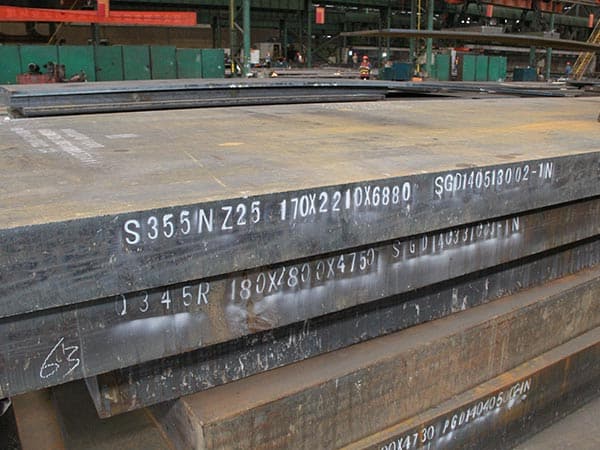
The Evolution of Lifting Performance with 1.8974 High-Strength Steel
The engineering requirements for modern heavy-duty lifting equipment have shifted dramatically toward higher payload capacities and lower self-weight. 1.8974 steel, commonly known as S700MC under the EN 10149-2 standard, represents the pinnacle of thermomechanically rolled high-yield strength steels. This material is specifically engineered for cold forming and is widely utilized in the manufacturing of large truss truck booms, where structural integrity and weight optimization are non-negotiable.
The adoption of 1.8974 steel allows designers to push the limits of crane reach and lifting height. By utilizing a material with a minimum yield strength of 700 MPa, engineers can significantly reduce the wall thickness of boom sections without compromising the safety factor. This reduction in dead weight directly translates to increased lifting capacity and improved fuel efficiency for the carrier vehicle, making it a cornerstone material for the next generation of mobile cranes and concrete pumps.
Metallurgical Excellence: The Thermomechanical Rolling Process
The superior properties of 1.8974 are achieved through a sophisticated thermomechanical rolling (TMCP) process. Unlike traditional normalized steels, TMCP steel gains its strength through a combination of precise temperature control during rolling and micro-alloying techniques. This results in an extremely fine-grained microstructure that offers a unique combination of high strength and excellent toughness at low temperatures.
Micro-alloying elements such as Niobium (Nb), Vanadium (V), and Titanium (Ti) are added in minute quantities. these elements form fine precipitates that pin grain boundaries during the rolling process, preventing grain growth and ensuring a uniform, refined structure. This metallurgical precision is what gives 1.8974 its exceptional ductility, allowing it to be bent and formed into complex truss shapes without the risk of cracking or structural failure.
Technical Specifications and Chemical Composition
Understanding the chemical makeup of 1.8974 is essential for optimizing fabrication processes. The low carbon content is a defining feature, ensuring that the material remains highly weldable despite its high strength levels.
| Element | Content (%) Max |
|---|---|
| Carbon (C) | 0.12 |
| Manganese (Mn) | 2.10 |
| Silicon (Si) | 0.60 |
| Phosphorus (P) | 0.025 |
| Sulfur (S) | 0.015 |
| Aluminium (Al) | 0.015 (min) |
| Nb + V + Ti | 0.22 |
The mechanical properties of 1.8974 steel are what set it apart in the heavy machinery sector. The high yield-to-tensile ratio ensures that the material can withstand significant stress before permanent deformation occurs, which is critical for the long, slender members of a truss boom.
| Property | Value |
|---|---|
| Yield Strength (ReH) | Min 700 MPa |
| Tensile Strength (Rm) | 750 - 950 MPa |
| Elongation (A5) | Min 12% |
| Impact Energy (Ch-V) | -20°C / -40°C (Optional) |
Fabrication and Cold Forming Performance
One of the primary reasons 1.8974 is favored for large truss truck booms is its excellent cold forming capability. Despite its high strength, the material behaves predictably during bending and folding operations. This allows for the creation of hexagonal or decagonal boom profiles that offer superior torsional rigidity compared to traditional rectangular sections.
- Minimum Bending Radius: For plates with a thickness (t) less than 3mm, the recommended internal bending radius is 0.9t. For thicknesses between 3mm and 6mm, it is 1.1t, and for those above 6mm, it is 1.6t.
- Springback Management: Due to the high yield strength, springback is more pronounced than in standard S355 steel. Fabricators must account for this by over-bending or using CNC-controlled press brakes with real-time angle measurement.
- Edge Quality: To prevent cracking during forming, it is recommended to grind or deburr the edges of the plates, especially in high-stress areas.
Advanced Welding Strategies for 1.8974 Steel
Welding 1.8974 requires a disciplined approach to maintain the properties of the thermomechanically rolled structure. Because the strength is derived from the grain refinement and micro-alloying rather than high carbon content, the Carbon Equivalent (CEV) is relatively low, typically around 0.38 to 0.42. This significantly reduces the risk of cold cracking and often eliminates the need for preheating, even in thicker sections.
However, heat input must be strictly controlled. Excessive heat can lead to grain coarsening in the Heat Affected Zone (HAZ), which may result in a localized loss of strength and toughness. Using low-heat processes like Gas Metal Arc Welding (GMAW) or Pulse-MAG is highly recommended. The cooling time (t8/5) should be monitored to ensure it falls within the range that preserves the fine-grained structure. Matching or slightly over-matching filler metals should be selected based on the specific design requirements of the truss boom.
Optimizing Truss Boom Design for Structural Efficiency
The design of a large truss truck boom involves managing complex compression and tension forces. By utilizing 1.8974, engineers can design thinner, more efficient lattice structures. The high strength allows for smaller cross-sections of the individual truss members, which reduces the wind profile of the boom—a critical factor for stability during high-altitude operations.
Furthermore, the fatigue resistance of 1.8974 is a vital attribute. Large booms are subjected to cyclic loading throughout their service life. The uniform microstructure of S700MC provides a reliable baseline for fatigue life calculations, ensuring that the equipment remains safe over thousands of lifting cycles. This reliability is why 1.8974 has become the standard for high-reach aerial work platforms and specialized firefighting equipment.
Economic Advantages and Market Availability
While the per-ton price of 1.8974 may be higher than that of conventional S355 steel, the total cost of ownership and the cost-to-performance ratio are far superior. The reduction in material volume required for a specific load-bearing capacity often offsets the higher material cost. Additionally, the decrease in vehicle weight leads to lower fuel consumption, reduced tire wear, and the ability to carry more auxiliary equipment within legal axle load limits.
Current market conditions show a strong stock availability for 1.8974 in various thicknesses, ranging from 3mm to 12mm, which are the most common gauges for truss boom construction. Sourcing from reputable suppliers ensures that the material comes with full 3.1 or 3.2 certification, providing traceability and peace of mind for safety-critical applications. Investing in high-quality stock 1.8974 steel is a strategic decision for manufacturers looking to maintain a competitive edge in the global lifting industry.
Environmental Adaptation and Long-term Durability
Truss truck booms often operate in harsh environments, from sub-zero arctic conditions to humid coastal regions. 1.8974 steel can be ordered with specific low-temperature impact properties (such as S700MCK2), ensuring that the boom does not undergo brittle failure in cold climates. The surface quality of TMCP steel is also conducive to high-quality coating systems. Whether using powder coating, galvanization, or advanced epoxy paints, the smooth surface finish of 1.8974 ensures excellent adhesion and long-term corrosion protection, extending the operational lifespan of the machinery.
The shift toward sustainable manufacturing also favors 1.8974. By using less steel to achieve the same structural goals, the carbon footprint associated with material production and transportation is reduced. This aligns with global trends toward greener construction and industrial practices, making 1.8974 not just a high-performance choice, but a responsible one for the future of heavy engineering.
Leave a message