
What kind of steel is B650L steel complete specifications?
A comprehensive guide to B650L steel, detailing its chemical composition, mechanical properties, processing characteristics, and industrial applications for automotive and heavy machinery sectors.
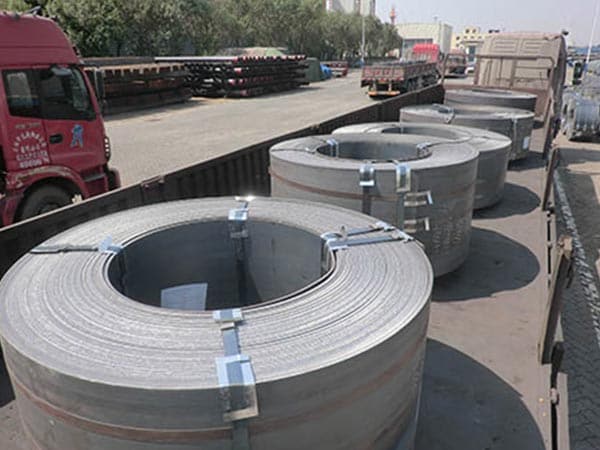
Understanding B650L Steel: A High-Strength Powerhouse for Modern Engineering
B650L is a high-strength low-alloy (HSLA) structural steel specifically engineered for the automotive industry, particularly for components that demand an exceptional balance between weight reduction and structural integrity. The 'B' typically refers to Baosteel's enterprise standard, while '650' denotes the minimum yield strength in Megapascals (MPa), and 'L' signifies its primary application in longitudinal beams and automotive frames. This material has become a cornerstone in the manufacturing of commercial vehicles, where the drive for lightweighting and fuel efficiency is paramount.
Unlike conventional carbon steels, B650L utilizes micro-alloying technology to achieve its superior properties. By adding precise amounts of elements like Niobium (Nb), Titanium (Ti), and Vanadium (V), manufacturers can refine the grain structure of the steel, leading to a material that is not only strong but also remarkably tough and weldable. This combination of attributes makes it an ideal candidate for heavy-duty truck frames, cross members, and other critical structural parts that must withstand significant dynamic loads and environmental stressors.
Chemical Composition and Micro-Alloying Strategy
The performance of B650L is rooted in its sophisticated chemical makeup. The strategy involves keeping carbon content low to ensure excellent weldability while using alloying elements to compensate for the strength loss. The following table outlines the typical chemical composition requirements for B650L steel under standard industrial specifications:
| Element | Content (Max %) | Primary Function |
|---|---|---|
| Carbon (C) | 0.12 | Ensures weldability and prevents brittleness. |
| Silicon (Si) | 0.50 | Deoxidation and solid solution strengthening. |
| Manganese (Mn) | 2.00 | Increases hardenability and tensile strength. |
| Phosphorus (P) | 0.025 | Kept low to maintain toughness. |
| Sulfur (S) | 0.015 | Kept low to improve lamellar tearing resistance. |
| Aluminum (Al) | 0.015 (Min) | Grain refinement and deoxidation. |
| Nb + Ti + V | 0.22 | Micro-alloying for grain refinement and precipitation hardening. |
The inclusion of Niobium and Titanium is particularly critical. These elements form stable carbides and nitrides during the cooling process, which pin grain boundaries and prevent grain growth. This results in a fine-grained ferrite-pearlite or bainitic microstructure, which is the secret behind B650L's high yield-to-tensile ratio and its ability to absorb energy during impacts.
Mechanical Properties and Structural Performance
The defining characteristic of B650L is its mechanical strength. For engineers, understanding the limits of yield and tensile strength is vital for safety calculations and weight optimization. B650L provides a significant upgrade over traditional Q345 or B510L grades, allowing for thinner gauges without compromising the load-bearing capacity of the vehicle frame.
| Property | Value Range | Significance |
|---|---|---|
| Yield Strength (ReL) | ≥ 650 MPa | The stress level where permanent deformation begins. |
| Tensile Strength (Rm) | 700 - 880 MPa | The maximum stress the material can withstand before failure. |
| Elongation (A50mm) | ≥ 12% | Indicates the ductility and energy absorption capacity. |
| Cold Bending (180°) | d = 3a (typical) | Ability to be formed without cracking. |
High yield strength allows for the design of "thin-walled" structures that can carry the same loads as thicker, heavier sections made from lower-grade steel. This is the essence of the lightweighting movement in the transport sector. Furthermore, the elongation values ensure that the material remains ductile enough to handle the vibrations and shocks associated with heavy-duty transport, preventing sudden catastrophic failures.
Exceptional Processability: Welding and Forming
One of the challenges with high-strength steels is their tendency to be difficult to process. However, B650L is designed with fabrication in mind. Its low carbon equivalent (Ceq) makes it highly compatible with standard welding processes used in automotive assembly lines, such as MAG (Metal Active Gas) and TIG (Tungsten Inert Gas) welding.
- Weldability: Due to the controlled micro-alloying, the heat-affected zone (HAZ) of B650L maintains a high degree of toughness. While preheating is generally not required for standard thicknesses, maintaining a controlled heat input is recommended to preserve the fine-grained structure.
- Cold Forming: B650L exhibits excellent cold bending properties. It can be formed into complex shapes like C-channels and Omega-sections used in truck chassis. Manufacturers must account for springback, which is more pronounced in 650 MPa steels compared to milder grades.
- Cutting: The material responds well to laser, plasma, and flame cutting. Laser cutting is preferred for high-precision components to minimize the thermal impact on the edges.
These processing characteristics ensure that B650L can be integrated into existing production workflows without the need for specialized, ultra-expensive equipment, making it a cost-effective choice for high-volume manufacturing.
Environmental Adaptability and Durability
Automotive frames are exposed to harsh environments, including road salt, moisture, and extreme temperature fluctuations. B650L offers reliable performance in these conditions. While it is not a stainless steel, its fine microstructure provides a uniform surface that responds well to modern anti-corrosion treatments like Electrophoretic Deposition (EPD) or hot-dip galvanizing.
The fatigue resistance of B650L is another critical factor. Under cyclic loading—common in long-haul trucking—the steel's ability to resist crack initiation and propagation determines the lifespan of the vehicle. The grain refinement achieved through Nb/Ti micro-alloying significantly enhances the fatigue limit, ensuring that frames do not develop cracks even after years of heavy service in rugged terrains.
Broadening the Scope: Beyond Automotive Frames
While the 'L' in B650L points to longitudinal beams, the utility of this steel grade extends far beyond truck chassis. Its high strength-to-weight ratio is being leveraged in various heavy industries:
- Construction Machinery: Used in the telescopic booms of cranes and the structural skeletons of excavators where reducing dead weight increases lifting capacity.
- Energy Sector: Applied in the fabrication of support structures for solar panels and wind turbine components that require high wind load resistance.
- Agricultural Equipment: Ideal for large-scale harvesters and trailers that need to be both light for soil protection and strong for high-volume transport.
- Container Manufacturing: Used in specialized shipping containers and intermodal frames to maximize payload capacity.
The versatility of B650L makes it a strategic asset for any engineering project where structural efficiency is a priority. By selecting B650L, designers can push the boundaries of what is possible, creating machines that are more capable, more efficient, and more durable.
Technical Guidance for Material Selection
When specifying B650L for a project, it is essential to verify the material's origin and compliance with relevant standards such as Baosteel's Q/BQB 310 or equivalent international standards like EN 10149-2 (S650MC). Quality assurance documentation, including mill test certificates (MTC), should be reviewed to ensure that the actual chemical and mechanical properties meet the design requirements.
For procurement teams, sourcing B650L involves understanding the trade-offs between different surface finishes (hot-rolled, pickled, and oiled) and how they affect subsequent processing steps like painting or welding. Engaging with a supplier who understands the nuances of HSLA steels can provide a competitive edge in optimizing the supply chain and ensuring the long-term success of the manufactured components.
Leave a message