
What does steel grade high yield strength alloy en 10149-2 s700mc mean
Comprehensive guide to S700MC high yield strength steel under EN 10149-2. Explore its chemical composition, mechanical properties, and industrial applications.
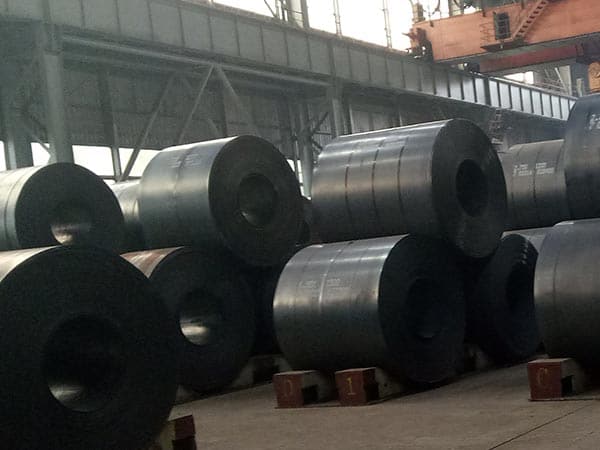
Decoding the Designation: What S700MC Represents
When engineers and procurement specialists encounter the term S700MC, they are looking at a highly engineered material designed for modern structural efficiency. This grade is governed by the European standard EN 10149-2, which specifies hot-rolled flat products made of high yield strength steels for cold forming. To understand what this grade means, we must break down the alphanumeric code into its core components.
The 'S' stands for structural steel, indicating its primary use in load-bearing components. The '700' represents the minimum yield strength of 700 Megapascals (MPa) for thicknesses up to 8mm. The 'M' denotes the delivery condition: thermomechanically rolled (TMCP). Finally, the 'C' signifies that the steel is specifically suited for cold forming, such as bending or folding. This combination of high strength and formability is what sets S700MC apart from traditional structural steels like S355.
The Metallurgy Behind High Yield Strength
The exceptional performance of S700MC is not accidental; it is the result of precise chemical engineering and advanced processing. Unlike conventional steels that rely on high carbon content for strength, S700MC utilizes a low-carbon micro-alloyed design. By keeping carbon levels low (typically below 0.12%), the steel maintains excellent weldability and toughness.
Strength is achieved through the addition of micro-alloying elements such as Niobium (Nb), Vanadium (V), and Titanium (Ti). These elements facilitate grain refinement and precipitation hardening. During the thermomechanical rolling process, these alloys prevent grain growth, resulting in an extremely fine-grained microstructure. This fine grain size is the secret to why S700MC can be both incredibly strong and remarkably ductile.
Mechanical Properties and Performance Data
Understanding the mechanical limits of S700MC is crucial for safe engineering design. The following table outlines the key mechanical properties as defined by the EN 10149-2 standard:
| Property | Value (Thickness ≤ 8mm) |
|---|---|
| Minimum Yield Strength (ReH) | 700 MPa |
| Tensile Strength (Rm) | 750 - 950 MPa |
| Minimum Elongation (A80mm) | 10% - 12% (Depending on thickness) |
| Bending Radius (90°) | Minimum 1.5t to 2.0t (t = thickness) |
The high yield-to-tensile ratio of S700MC allows for significant weight reduction in structures. By using a material that is twice as strong as standard S355, designers can reduce plate thickness by up to 30-40% without compromising structural integrity. This leads to lighter vehicles, lower fuel consumption, and higher payload capacities.
The Importance of Thermomechanical Rolling (TMCP)
The 'M' in S700MC refers to thermomechanical rolling, a process that combines controlled rolling and controlled cooling. Unlike traditional normalized rolling, TMCP involves deforming the steel at specific temperature ranges where recrystallization is suppressed. This forces the formation of a very fine ferrite-pearlite or bainitic structure.
This process is environmentally friendly as it reduces the need for additional heat treatment cycles like quenching and tempering. It also ensures that the steel has a low Carbon Equivalent (CEV), which is a critical factor for weldability. Low CEV means the steel is less prone to cold cracking in the heat-affected zone (HAZ) during welding, even without extensive preheating.
Exceptional Cold Forming and Fabrication Characteristics
Despite its high strength, S700MC is designed for ease of fabrication. The 'C' designation highlights its suitability for cold forming. Manufacturers can bend and fold S700MC into complex shapes, which is essential for chassis frames, crane booms, and structural sections. However, due to the high strength, the springback effect is more pronounced than in lower-grade steels. Fabricators must account for this by over-bending slightly or using precision CNC equipment.
- Cutting: S700MC can be easily cut using laser, plasma, or waterjet methods. Laser cutting is particularly effective due to the steel's clean surface and consistent microstructure.
- Welding: It is compatible with all standard welding processes, including MAG, TIG, and submerged arc welding. Because of the low alloy content, it maintains its toughness even after welding.
- Surface Quality: EN 10149-2 steels typically feature a high-quality surface finish with minimal scale, making them ideal for subsequent painting or galvanizing.
Industrial Applications: Where S700MC Shines
The primary driver for S700MC adoption is the global push for lightweighting. In the transportation sector, every kilogram saved in the vehicle's tare weight translates to increased efficiency and reduced emissions. This makes S700MC the material of choice for several critical industries.
In the heavy lifting and crane industry, S700MC is used for telescopic booms and outriggers. The high strength allows cranes to reach higher and lift more while remaining light enough to travel on public roads. Similarly, in the automotive and trucking industry, it is used for truck chassis, cross members, and side protection beams. The ability to absorb energy during an impact while maintaining structural form is a key safety benefit.
Beyond transport, S700MC is finding its way into agricultural machinery. Modern harvesters and plows require materials that can withstand high stress and abrasive environments without adding excessive weight that would compact the soil. The renewable energy sector also utilizes this grade for structural components in wind turbine towers and solar tracking systems where high wind loads are a factor.
Environmental Adaptability and Sustainability
S700MC exhibits good atmospheric corrosion resistance compared to standard carbon steels, although it is not a weathering steel like Corten. Its real environmental contribution lies in resource efficiency. Using less steel to achieve the same structural performance reduces the carbon footprint of the entire manufacturing lifecycle—from ore extraction to transportation.
Furthermore, the high toughness of S700MC at low temperatures (often tested at -20°C or -40°C) ensures that structures remain safe in harsh, cold climates. This makes it a reliable choice for equipment operating in Nordic regions or high-altitude environments where brittle fracture is a concern.
Comparative Analysis: S700MC vs. Traditional Grades
When comparing S700MC to traditional s355jr or S355J2, the differences are stark. S355 is a versatile workhorse, but it lacks the weight-saving potential of S700MC. While S700MC has a higher initial cost per ton, the total cost of ownership is often lower. Reduced material volume means less welding consumables, lower shipping costs, and faster assembly times.
Compared to quenched and tempered (Q+T) steels like S690QL, S700MC offers better cold formability. Q+T steels are often harder and more difficult to bend without cracking. S700MC provides a "sweet spot" for manufacturers who need extreme strength but also require the ability to shape the steel into complex profiles using standard workshop machinery.
Technical Considerations for Engineering Design
Engineers specifying S700MC must be mindful of its directional properties. While EN 10149-2 steels are designed to be isotropic, the rolling direction can still influence the bending radius. It is generally recommended to bend transverse to the rolling direction to achieve the tightest radii. Additionally, designers should avoid sharp notches or abrupt changes in section, as the high stress levels in S700MC structures can amplify the risk of fatigue if not properly managed.
The transition to S700MC often requires a shift in design philosophy. Instead of simply replacing S355 with a thinner sheet of S700MC, engineers should optimize the geometry to take full advantage of the material's yield strength. This might involve using tubular sections or complex pressed profiles that provide higher torsional rigidity.
Leave a message