
What is the en 10149-2 high yield strength alloy steel specification price export to Australia
A professional guide to EN 10149-2 high yield strength steel specifications, covering S315MC to S700MC grades, mechanical properties, processing advantages, and pricing factors for the Australian market.
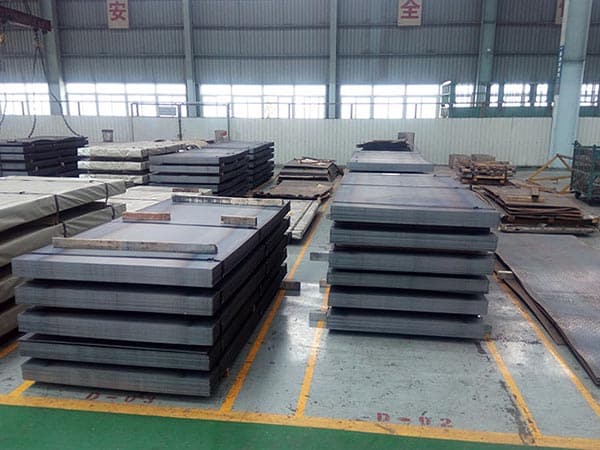
Understanding EN 10149-2: The Benchmark for High Yield Strength Cold Forming Steels
EN 10149-2 is a European standard that specifies the technical delivery conditions for hot-rolled flat products made of high yield strength steels for cold forming. These steels are characterized by their thermomechanically rolled (M) delivery condition, which allows for a unique combination of high strength, excellent ductility, and superior weldability. For Australian importers and engineers, this standard represents a critical material choice for reducing vehicle weight, increasing payload, and ensuring structural integrity in harsh environments.
The standard encompasses several grades, most notably S315MC, S355MC, S420MC, S460MC, S500MC, S550MC, S600MC, and S700MC. The numeric value represents the minimum yield strength in Megapascals (MPa). The 'S' denotes structural steel, 'M' indicates thermomechanical rolling, and 'C' signifies that the grade is suitable for cold forming. This nomenclature is vital for procurement teams in Sydney or Perth when comparing these grades to local Australian standards like AS/NZS 1594.
Technical Specifications and Chemical Composition
The performance of EN 10149-2 steels stems from a precise micro-alloying strategy. Unlike traditional carbon steels that rely on high carbon content for strength, these grades utilize minute additions of Niobium (Nb), Titanium (Ti), and Vanadium (V). This approach keeps the carbon equivalent (CEV) low, which is the primary reason for their exceptional weldability.
| Grade | C % (max) | Mn % (max) | Si % (max) | P % (max) | S % (max) | Al % (min) |
|---|---|---|---|---|---|---|
| S355MC | 0.12 | 1.50 | 0.50 | 0.025 | 0.020 | 0.015 |
| S420MC | 0.12 | 1.60 | 0.50 | 0.025 | 0.015 | |
| S500MC | 0.12 | 1.70 | 0.50 | 0.025 | 0.015 | |
| S700MC | 0.12 | 2.10 | 0.60 | 0.025 | 0.015 |
By maintaining low carbon levels, usually below 0.12%, the steel avoids the formation of brittle martensite during the welding process. This is a significant advantage for Australian manufacturers of heavy-duty trailers and mining equipment who require high-integrity joints without the need for extensive pre-heating.
Mechanical Properties and Performance Metrics
The mechanical properties of EN 10149-2 are what define its value proposition. The thermomechanical rolling process refines the grain structure to a level that conventional normalized rolling cannot achieve. This results in a material that is both incredibly strong and remarkably tough.
- Yield Strength: Ranges from 315 MPa to 700 MPa, providing a wide spectrum for design optimization.
- Tensile Strength: For S700MC, this reaches 750-950 MPa, allowing for significant thickness reduction in structural components.
- Elongation: Despite the high strength, these steels maintain good elongation (e.g., 12-13% for S700MC), ensuring they can be bent and shaped without cracking.
- Impact Toughness: Often tested at -20°C or -40°C, ensuring the steel performs reliably in the varied climates of the Australian Outback.
Engineers utilizing these specs can achieve weight savings of up to 30% compared to traditional s355jr structural steels. This reduction in tare weight directly translates to higher fuel efficiency and increased payload capacity for transport logistics—a key factor in the Australian economy.
Processing Advantages: Bending, Welding, and Cutting
One of the primary reasons for the popularity of EN 10149-2 in the Australian fabrication industry is its ease of processing. High yield strength often comes at the cost of workability, but the 'MC' series breaks this trend.
Cold Forming and Bending: These steels are specifically designed for cold forming. They exhibit very low springback compared to other high-strength alloys. For a fabricator in Melbourne producing chassis rails, this means more accurate dimensions and less tool wear. The minimum recommended bend radius is remarkably tight, often as low as 1.0 to 2.0 times the thickness depending on the grade and orientation.
Advanced Welding: Due to the low alloy content and low CEV, EN 10149-2 steels can be welded using all standard methods, including GMAW (MIG), GTAW (TIG), and submerged arc welding. The heat-affected zone (HAZ) remains stable, maintaining much of the base metal's strength, provided that heat input is controlled to prevent excessive grain growth.
Laser and Plasma Cutting: The clean chemical composition and uniform grain structure make these grades ideal for high-precision laser cutting. The absence of heavy scale and internal stresses ensures that parts remain flat after cutting, which is essential for automated assembly lines.
Exporting to Australia: Market Dynamics and Pricing
When discussing the price of EN 10149-2 for export to Australia, several variables come into play. As of current market trends, prices are influenced by global iron ore costs, energy prices in manufacturing hubs, and international shipping rates. Australia, being a major iron ore producer, paradoxically imports a significant volume of high-value processed steel like S700MC because local production focuses more on standard commercial grades.
Pricing Factors:
- Base Material Cost: S700MC typically carries a premium over S355MC due to the complex rolling process and micro-alloying elements.
- Logistics: Shipping from major ports in China, Korea, or Europe to Brisbane, Sydney, or Fremantle adds a layer of cost. Bulk shipments or containerized coils are the standard modes of transport.
- Exchange Rates: The AUD/USD and AUD/EUR fluctuations significantly impact the landed cost for Australian distributors.
- Certification and Compliance: Australian buyers often require Mill Test Certificates (MTC) to EN 10204 3.1 as a minimum. Ensuring the material meets both EN 10149-2 and is recognizable under AS/NZS standards (where applicable) is crucial for structural compliance.
Current price estimates for S700MC exported to Australia generally range between $950 to $1,250 USD per tonne CFR (Cost and Freight), depending on volume, thickness, and width requirements. S355MC is naturally more affordable, often tracking closer to standard hot-rolled coil prices with a modest premium for the 'MC' designation.
Environmental Adaptability and Industry Applications
The Australian environment is notoriously demanding, with extreme heat in the north and coastal salt spray in major cities. EN 10149-2 steels, while not stainless, offer a dense surface structure that responds well to modern protective coatings. Galvanizing and high-performance painting systems adhere exceptionally well to the fine-grained surface of thermomechanically rolled steel.
Mining and Earthmoving: In the Pilbara region, equipment is subjected to massive loads and abrasive materials. Using S700MC for crane booms, excavator buckets, and wear plates allows for lighter equipment that can move more ore per cycle without sacrificing safety.
Agricultural Machinery: Australian farmers require robust equipment that can handle tough soil conditions. Seeder bars, plough frames, and harvester components benefit from the high fatigue resistance of EN 10149-2 steels, extending the service life of the machinery.
Renewable Energy: The push for wind and solar power across South Australia and Queensland involves large-scale structural supports. High yield steel reduces the amount of material needed for these structures, lowering the overall carbon footprint of the project and simplifying the logistics of transporting large components to remote sites.
Critical Considerations for Australian Importers
Procuring EN 10149-2 for the Australian market requires attention to detail regarding tolerances. EN 10051 is the standard usually applied for tolerances on dimensions and shape for these products. Importers must specify if they require restricted tolerances for specialized applications like automated welding robots.
Furthermore, understanding the impact of 'Cold Work' is essential. While these steels are excellent for cold forming, excessive deformation can lead to work hardening. For critical structural components, designers should consult with material specialists to ensure the final part retains the necessary toughness, especially for applications in the transport sector where vibration and cyclic loading are constant.
The transition from traditional heavy sections to high-strength thin-walled sections made from S500MC or S700MC is a growing trend in Australia. This shift is driven by the need for efficiency and the stringent Australian Design Rules (ADR) for vehicles. By adopting EN 10149-2, local manufacturers can remain competitive against imported finished goods, leveraging the superior properties of these advanced alloy steels.
Leave a message