
Can you heat treat S315MC automotive steel sheet yield?
Detailed analysis of why heat treatment affects S315MC automotive steel yield strength, covering TMCP processes, mechanical properties, and application impacts.
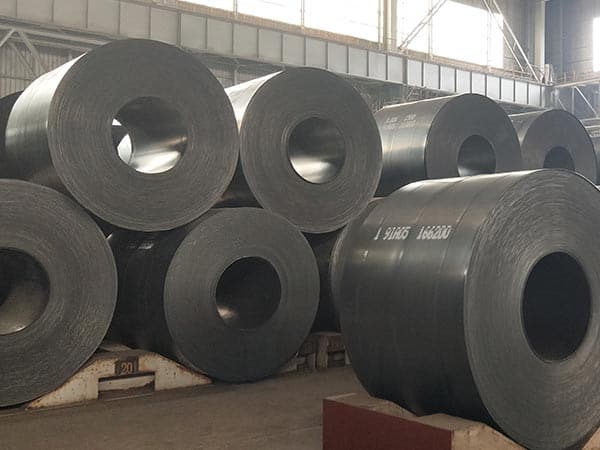
Understanding the Metallurgical Foundation of S315MC Automotive Steel
S315MC is a high-yield strength, cold-forming steel specifically designed for the automotive industry, governed by the EN 10149-2 standard. The 'MC' suffix denotes that this material is delivered in a thermomechanically rolled (TMCP) condition. Unlike traditional hot-rolled steels that rely on heavy alloying or subsequent heat treatment to achieve strength, S315MC derives its mechanical prowess from a precision-controlled rolling process combined with micro-alloying elements such as Niobium (Nb), Vanadium (V), and Titanium (Ti). This metallurgical approach ensures a fine-grained ferritic-pearlitic structure that provides an optimal balance between strength, ductility, and toughness.
The Impact of Heat Treatment on S315MC Yield Strength
When addressing the question of whether one can heat treat S315MC automotive steel, the technical answer is nuanced. While you can physically subject the steel to heat treatment processes like normalizing, annealing, or quenching, doing so is generally counterproductive for maintaining its specified yield strength. Because S315MC achieves its 315 MPa minimum yield strength through the TMCP process, any subsequent heating above the transformation temperature (Ac1) disrupts the engineered microstructure. Reheating the steel to typical normalizing temperatures (around 900°C) causes grain coarsening. The fine-grained structure, which is the primary source of its high yield strength and excellent low-temperature impact toughness, is lost, leading to a significant drop in yield strength and potentially rendering the material non-compliant with EN 10149-2 specifications.
Thermomechanical rolling is a process where the final deformation is carried out in a specific temperature range that leads to a grain size much finer than that achievable by conventional rolling or normalizing. If a manufacturer attempts to 'stress relieve' or 'soften' S315MC through high-temperature heat treatment, they are essentially undoing the work performed at the steel mill. For automotive components requiring high structural integrity, this loss of strength can be catastrophic, leading to premature fatigue or structural failure under load.
Chemical Composition and Micro-Alloying Strategy
The performance of S315MC is rooted in its chemistry. The low carbon content ensures excellent weldability, while the micro-alloys provide precipitation hardening and grain refinement. Below is a breakdown of the typical chemical composition for S315MC:
| Element | Max % (Mass Fraction) |
|---|---|
| Carbon (C) | 0.12 |
| Manganese (Mn) | 1.30 |
| Silicon (Si) | 0.50 |
| Phosphorus (P) | 0.025 |
| Sulfur (S) | 0.020 |
| Aluminium (Al) | 0.015 |
| Nb + V + Ti | 0.22 |
The combination of Niobium and Titanium is particularly critical. These elements form carbonitrides that pin grain boundaries during the rolling process, preventing grain growth even at elevated rolling temperatures. This allows the steel to maintain a fine grain size even after the intense deformation required to produce thin sheets for automotive frames and brackets.
Mechanical Properties and Yield Performance
S315MC is prized for its consistent yield strength and high elongation, which are vital for complex cold-forming operations. The mechanical properties are tested longitudinal to the rolling direction. The yield strength (Reh) must be at least 315 MPa, while the tensile strength (Rm) ranges between 390 and 510 MPa. Elongation (A80mm) is typically 20% or higher, depending on the thickness of the sheet.
Yield Strength Stability: In the context of automotive manufacturing, 'yield' refers not just to the point of permanent deformation but to the reliability of the part under cyclic loading. S315MC exhibits a very stable yield-to-tensile ratio. However, if the material is heated during secondary processing—such as intensive welding or flame cutting—the heat-affected zone (HAZ) may experience a localized reduction in yield strength. Engineers must account for this 'softening' when designing safety-critical components like chassis cross-members or suspension mounts.
Cold Forming and Process Performance
One of the primary reasons S315MC is selected over standard carbon steels is its superior cold-forming capability. It can be bent to very tight radii without cracking. For thicknesses (t) less than 3mm, the recommended minimum internal bending radius is 0.25t, which is remarkably tight for a steel of this strength level. This allows automotive designers to create complex, weight-optimized geometries that improve vehicle fuel efficiency without sacrificing safety.
- Springback Control: Due to its consistent yield strength, S315MC offers predictable springback during stamping and bending, which is essential for high-volume automated assembly lines.
- Hole Expansion: The fine-grained structure contributes to excellent hole expansion ratios, reducing the risk of edge cracking during flanging operations.
- Surface Quality: As a hot-rolled pickled and oiled (HRPO) product, S315MC provides a clean surface suitable for direct painting or coating, which is a standard requirement in the automotive supply chain.
Environmental Adaptability and Corrosion Resistance
In the automotive environment, steel is subjected to corrosive road salts, moisture, and varying temperatures. S315MC, while not a stainless grade, offers decent atmospheric corrosion resistance due to its low impurity levels (low Phosphorus and Sulfur). However, in most automotive applications, it is used in conjunction with cathodic protection systems, such as E-coating (electrophoretic coating) or galvanizing. The TMCP structure of S315MC is compatible with modern galvanizing processes, provided the silicon content is controlled to avoid the Sandelin effect, which can lead to brittle or overly thick zinc coatings.
Advanced Application in Modern Vehicle Architecture
S315MC finds its place in the structural backbone of both passenger and commercial vehicles. It is frequently used for truck chassis frames, where the high yield strength allows for thinner gauges, reducing the overall curb weight of the vehicle. In passenger cars, it is used for seat frames, bumper reinforcements, and various brackets. The ability to maintain structural integrity under impact makes it a preferred choice for energy-absorbing zones.
The move towards electric vehicles (EVs) has further increased the demand for steels like S315MC. EV battery enclosures require materials that are lightweight yet strong enough to protect the battery pack during a collision. S315MC provides a cost-effective solution compared to aluminum or ultra-high-strength steels (UHSS) for certain structural components that require significant forming.
Welding Considerations and Heat Input Management
While S315MC is highly weldable using standard methods like MIG, MAG, or laser welding, the 'heat treat' question returns in the form of welding heat input. Excessive heat input during welding can act as a localized heat treatment, causing grain growth in the HAZ. To maintain the yield strength of the assembly, it is recommended to use low-heat input welding techniques and to limit the interpass temperature. By controlling the cooling rate, the fine-grained nature of the steel is largely preserved, ensuring that the welded joint remains the strongest part of the structure.
Laser Cutting: S315MC is also excellent for laser cutting. The low carbon equivalent (CEV) ensures that the cut edges do not harden excessively, which facilitates subsequent machining or welding operations without the need for edge grinding.
Conclusion on Thermal Exposure
To maximize the yield performance of S315MC, it should be treated as a precision-engineered product of thermomechanical rolling. Avoid any unnecessary high-temperature thermal cycles. If stress relieving is absolutely required by a specific design code, it should be performed at temperatures well below the transformation range (typically below 580°C) and for the shortest duration possible to minimize the risk of softening. By respecting the metallurgical limits of S315MC, manufacturers can fully leverage its high yield strength and exceptional formability to produce safer, lighter, and more efficient automotive structures.
Leave a message