
What characteristics should the S500MC hot rolled automotive steel coil inventory have
Explore the essential characteristics of S500MC hot rolled automotive steel coil inventory, including mechanical properties, processing performance, and industry standards.
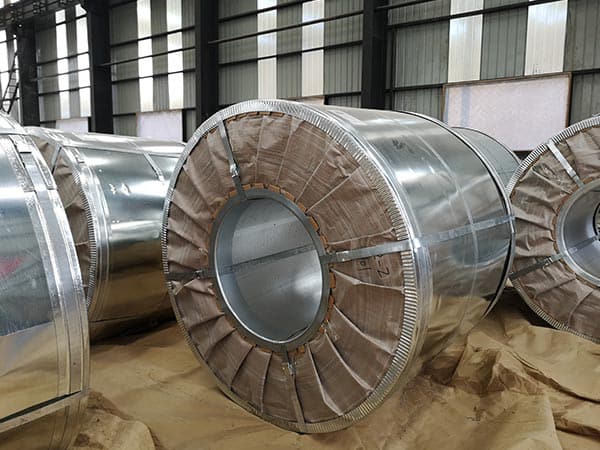
The Fundamental Role of S500MC in Modern Automotive Engineering
S500MC is a high-yield strength, cold-forming steel produced through thermomechanical rolling, primarily governed by the EN 10149-2 standard. As the automotive industry shifts toward lightweighting to improve fuel efficiency and reduce carbon emissions, the demand for high-strength low-alloy (HSLA) steels like S500MC has surged. A high-quality inventory of S500MC must exhibit specific characteristics that balance structural integrity with manufacturing flexibility.
When evaluating S500MC hot rolled automotive steel coil inventory, the focus extends beyond simple chemistry. It involves a comprehensive assessment of its metallurgical structure, surface integrity, and dimensional precision. These factors determine how the material will behave during high-speed stamping, complex bending, and automated welding processes in the production of truck frames, chassis components, and structural cross-members.
Exceptional Mechanical Properties: The Core of Structural Reliability
The primary characteristic of any S500MC inventory is its mechanical performance. The "500" in its designation refers to a minimum yield strength of 500 MPa. However, a premium inventory should demonstrate consistency across the entire coil length and width.
- Yield Strength (ReH): Must be maintained between 500 and 620 MPa to ensure the material can withstand significant loads without permanent deformation.
- Tensile Strength (Rm): Typically ranges from 550 to 700 MPa, providing the necessary safety margin for structural components.
- Elongation (A80): A minimum of 12% to 14% (depending on thickness) is crucial for cold forming. High ductility allows for complex geometries without micro-cracking.
| Mechanical Property | Requirement (EN 10149-2) | Typical Inventory Value |
|---|---|---|
| Yield Strength (MPa) | min. 500 | 520 - 580 |
| Tensile Strength (MPa) | 550 - 700 | 580 - 660 |
| Elongation A5 (%) | min. 14 (t < 3mm) | 16 - 20 |
Thermomechanical Control Process (TMCP) and Grain Refinement
A distinctive characteristic of S500MC is its fine-grained microstructure, achieved through the Thermomechanical Control Process (TMCP). Unlike traditional hot rolling, TMCP involves precise temperature control during the rolling stages and accelerated cooling. This results in a refined ferrite-pearlite structure with micro-alloying elements like Niobium (Nb), Vanadium (V), and Titanium (Ti).
These micro-alloys form stable carbides and nitrides that pin grain boundaries, preventing grain growth during processing. For an inventory holder, verifying the grain size is essential. A finer grain structure not only enhances strength but also significantly improves impact toughness at low temperatures, a critical requirement for vehicles operating in cold climates.
Superior Cold Forming and Bending Performance
Automotive manufacturers require S500MC for parts that involve tight bending radii. A high-quality inventory must show no signs of "orange peel" or surface fracturing during the bending process. The material's ability to be cold-formed is one of its most marketable traits.
The minimum recommended bending radius for S500MC is usually 1.0 to 1.5 times the thickness (t) for a 90-degree bend. If the inventory consists of material with high inclusion levels or coarse grains, it will fail this test. Therefore, low sulfur and phosphorus content are non-negotiable characteristics, as they ensure internal cleanliness and prevent delamination during severe deformation.
Weldability and Chemical Composition Stability
S500MC is designed for excellent weldability due to its low carbon equivalent (CEV). In automotive assembly lines, where robotic MIG/MAG or laser welding is standard, the consistency of the chemical composition is vital to prevent weld defects such as cold cracking or softening in the heat-affected zone (HAZ).
Chemical Composition Limits:
- Carbon (C): Max 0.12% - Ensures ductility and weldability.
- Manganese (Mn): Max 1.60% - Provides solid solution strengthening.
- Silicon (Si): Max 0.50% - Acts as a deoxidizer.
- Micro-alloys (Nb+V+Ti): Max 0.22% - Essential for grain refinement.
Inventory batches should be accompanied by Mill Test Certificates (MTC) that prove these elements are within the tight tolerances required for stable welding parameters across different production shifts.
Surface Quality and Dimensional Tolerances
For automated automotive production, the physical dimensions of the S500MC coil are as important as its chemistry. Inventory should adhere to EN 10051 for dimensional tolerances. This includes precise control over thickness, width, and flatness.
Thickness Uniformity: Variations in thickness can lead to inconsistent springback during stamping, causing assembly issues. A premium S500MC inventory will often feature "half-tolerance" or better compared to standard requirements.
Surface Finish: The coils should be free from scale pits, deep scratches, or rust. Many automotive applications require the steel to be pickled and oiled (P&O) to provide a clean surface for subsequent coating or painting processes. The absence of surface defects ensures that the fatigue life of the final component is not compromised by stress concentrators.
Environmental Adaptability and Fatigue Resistance
Automotive components like truck chassis are exposed to dynamic loads and corrosive environments. S500MC's refined grain structure provides an inherent advantage in fatigue resistance. However, the inventory must be stored in climate-controlled environments to prevent oxidation. Even minor surface corrosion can act as a site for fatigue crack initiation.
Furthermore, the material's performance at sub-zero temperatures (often tested at -20°C or -40°C) is a key characteristic for heavy-duty transport applications. High-quality S500MC inventory should offer guaranteed Charpy V-notch impact energy values, ensuring the vehicle remains safe under impact even in arctic conditions.
Expanding Applications: Beyond the Automotive Sector
While S500MC is branded as automotive steel, its characteristics make it ideal for various other demanding industries. Recognizing these applications helps in managing inventory turnover and identifying new market opportunities.
- Crane and Lifting Equipment: The high strength-to-weight ratio allows for longer booms and higher load capacities without increasing the dead weight of the machine.
- Agricultural Machinery: Used in plow frames and harvester structures where durability and weight reduction are equally important.
- Cold-Formed Sections: S500MC is frequently used to roll-form C-profiles and Z-profiles for industrial racking and solar mounting systems.
- Waste Management Vehicles: The wear resistance and strength of S500MC improve the lifespan of garbage truck compactors and containers.
Inventory Management and Traceability
The final characteristic of a professional S500MC inventory is its traceability. Every coil must be linked to its original heat number and processing history. In the automotive industry, where recalls can be devastatingly expensive, the ability to trace a specific part back to a specific steel batch is a mandatory requirement. Digital inventory systems that track mechanical properties and chemical analysis for every square meter of steel are now the industry standard for high-tier suppliers.
By maintaining these strict characteristics—mechanical precision, metallurgical purity, and dimensional accuracy—S500MC inventory becomes a high-value asset that enables manufacturers to push the boundaries of vehicle design and efficiency.
Leave a message