
What factors influence the development of domex 700
Explore the critical metallurgical, economic, and industrial factors driving the evolution of Domex 700 (S700MC). Learn about its mechanical properties, processing advantages, and impact on sustainable manufacturing.
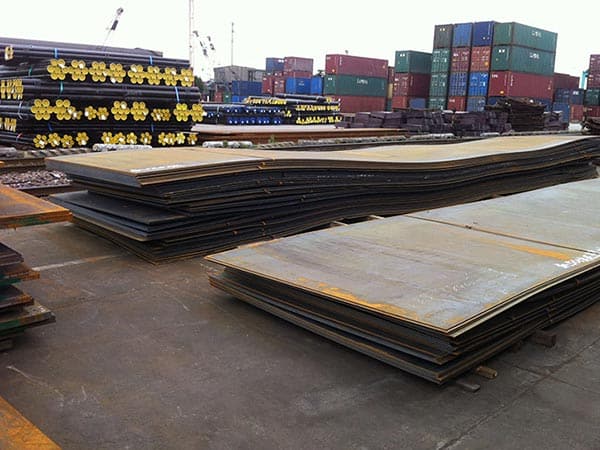
The Evolution of High-Strength Structural Steel: The Domex 700 Paradigm
The development of Domex 700, a hot-rolled, extra-high-strength steel specifically designed for cold forming, represents a significant milestone in metallurgical engineering. Often classified under the European standard S700MC, this material has redefined the boundaries of what is possible in structural design. Its rise to prominence is not a result of a single innovation but rather a convergence of several critical factors ranging from advanced steelmaking technology to the global push for environmental sustainability.
1. Metallurgical Innovation: The Power of TMCP
The primary factor influencing the development of Domex 700 is the advancement of Thermo-Mechanical Controlled Processing (TMCP). Unlike traditional normalized steels that achieve their properties through heat treatment after rolling, Domex 700 gains its strength during the rolling process itself. By precisely controlling the temperature and the reduction ratio during rolling, manufacturers can create a extremely fine-grained microstructure.
This fine grain size is the secret behind the material's unique combination of high yield strength (minimum 700 MPa) and excellent toughness. The development of sophisticated cooling systems on the run-out table of hot strip mills allowed for the specific cooling rates required to transform the austenite into a fine-grained ferrite-bainite structure, which is essential for the material's performance.
2. Micro-alloying Strategies and Chemical Purity
The chemical composition of Domex 700 is a masterclass in precision. The development was heavily influenced by the ability to utilize micro-alloying elements such as Niobium (Nb), Vanadium (V), and Titanium (Ti). These elements, even in minute quantities, play a vital role in grain refinement and precipitation hardening.
- Niobium: Increases the recrystallization temperature, allowing for more effective grain refinement during rolling.
- Titanium: Forms stable nitrides that prevent grain growth at high temperatures, particularly in the heat-affected zone (HAZ) during welding.
- Low Carbon Content: By keeping carbon levels extremely low (typically below 0.12%), the steel maintains exceptional weldability and ductility, which were previously difficult to achieve at such high strength levels.
| Element | Max Content (%) | Role in Development |
|---|---|---|
| Carbon (C) | 0.12 | Ensures superior weldability and cold formability. |
| Manganese (Mn) | 2.10 | Provides solid solution strengthening. |
| Silicon (Si) | 0.60 | Deoxidation and strength enhancement. |
| Niobium (Nb) | 0.09 | Grain refinement and precipitation hardening. |
3. The Economic Drive for Weight Reduction
In the transport and logistics industry, weight is a direct cost. The development of Domex 700 was accelerated by the market demand for downweighting. By using a steel with a yield strength of 700 MPa instead of a conventional 355 MPa steel, engineers can reduce the thickness of structural components by up to 40% without compromising load-bearing capacity.
This reduction in dead weight translates directly into increased payload for trucks, trailers, and cranes. For fleet operators, this means fewer trips, lower fuel consumption, and higher profitability. The economic incentive to optimize structural efficiency has been a relentless driver for the adoption and continuous improvement of S700MC grades.
4. Manufacturing Efficiency and Fabricability
A steel grade is only as good as its ease of use in the workshop. The development of Domex 700 focused heavily on fabricability. Modern manufacturing requires materials that can be processed quickly and reliably. Key factors include:
- Cold Formability: Despite its high strength, Domex 700 exhibits tight bending radii, allowing for complex geometries in chassis and boom designs.
- Weldability: The low Carbon Equivalent (CEV) value ensures that the steel can be welded using standard methods (MIG/MAG, Submerged Arc) without the need for expensive pre-heating in most thicknesses.
- Laser Cutting Performance: The material's consistent surface quality and low internal stresses make it ideal for high-speed laser cutting, ensuring dimensional accuracy and clean edges.
5. Environmental Regulations and Sustainability
Global environmental standards, such as the Euro 6 emission norms for heavy vehicles, have necessitated a shift toward lighter materials. Reducing the weight of a vehicle is the most effective way to lower its CO2 footprint. Domex 700 enables the construction of "green" machinery by reducing the total amount of steel required for a project and lowering the energy consumption during the vehicle's operational life.
Furthermore, the move toward fossil-free steelmaking (pioneered by companies like SSAB with the HYBRIT project) is the latest factor influencing the trajectory of Domex 700. The market now demands not only high performance but also a low carbon footprint during the production phase of the steel itself.
6. Demands of the Heavy Lifting and Construction Sector
The construction of mobile cranes and telescopic booms requires materials that can withstand extreme stresses while remaining lightweight. The development of Domex 700 was heavily influenced by the need for higher reach and greater lifting capacities. The fatigue resistance of S700MC makes it particularly suitable for components subjected to cyclic loading, ensuring a long and safe service life for critical infrastructure equipment.
| Mechanical Property | Domex 700 (S700MC) Value | Engineering Benefit |
|---|---|---|
| Yield Strength (ReH) | Min 700 MPa | Higher load capacity with thinner sections. |
| Tensile Strength (Rm) | 750 - 950 MPa | Structural integrity under extreme tension. |
| Elongation (A5) | Min 10 - 12% | Ensures safety margin before fracture. |
| Impact Toughness | 40J at -20°C / -40°C | Reliability in arctic or low-temperature environments. |
7. Technological Synergy with Design Software
The rise of Finite Element Analysis (FEA) and advanced CAD software has allowed engineers to simulate stresses with incredible precision. This technological shift created a demand for materials with very tight property tolerances. Domex 700 is manufactured with high consistency in thickness, flatness, and mechanical properties, allowing designers to push the safety factors closer to the limit, knowing the material will behave exactly as predicted in the digital model.
8. Global Competition and Standardization
The standardization of high-strength steels under EN 10149-2 provided a clear framework for quality and performance, which encouraged global adoption. As more steel mills developed the capability to produce S700MC, the competitive landscape forced continuous refinement in surface quality and thickness tolerances. Domex 700, as a brand, has maintained its lead by focusing on "clean steel" practices, reducing non-metallic inclusions that could act as crack initiators during severe bending or high-stress applications.
The trajectory of Domex 700 is a testament to the synergy between metallurgical science and market necessity. As industries move toward even higher grades, such as 900, 960, and 1100 MPa, the lessons learned from the development of Domex 700 continue to serve as the foundation for the next generation of ultra-high-strength steels. The focus remains on balancing strength, weight, and ease of processing to meet the increasingly complex demands of modern engineering.
Leave a message