
What is EN 10346 HX160YD + ZF galvanealed coil steel grade
Comprehensive guide to HX160YD+ZF steel grade, covering its chemical composition, mechanical properties, galvanealed coating benefits, and industrial applications.
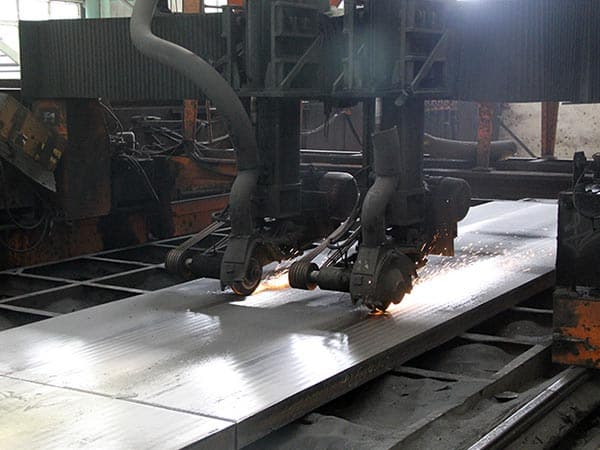
Understanding the Technical DNA of HX160YD + ZF
In the high-stakes world of automotive manufacturing and precision engineering, selecting the right substrate is a decision that impacts everything from structural integrity to the final aesthetic finish. EN 10346 HX160YD + ZF represents a specialized category of high-strength, Interstitial-Free (IF) steel that has been hot-dip coated and subsequently heat-treated to create a zinc-iron alloy layer. This material is not merely a commodity; it is a highly engineered solution designed to solve the paradox of high formability coupled with superior weldability and paint adhesion.
The nomenclature defined by the EN 10346 standard provides a roadmap to its capabilities. The 'H' signifies high-strength steel for cold forming, while 'X' indicates that the rolling condition is at the manufacturer's discretion (usually cold-rolled before coating). The '160' denotes a minimum yield strength of 160 MPa. The 'Y' is perhaps the most critical letter, identifying it as an Interstitial-Free (IF) steel, which means carbon and nitrogen atoms are stabilized by micro-alloying elements like titanium or niobium. Finally, the 'D' confirms it is intended for hot-dip coating, and '+ZF' specifies the Galvanealed finish.
Chemical Composition and the Role of IF Steel Technology
The performance of HX160YD + ZF begins at the molecular level. By reducing interstitial elements like carbon and nitrogen to extremely low levels (often below 0.005%), the steel lattice becomes more uniform. This vacuum-degassing process ensures that there are no free atoms to impede the movement of dislocations during forming, which virtually eliminates the phenomenon of strain aging.
| Element | C (max %) | Si (max %) | Mn (max %) | P (max %) | S (max %) | Ti (max %) |
|---|---|---|---|---|---|---|
| HX160YD | 0.01 | 0.30 | 0.70 | 0.06 | 0.025 | 0.30 |
The addition of Titanium (Ti) or Niobium (Nb) serves to 'lock up' any remaining carbon or nitrogen. This chemical precision results in a material that can be stored for long periods without losing its ductility, making it a favorite for global supply chains where transit times might otherwise degrade the quality of traditional deep-drawing steels.
Mechanical Properties: The Balance of Strength and Ductility
HX160YD is engineered for complex geometries. Unlike standard mild steels, this grade offers a high strain-hardening exponent (n-value) and a high plastic strain ratio (r-value). These metrics are vital for engineers who need to predict how the metal will flow into a die without thinning or tearing.
- Yield Strength (Re): 160 – 210 MPa, providing enough rigidity for structural stability while remaining easy to manipulate.
- Tensile Strength (Rm): 300 – 360 MPa, ensuring the finished part can withstand operational stresses.
- Elongation (A80): Minimum 38%, allowing for extreme stretching and deep-drawing operations.
- r90 Value: Minimum 1.7, indicating excellent resistance to thinning during drawing.
- n90 Value: Minimum 0.18, showing a high capacity for work hardening.
These mechanical attributes allow for the production of intricate parts like inner door panels, floor pans, and complex brackets where multi-stage drawing is required. The consistency of these properties across the coil length is a hallmark of the EN 10346 standard.
The Galvanealed (+ZF) Coating Advantage
The '+ZF' suffix indicates a Galvanealed coating, a process distinct from standard galvanizing (+Z). After the steel strip emerges from the molten zinc bath, it passes through an annealing furnace. This causes iron from the steel substrate to diffuse into the zinc coating, creating a zinc-iron alloy layer (typically containing 8% to 12% iron).
This alloy layer changes the surface characteristics fundamentally. While pure zinc (+Z) is soft and shiny, the ZF coating is hard, brittle, and has a matte grey appearance. This provides several strategic advantages:
- Superior Weldability: The iron content increases the electrical resistance of the coating, which facilitates easier spot welding with lower currents and longer electrode life compared to pure zinc coatings.
- Excellent Paint Adhesion: The microscopic surface of a galvanealed coating is porous and 'toothy,' providing an ideal mechanical bond for primers and topcoats.
- No Spangle: The matte finish eliminates the 'spangle' pattern, ensuring a uniform appearance after painting, which is critical for automotive outer panels.
- Corrosion Resistance: While thinner than some galvanized coatings, the Zn-Fe alloy provides excellent sacrificial protection and is less prone to 'zinc peeling' during heavy forming.
Processing Performance and Manufacturing Synergy
When working with HX160YD + ZF, manufacturers benefit from a material that responds predictably to modern production techniques. In the stamping shop, the high r-value means fewer cracks in deep-drawn sections. However, because the ZF coating is harder than pure zinc, it requires specific lubrication strategies to prevent 'powdering'—a condition where the brittle alloy layer sheds fine particles under high pressure.
In the assembly line, the benefits of the ZF coating become even more apparent. The improved spot-welding performance allows for faster cycle times. In the paint shop, the material’s compatibility with cathodic electrodeposition (KTL/ED coating) ensures a flawless finish that meets the 10-to-12-year anti-corrosion warranties common in the automotive industry.
Strategic Applications Across Industries
While the automotive sector is the primary consumer of HX160YD + ZF, its unique properties have led to adoption in other high-performance fields. Any application requiring a combination of complex shaping and high-quality surface finishing can benefit from this grade.
| Industry | Typical Components | Key Benefit Required |
|---|---|---|
| Automotive | Side Panels, Floor Frames, Reinforcements | Deep drawing & Spot welding |
| Home Appliances | Washing Machine Drums, Refrigerator Panels | Paint aesthetics & Corrosion resistance |
| HVAC Systems | Heat Exchanger Casings, Internal Brackets | Environmental adaptability |
| Precision Engineering | Complex Electronic Enclosures | Dimensional stability after forming |
In the context of the Green Transition, the high formability of HX160YD allows for the design of lighter, more complex parts that reduce overall vehicle weight, contributing to better fuel efficiency or longer EV range without sacrificing safety or longevity.
Environmental Adaptability and Longevity
The HX160YD + ZF grade is designed to survive harsh environments. The galvanealed coating acts as a dual-layered defense. The zinc-iron alloy provides a physical barrier against oxygen and moisture, while the electrochemical properties of zinc ensure that even if the surface is scratched, the surrounding coating will corrode preferentially to protect the underlying steel.
This makes it particularly suitable for components exposed to road salt, humidity, and industrial pollutants. Unlike cold-rolled steel (DC series), which requires immediate oiling and painting to prevent rust, HX160YD + ZF offers a window of protection during the manufacturing process, reducing scrap rates and improving overall plant efficiency.
Sourcing and Quality Assurance Considerations
Procuring EN 10346 HX160YD + ZF requires attention to detail regarding tolerances and surface quality. Standard EN 10143 usually governs the dimensional tolerances (thickness, width, and flatness). For critical visible parts, specifying 'Surface Quality B' (improved surface) is essential to ensure that the galvanealed finish is free from pits or scratches that could telegraph through the paint.
When evaluating suppliers, it is important to verify the coating weight (e.g., ZF100 or ZF120, denoting grams per square meter). A heavier coating provides better corrosion resistance but may increase the risk of powdering during extreme deformation. Finding the 'sweet spot' for your specific tooling and part geometry is the key to maximizing the value of this advanced steel grade.
By integrating the deep-drawing capabilities of IF steel with the welding and painting advantages of galvanealed coating, HX160YD + ZF remains a cornerstone material for engineers pushing the boundaries of what is possible in metal forming and surface protection.
Leave a message