
What is S900MC automotive steel supplier steel
Explore the comprehensive properties of S900MC automotive steel, including its mechanical performance, chemical composition, welding techniques, and industry applications for lightweighting.
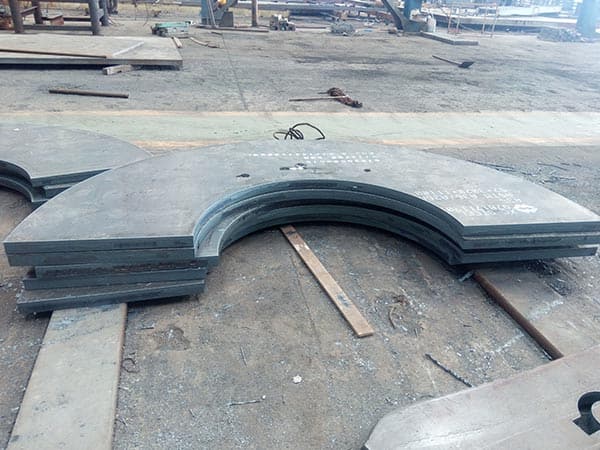
The Essence of S900MC: High-Strength Thermomechanically Rolled Steel
S900MC is a high-yield-strength steel grade designed for cold forming, governed by the European standard EN 10149-2. The designation 'S' identifies it as structural steel, '900' signifies its minimum yield strength of 900 MPa, and 'MC' indicates that the material is thermomechanically rolled (M) and intended for cold forming (C). This steel represents the cutting edge of metallurgical engineering, offering an exceptional strength-to-weight ratio that is critical for modern automotive and heavy machinery industries. Unlike traditional quenched and tempered steels, S900MC achieves its properties through a precise combination of chemical composition and controlled rolling processes, making it a preferred choice for structural components that require both extreme strength and formability.
Chemical Composition and the Role of Micro-alloying
The performance of S900MC is rooted in its low-carbon chemistry, which is enhanced by micro-alloying elements such as Niobium (Nb), Titanium (Ti), and Vanadium (V). These elements play a vital role in grain refinement and precipitation hardening during the thermomechanical rolling process. By maintaining a low carbon content (typically below 0.12%), the steel exhibits excellent weldability and toughness. Manganese (Mn) is added to increase hardenability and solid solution strengthening, while Silicon (Si) helps in deoxidation. The strict control of impurities like Phosphorus (P) and Sulfur (S) ensures high internal cleanliness, which is essential for preventing cracks during intensive cold forming operations.
| Element | Max % (Typical) | Function in S900MC |
|---|---|---|
| Carbon (C) | 0.12 | Ensures weldability and reduces brittleness |
| Manganese (Mn) | 2.10 | Increases strength and toughness |
| Silicon (Si) | 0.60 | Deoxidation and solution strengthening |
| Niobium (Nb) | 0.09 | Grain refinement and precipitation hardening |
| Titanium (Ti) | 0.15 | Prevents grain growth at high temperatures |
Mechanical Properties and Structural Integrity
The primary advantage of S900MC is its high yield strength, which allows engineers to reduce the thickness of structural components without compromising safety. This weight reduction, often referred to as 'lightweighting,' is a key driver in the automotive sector for improving fuel efficiency and increasing payload capacity. The tensile strength of S900MC typically ranges between 930 and 1200 MPa, providing a robust buffer against structural failure. Despite its high strength, it maintains a minimum elongation of 7% to 10% (depending on thickness), which allows for necessary deformation during manufacturing and service life. Its impact toughness is also a critical factor, ensuring the material can withstand sudden loads even in low-temperature environments.
- Minimum Yield Strength: 900 MPa
- Tensile Strength: 930 - 1200 MPa
- Elongation (A80): Min 7% (thickness < 3mm)
- Bending Radius: Typically 2.5 to 3.0 times the thickness (t)
Advanced Processing: Cold Forming and Bending
Processing S900MC requires a deep understanding of its elastic recovery, or 'springback.' Due to its high yield strength, S900MC exhibits significantly more springback compared to conventional mild steels. Fabricators must compensate for this by over-bending the material or using precision-controlled CNC press brakes. The cold forming process must be performed with high-quality tooling to avoid surface marks or cracking. Because the steel is thermomechanically rolled, it possesses a fine-grained microstructure that supports tight bending radii, provided the bending axis is perpendicular to the rolling direction. When bending parallel to the rolling direction, a slightly larger radius may be required to maintain integrity.
Welding Characteristics and Heat Input Management
S900MC is designed for excellent weldability using standard methods such as MAG (Metal Active Gas), MIG (Metal Inert Gas), and Laser welding. The low Carbon Equivalent (CEV) minimizes the risk of cold cracking in the heat-affected zone (HAZ). However, because the strength of S900MC is derived from its thermomechanical processing, excessive heat input during welding can lead to local softening in the HAZ. To maintain the structural integrity of the joint, it is crucial to control the cooling time (t8/5) and limit the heat input per unit length. Using high-strength filler materials that match the base metal's properties is recommended for load-bearing welds. Preheating is generally not required for thin sections, which simplifies the assembly process and reduces production costs.
Applications in Automotive and Heavy Transportation
The automotive industry utilizes S900MC for critical safety and structural components where weight reduction is paramount. Chassis frames, cross members, and longitudinal beams in heavy trucks and trailers are prime examples. By switching from S355 or S700MC to S900MC, manufacturers can achieve weight savings of up to 30-40% in specific parts. This is not only beneficial for fuel economy but also increases the legal payload of transport vehicles. In addition to the automotive sector, S900MC is widely used in the production of telescopic cranes, agricultural machinery, and high-performance containers. The ability to support massive loads with thinner plates makes it indispensable for mobile lifting equipment where the self-weight of the boom must be minimized.
Environmental Adaptability and Sustainability
S900MC contributes significantly to environmental sustainability through the lifecycle of the product. During the manufacturing phase, the thermomechanical rolling process is more energy-efficient than the traditional quenching and tempering route. In the operational phase, the weight savings achieved by using S900MC lead to lower CO2 emissions in vehicles. Furthermore, S900MC is fully recyclable. As a high-purity steel, it can be returned to the electric arc furnace at the end of its life to produce new high-quality steel grades, supporting the circular economy. Its resistance to atmospheric corrosion can be further enhanced through modern coating technologies like galvanizing or KTL (cathodic dip painting), ensuring a long service life even in harsh environments.
Selecting the Right S900MC Supplier
Choosing a reliable supplier for S900MC involves more than just comparing prices. A professional supplier must provide full traceability and mill test certificates (MTC) according to EN 10204 3.1. Quality consistency is paramount, especially regarding thickness tolerances and flatness. High-strength steels are sensitive to surface defects, so the supplier's storage and handling practices must be top-tier. Additionally, advanced suppliers offer value-added services such as laser cutting, precision slitting, and technical support for welding and forming parameters. Understanding the specific requirements of the end application allows the supplier to recommend the optimal coil or sheet dimensions to minimize scrap and optimize production efficiency.
Future Trends in High-Strength Steel Development
The demand for even higher strength levels continues to push metallurgical boundaries. While S900MC is currently a high-end solution, research is ongoing into grades like S1100MC and beyond. These developments focus on further refining the grain structure and optimizing the precipitation of nano-carbides. As the automotive industry shifts toward electric vehicles (EVs), the need for lightweight battery enclosures and crash-protection structures will further drive the adoption of S900MC and its successors. The integration of digital twin technology in the rolling mill also allows for more precise control over the mechanical properties across the entire length of the coil, ensuring that every square millimeter of S900MC meets the rigorous standards required by modern engineering.
Leave a message