
Which is better, carbon steel or S700MC steel coil?
Explore the comprehensive comparison between S700MC high-strength steel and traditional carbon steel. Learn about mechanical properties, fabrication advantages, and industry-specific benefits.
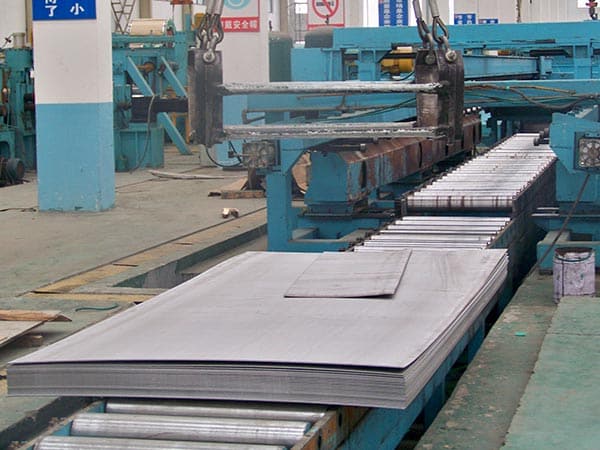
The Evolution of Structural Materials: Carbon Steel vs. S700MC
In the landscape of modern engineering, the choice between traditional carbon steel and advanced high-strength low-alloy (HSLA) steels like S700MC represents a pivotal decision for manufacturers. While carbon steel has served as the backbone of industrial development for over a century, the emergence of thermomechanically rolled steels like S700MC has redefined the boundaries of structural efficiency and performance. Understanding which is 'better' requires a deep dive into their metallurgical profiles, mechanical capabilities, and the specific demands of the intended application.
Metallurgical Composition and Microstructure
Traditional carbon steels, such as S235 or S355, rely primarily on carbon and manganese content to achieve their strength. While effective, higher carbon content can lead to challenges in weldability and toughness. In contrast, S700MC is produced through a sophisticated thermomechanical rolling process. This method refines the grain structure to an extraordinary degree, utilizing micro-alloying elements like niobium, vanadium, and titanium. This fine-grain structure allows S700MC to achieve a minimum yield strength of 700 MPa while maintaining a remarkably low carbon equivalent, which is a feat traditional carbon steels cannot match without becoming brittle or difficult to process.
Mechanical Performance: Strength-to-Weight Ratio
The most striking difference lies in the yield strength. Standard structural carbon steel typically offers a yield strength between 235 MPa and 355 MPa. S700MC, as the name implies, provides a minimum yield strength of 700 MPa. This doubling of strength creates an immediate opportunity for weight reduction. By utilizing S700MC, engineers can specify thinner gauges of steel to support the same loads that would require much thicker, heavier sections of standard carbon steel. This 'lightweighting' is not merely an aesthetic choice; it directly impacts the payload capacity of transport vehicles and the energy efficiency of mobile machinery.
| Property | Standard Carbon Steel (e.g., S355) | S700MC Steel Coil |
|---|---|---|
| Yield Strength (MPa) | Min 355 | Min 700 |
| Tensile Strength (MPa) | 470 - 630 | 750 - 950 |
| Elongation (%) | Approx. 20-22 | Min 12 (depending on thickness) |
| Processing Method | Hot Rolled | Thermomechanically Rolled |
| Weight Saving Potential | Baseline | 30% - 50% |
Fabrication and Cold Forming Capabilities
A common misconception is that higher strength leads to poorer workability. However, S700MC is specifically engineered for cold forming. Despite its high strength, it exhibits excellent bending properties, allowing for tight radii without cracking. This is achieved through the precise control of inclusions and the fine-grain structure mentioned earlier. Traditional carbon steels are also easy to form, but they lack the springback predictability and consistency found in high-quality S700MC coils. For complex geometries in chassis components or crane booms, S700MC provides a level of precision that reduces scrap rates and improves production throughput.
Welding Integrity and Heat Affected Zones
Welding is a critical factor in structural integrity. Carbon steels are generally easy to weld, but as the carbon content increases to reach higher strengths, the risk of cold cracking rises. S700MC solves this by maintaining a low carbon equivalent (CEV). This ensures that the steel remains highly weldable using standard methods like MIG, MAG, or laser welding. Furthermore, the specialized rolling process ensures that the Heat Affected Zone (HAZ) maintains a high degree of toughness, provided that the heat input is controlled within the manufacturer's recommendations. This makes S700MC superior for dynamic loading environments where weld fatigue is a primary concern.
Environmental Adaptability and Sustainability
From a sustainability perspective, S700MC offers a clear advantage over traditional carbon steel. Because less material is required to achieve the same structural performance, the total carbon footprint of the final product is significantly reduced. This extends from the raw material extraction phase to the transportation phase, where lighter vehicles consume less fuel and emit fewer greenhouse gases. Additionally, the high purity of S700MC makes it fully recyclable, fitting perfectly into the circular economy models adopted by modern industries. Its resistance to atmospheric corrosion is comparable to standard carbon steel, but its ability to maintain structural integrity under extreme stress makes it more durable in harsh operational environments.
Industry Applications: Where S700MC Outshines Carbon Steel
The shift toward S700MC is most evident in sectors where every kilogram of weight matters. In the automotive and transportation industry, S700MC is used for truck chassis, trailers, and cross members. By reducing the tare weight of a trailer, operators can increase the legal payload, directly boosting profitability. In the lifting and mobile crane sector, the high strength-to-weight ratio allows for longer boom reaches and higher lifting capacities without increasing the overall weight of the machine. Carbon steel remains the preferred choice for static structures where weight is not a constraint and cost-per-ton is the primary driver, such as in basic building frames or simple support brackets.
Cost-Benefit Analysis: Initial Investment vs. Lifecycle Value
On a per-ton basis, S700MC is more expensive than standard carbon steel due to the advanced micro-alloying elements and the sophisticated thermomechanical rolling process. However, a professional analysis must look beyond the initial material cost. Because S700MC allows for a reduction in material volume (often 30% to 50%), the total tonnage required for a project decreases. This reduction offsets the higher unit price. Furthermore, secondary savings are realized through reduced welding consumables, lower transportation costs for the raw material, and enhanced performance of the end product. When evaluating which is better, the total lifecycle value and the competitive advantage of a lighter, stronger product often tilt the scales in favor of S700MC.
Strategic Selection Criteria
Choosing between these two materials depends on several technical factors. If the design is stiffness-limited (where the thickness is dictated by deflection rather than yield strength), the advantage of S700MC is diminished because the Modulus of Elasticity remains virtually the same for all steels. However, if the design is strength-limited, S700MC is the undisputed winner. Manufacturers should also consider their workshop equipment; while S700MC is highly workable, it requires robust presses and high-quality welding setups to fully realize its potential. For high-volume production of high-performance components, the transition from carbon steel to S700MC is not just an upgrade—it is a strategic necessity to remain competitive in a market that demands efficiency and durability.
Leave a message