
What is the S960MC high yield strength steel coil pipe schedule
Discover the comprehensive technical guide to S960MC high yield strength steel. Explore its mechanical properties, chemical composition, welding requirements, and dimensional schedules for pipes and coils in heavy-duty engineering.
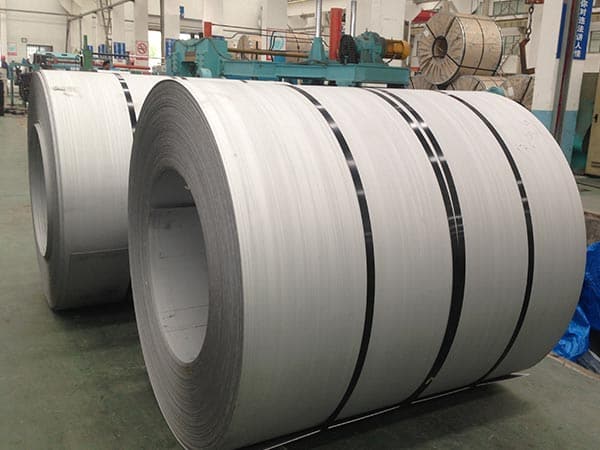
Defining S960MC: The Pinnacle of Thermomechanically Rolled Steel
S960MC represents a sophisticated class of high-strength structural steel, categorized under the EN 10149-2 standard. The nomenclature itself reveals its core identity: 'S' denotes structural steel, '960' signifies a minimum yield strength of 960 megapascals (MPa), and 'MC' indicates that the material is thermomechanically rolled (M) and possesses high cold-forming (C) capabilities. This steel is engineered for environments where extreme weight reduction is paramount without compromising structural integrity. Unlike traditional quenched and tempered steels, S960MC achieves its remarkable properties through a precise controlled rolling process followed by rapid cooling, which refines the grain structure to a microscopic level.
The Chemical Blueprint of S960MC
The performance of S960MC is rooted in its low-carbon, micro-alloyed chemistry. By maintaining a low carbon equivalent (CEV), the steel ensures excellent weldability, a rare trait for materials with such high tensile strength. The addition of micro-alloying elements like Niobium (Nb), Vanadium (V), and Titanium (Ti) facilitates precipitation hardening and grain refinement. This chemical balance is critical for maintaining toughness at low temperatures and preventing the formation of brittle phases during fabrication.
| Element | Max % Content |
|---|---|
| Carbon (C) | 0.20 |
| Manganese (Mn) | 2.20 |
| Silicon (Si) | 0.60 |
| Phosphorus (P) | 0.025 |
| Sulfur (S) | 0.010 |
| Aluminium (Al) | 0.015 |
| Nb + V + Ti | 0.22 |
The strictly controlled impurity levels (P and S) contribute to the steel's isotropic properties, ensuring that the material performs consistently whether loaded longitudinally or transversely. This purity is essential for high-quality laser cutting and intricate bending operations.
Mechanical Properties and Structural Integrity
The primary advantage of S960MC is its yield-to-tensile ratio. With a minimum yield strength of 960 MPa and a tensile strength ranging between 980 and 1250 MPa, engineers can design thinner sections that carry the same loads as thicker, lower-grade steels. This 'down-gauging' strategy is the cornerstone of modern fuel-efficient transport and high-reach lifting equipment.
| Property | Value |
|---|---|
| Min. Yield Strength (MPa) | 960 |
| Tensile Strength (MPa) | 980 - 1250 |
| Min. Elongation (A5 %) | 7 |
| Impact Energy (Charpy-V) | 27J at -20°C (Optional) |
While S960MC is optimized for strength, its elongation properties remain sufficient for complex cold-forming. However, designers must account for the reduced ductility compared to S355 or S700 grades, requiring larger bending radii and precise tooling.
S960MC Pipe Schedule and Dimensional Availability
When discussing the 'pipe schedule' for S960MC, it is important to distinguish between standard fluid-conveying pipes (like ASME B36.10) and structural hollow sections (EN 10219). S960MC is predominantly used for high-strength structural tubes, often manufactured from coil through cold-forming and high-frequency induction welding. The dimensional schedule for these pipes is typically defined by outside diameter (OD) and wall thickness (WT), rather than traditional 'Schedule 40/80' ratings.
- Wall Thickness Range: Typically 3mm to 12mm for coil-derived products.
- Outer Diameter: Available from 40mm up to 500mm in circular, square, and rectangular profiles.
- Tolerances: Strict adherence to EN 10219-2 for out-of-roundness and straightness.
The use of S960MC in pipe form is particularly prevalent in telescopic crane booms and chassis components where torsional rigidity and weight are the primary constraints. The thin-walled nature of S960MC pipes allows for nested designs in multi-stage hydraulic systems.
Advanced Fabrication: Welding S960MC
Welding S960MC requires a deep understanding of the thermomechanical process used to create the steel. Excessive heat input can lead to grain growth in the Heat Affected Zone (HAZ), significantly reducing the local yield strength. To maintain the 960 MPa integrity, welders must control the cooling time (t8/5), which is the time it takes for the weld to cool from 800°C to 500°C.
- Heat Input: Should be kept low (typically 0.5 to 1.5 kJ/mm).
- Preheating: Generally not required due to low carbon content, unless the material is very thick or the ambient temperature is extremely low.
- Filler Metals: Must be matched to the high yield strength of the base metal (e.g., AWS A5.28 ER110S-G).
- Interpass Temperature: Should be monitored to prevent heat accumulation.
Properly executed welds in S960MC will exhibit a slight softening in the HAZ, but with optimized parameters, the joint remains capable of supporting the design loads intended for high-strength applications.
Cold Forming and Bending Precision
S960MC is specifically designed for cold forming. However, the high strength means that the material has significant 'springback'—the tendency of the steel to return to its original shape after the bending force is removed. Over-bending is necessary to achieve the desired final angle.
| Thickness (t) | Min. Inside Bend Radius (90°) |
|---|---|
| t < 3mm | 3.0 * t |
| 3mm < t < 6mm | 4.0 * t |
| t > 6mm | 5.0 * t |
It is recommended to bend the material perpendicular to the rolling direction to minimize the risk of cracking. The surface quality of the die and the lubrication used also play a vital role in preventing surface micro-tears during the high-pressure forming process.
Industrial Applications and Weight Optimization
The shift toward S960MC is driven by the need for efficiency. In the transport industry, reducing the tare weight of a trailer by using S960MC structural sections allows for a higher payload, directly increasing the return on investment for fleet operators. In the mobile crane industry, S960MC allows for longer boom reaches and higher lifting capacities without increasing the overall weight of the vehicle.
- Automotive: Safety cages, bumper beams, and chassis reinforcements.
- Lifting: Lattice boom sections, outriggers, and telescopic segments.
- Agriculture: High-capacity trailers and sprayers where soil compaction must be minimized.
- Offshore: Lightweight secondary structures where high strength-to-weight ratios reduce installation costs.
Environmental Adaptability and Fatigue Resistance
S960MC performs exceptionally well in harsh environments. Its fine-grained structure provides inherent resistance to fatigue, which is critical for components subjected to cyclic loading, such as crane booms or truck frames. Furthermore, while S960MC is not a 'weathering steel' like Corten, its smooth surface finish from the rolling process provides an excellent substrate for modern protective coatings and galvanization. When galvanized, care must be taken regarding the silicon content to ensure a uniform zinc layer, which S960MC typically manages well within the Sebisty range.
Conclusion on Material Selection
Choosing S960MC is a strategic decision that goes beyond simple material substitution. It requires a holistic approach to design, where the benefits of high yield strength are balanced with the specific fabrication requirements of thermomechanically rolled steels. By understanding the pipe schedules, welding nuances, and forming limits, manufacturers can push the boundaries of engineering, creating products that are lighter, stronger, and more sustainable for the global market.
Leave a message