
What is the cheapest S500MC farm machinery steel?
Discover the most cost-effective S500MC steel solutions for farm machinery. Learn about its mechanical properties, processing benefits, and how to optimize costs in agricultural equipment production.
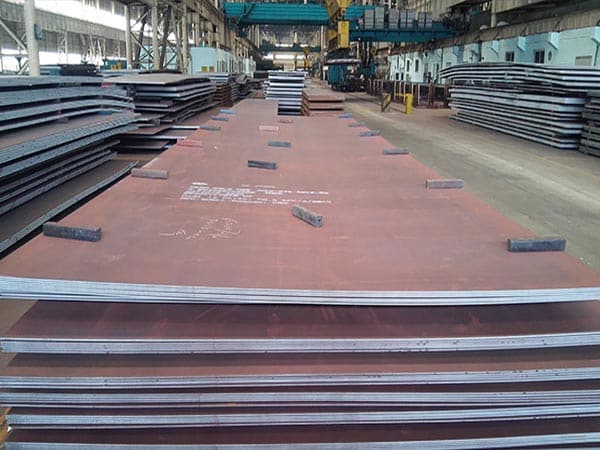
Understanding the Value Proposition of S500MC in Agricultural Engineering
In the modern agricultural machinery manufacturing landscape, the drive for efficiency, durability, and cost-effectiveness has never been more intense. S500MC steel, a high-strength cold-forming steel governed by the EN 10149-2 standard, has emerged as a cornerstone material for engineers looking to balance performance with budget constraints. When searching for the 'cheapest' S500MC, it is vital to look beyond the initial price per ton and evaluate the total lifecycle cost, including weight reduction, processing ease, and longevity in harsh farming environments.
S500MC is a thermomechanically rolled steel that offers a minimum yield strength of 500 MPa. This high strength-to-weight ratio allows manufacturers to use thinner sections without compromising structural integrity. For farm machinery like seeders, plows, and harvesters, this translates directly into lighter equipment, lower fuel consumption for tractors, and reduced material procurement costs. The 'cheapest' option is often the one that minimizes waste and maximizes production speed through superior workability.
Mechanical Excellence: Why S500MC Outperforms Standard Grades
The mechanical properties of S500MC are specifically engineered for demanding structural applications. Unlike traditional hot-rolled structural steels like S355, S500MC provides a significant jump in yield strength while maintaining excellent ductility. This is achieved through precise micro-alloying with elements such as niobium, vanadium, or titanium, combined with controlled cooling during the rolling process.
| Property | Value (Thickness ≤ 16mm) |
|---|---|
| Yield Strength (ReH) | Min. 500 MPa |
| Tensile Strength (Rm) | 550 - 700 MPa |
| Elongation (A80mm) | Min. 12% - 14% (Depending on thickness) |
| Bending Radius (90°) | 0.8t to 1.3t (Highly formable) |
These properties ensure that farm machinery can withstand the dynamic loads and impacts encountered in rocky soils or uneven terrain. The high tensile strength prevents permanent deformation, extending the service life of critical components such as chassis frames and support brackets. By choosing S500MC, manufacturers can reduce the steel volume required by up to 25-30% compared to S355, which is the primary driver of cost savings in large-scale production.
Chemical Composition and Its Impact on Sourcing Costs
The cost of S500MC is heavily influenced by its chemical makeup. To keep the steel 'cheap' while maintaining high performance, mills utilize a low-carbon approach. A low carbon content (typically ≤ 0.12%) is essential for weldability and toughness, but it also means the steel is less reliant on expensive alloying elements compared to quenched and tempered grades.
- Carbon (C): Low levels ensure excellent weldability without preheating.
- Manganese (Mn): Enhances strength and grain refinement.
- Silicon (Si): Controlled to optimize surface quality for galvanizing or painting.
- Micro-alloys (Nb, V, Ti): Provide the high yield strength through grain size control.
When sourcing the cheapest S500MC, buyers should compare mill certificates from different regions. Chinese mills often offer highly competitive pricing due to economies of scale and integrated supply chains, while European mills might offer tighter tolerances that reduce scrap rates. The key to finding the best price is identifying a supplier that balances raw material cost with consistent metallurgical quality.
Processing Advantages: Reducing Manufacturing Overhead
The true 'cheapness' of S500MC is found on the factory floor. Its exceptional cold formability allows for complex shapes to be bent without cracking, which is a common failure point in lower-quality high-strength steels. This allows for the design of streamlined parts that require fewer welds, reducing labor costs and inspection time.
Welding Performance: S500MC has a low carbon equivalent (CEV), making it compatible with standard MIG/MAG welding processes. It does not require the expensive pre-heating or post-weld heat treatments often associated with high-strength alloys. This speed of assembly is a critical factor in maintaining a low unit cost for agricultural implements.
Laser and Plasma Cutting: The clean surface and fine grain structure of S500MC make it ideal for high-speed laser cutting. This results in cleaner edges, less dross, and minimal secondary finishing. For a farm machinery OEM, the ability to move directly from cutting to bending to welding without intermediate grinding saves significant operational expenses.
Environmental Adaptability in Agriculture
Farm machinery operates in some of the most corrosive and abrasive environments on earth. S500MC provides a solid foundation for various protective coatings. Its low silicon and phosphorus content make it particularly suitable for hot-dip galvanizing, ensuring a uniform zinc coating that protects against fertilizers, moisture, and soil acidity.
Furthermore, the fatigue resistance of S500MC is superior to standard carbon steels. In agricultural applications where machinery is subjected to constant vibration and cyclic loading (such as harrow discs or trailer frames), the fine-grained structure of S500MC resists crack initiation and propagation. This reliability reduces warranty claims for manufacturers and downtime for farmers, proving that the 'cheapest' steel is the one that doesn't fail in the harvest season.
Strategic Sourcing: How to Find the Best Price for S500MC
To secure the most competitive pricing for S500MC farm machinery steel, procurement teams should consider several strategic factors:
- Volume Consolidation: Standardizing multiple components to use the same thickness of S500MC allows for bulk purchasing discounts and better leverage with steel service centers.
- Thickness Optimization: S500MC is often priced based on thickness brackets. Engineering a part to fit into a more common or thinner gauge can significantly lower the price per square meter.
- Regional Market Timing: Steel prices fluctuate based on iron ore costs and regional demand. Monitoring global indices can help in timing large purchases.
- Alternative Standards: While S500MC is the EN standard, checking for equivalent grades like ASTM A1011 HSLAS Grade 70 or Chinese GB/T 1591 Q500D can sometimes reveal lower-cost alternatives depending on the shipping location.
Ultimately, the cheapest S500MC for farm machinery is the one that meets all technical specifications while offering the best balance of material cost, processing efficiency, and long-term durability. By leveraging the high-strength properties of S500MC, manufacturers can build tougher, lighter, and more efficient machines that provide a superior return on investment for the end-user.
The Role of S500MC in the Future of Sustainable Farming
As the agricultural industry moves toward more sustainable practices, the role of high-strength steel like S500MC becomes even more critical. Lightweighting is no longer just about cost; it is about reducing the soil compaction caused by heavy machinery and lowering the carbon footprint of the farming operation. S500MC enables the creation of wide-span equipment that covers more ground in fewer passes, all while maintaining the ruggedness required for decades of service.
By integrating S500MC into the design phase, engineers can push the boundaries of what is possible in farm machinery. Whether it is a high-capacity grain cart or a precision robotic seeder, this steel grade provides the mechanical backbone necessary for the next generation of agricultural technology. Investing in S500MC is not just a procurement choice; it is a strategic decision to embrace modern material science for better agricultural outcomes.
Leave a message