
What is the application scope of BS700MC steel for car parts
Discover the comprehensive application scope of BS700MC high-strength steel in the automotive industry, covering mechanical properties, processing advantages, and lightweighting solutions.
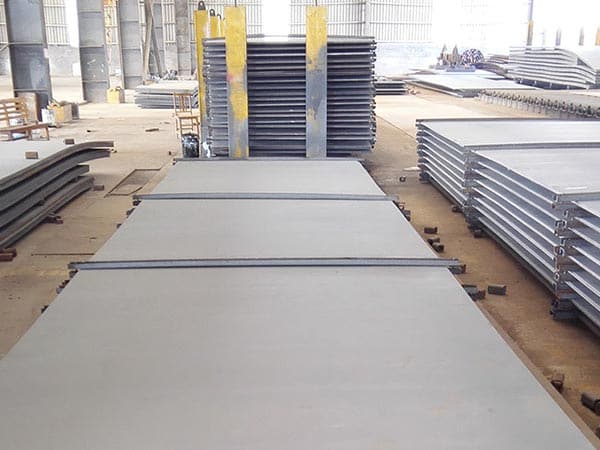
The Strategic Role of BS700MC in Modern Vehicle Engineering
The automotive industry is currently undergoing a radical transformation, driven by the dual pressures of energy efficiency and enhanced safety standards. BS700MC, a high-yield strength, thermomechanically rolled steel, has emerged as a cornerstone material for engineers seeking to reduce vehicle weight without compromising structural integrity. This steel grade, often conforming to the EN 10149-2 standard, offers a unique combination of high tensile strength and exceptional cold-forming properties. By replacing traditional lower-strength steels with BS700MC, manufacturers can significantly reduce the thickness of structural components, leading to lighter chassis and improved fuel economy.
The '700' in its designation refers to its minimum yield strength of 700 MPa, while 'MC' indicates it is thermomechanically rolled (M) and intended for cold forming (C). This specific manufacturing process creates a fine-grained microstructure that is essential for absorbing energy during impacts, making it an ideal candidate for safety-critical car parts. Beyond simple weight reduction, BS700MC facilitates complex geometric designs that were previously unattainable with conventional high-strength steels.
Technical Specifications and Mechanical Performance
Understanding the application scope of BS700MC requires a deep dive into its mechanical attributes. Unlike standard carbon steels, BS700MC utilizes micro-alloying elements such as Niobium (Nb), Vanadium (V), and Titanium (Ti). These elements refine the grain structure, providing high strength while maintaining excellent ductility. This balance is crucial for parts that must undergo rigorous stamping or bending during production.
| Mechanical Property | Typical Value (BS700MC) | Significance for Car Parts |
|---|---|---|
| Yield Strength (ReH) | ≥ 700 MPa | Ensures structural stability under heavy loads. |
| Tensile Strength (Rm) | 750 - 950 MPa | Provides resistance against ultimate failure and tearing. |
| Elongation (A5) | ≥ 12% | Allows for complex cold forming and energy absorption. |
| Bending Radius (180°) | 0.5t - 1.5t | Enables tight bends without surface cracking. |
These properties ensure that BS700MC remains stable even when subjected to the dynamic stresses of high-speed driving and variable road conditions. The high yield-to-tensile ratio is particularly beneficial for components that must resist permanent deformation under load, such as truck longitudinal beams and heavy-duty trailer frames.
Application Scope: Chassis and Structural Frameworks
The primary application scope of BS700MC lies within the structural backbone of vehicles, particularly in heavy-duty trucks, trailers, and commercial vehicles. The chassis frame is perhaps the most critical area where BS700MC excels. By utilizing this high-strength steel, engineers can design longitudinal and cross members that are thinner and lighter, yet capable of carrying higher payloads. This is a vital factor for logistics companies looking to maximize transport efficiency.
- Longitudinal Beams: These are the primary load-bearing structures of a truck. BS700MC provides the necessary stiffness to prevent sagging and twisting.
- Cross Members: These connect the longitudinal beams and must withstand torsional forces. The weldability of BS700MC ensures these joints remain robust.
- Suspension Brackets: Components that connect the axle to the frame benefit from the fatigue resistance of BS700MC, ensuring long-term reliability under vibration.
In passenger vehicles, BS700MC is increasingly used for bumper reinforcements and side impact beams. In the event of a collision, these parts must absorb and redistribute energy to protect the occupants. The high energy absorption capacity of BS700MC, derived from its fine-grained structure, makes it superior to many traditional materials in crashworthiness tests.
Processing Performance: Welding and Cold Forming
One of the reasons BS700MC is so widely adopted in car part manufacturing is its exceptional processing performance. High strength often comes at the cost of workability, but BS700MC breaks this mold. Its low carbon equivalent (Ceq) ensures that it can be welded using standard industrial methods such as MAG, MIG, and laser welding without the need for extensive preheating or post-weld heat treatment.
The cold-forming capability of BS700MC is another significant advantage. It can be bent, flanged, and stamped into complex shapes. This allows for the integration of multiple functions into a single part, reducing the number of welds and assembly steps required. Manufacturers can achieve tighter bending radii compared to other 700MPa steels, which is essential for compact engine compartments and intricate chassis layouts. Furthermore, the surface quality of BS700MC is optimized for coating and painting, providing a high-quality finish that resists environmental degradation.
Environmental Adaptability and Fatigue Resistance
Automotive components are frequently exposed to harsh environments, including road salt, moisture, and extreme temperature fluctuations. BS700MC demonstrates excellent environmental adaptability. While it is not a stainless steel, its refined microstructure provides a degree of inherent resistance to atmospheric corrosion when properly coated. More importantly, its fatigue strength is significantly higher than that of standard structural steels.
Fatigue is a leading cause of failure in automotive parts due to the constant cyclic loading experienced during operation. BS700MC's ability to withstand millions of cycles at high stress levels makes it the preferred choice for parts like axle housings and fifth-wheel coupling plates. This durability extends the service life of the vehicle and reduces maintenance costs for the end-user, contributing to a lower total cost of ownership (TCO).
Expanding Horizons: Specialized Automotive Applications
Beyond the standard chassis and frame components, the application scope of BS700MC is expanding into specialized areas of automotive engineering. This includes the manufacturing of lifting systems for recovery vehicles and crane booms mounted on trucks. The high strength-to-weight ratio allows for longer reach and higher lifting capacities without making the vehicle top-heavy or unstable.
In the burgeoning sector of electric vehicles (EVs), BS700MC is finding a new role in battery enclosures. EV batteries are heavy and require a protective casing that is both lightweight and incredibly strong to protect against punctures during accidents. BS700MC provides the necessary structural integrity to safeguard the battery cells while helping to offset the weight of the battery pack itself, thereby extending the vehicle's driving range.
The versatility of BS700MC ensures it remains a vital material in the pursuit of sustainable and efficient transportation. As manufacturing techniques like roll forming and hydroforming become more sophisticated, the potential for BS700MC to replace even more traditional components continues to grow, solidifying its place as a fundamental material in the automotive supply chain.
Leave a message