
S900MC steel for boom ASTM equivalent
Comprehensive guide on S900MC steel for crane booms, covering mechanical properties, welding, cold forming, and its closest ASTM equivalents like A514 and A1011.
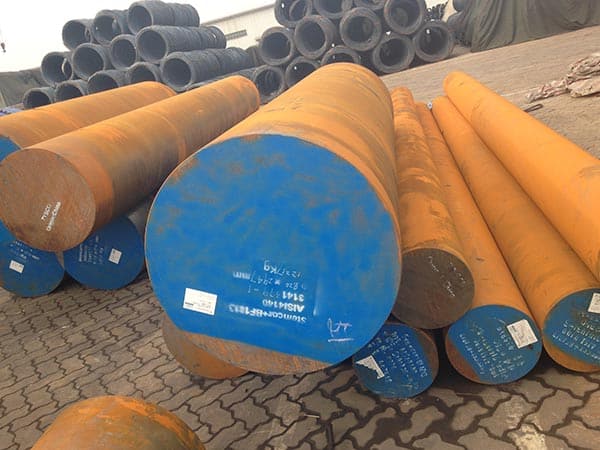
S900MC Steel: The Benchmark for High-Performance Boom Construction
Modern engineering demands materials that push the boundaries of strength-to-weight ratios. S900MC steel, governed by the EN 10149-2 standard, represents the pinnacle of thermomechanically rolled (TMCP) fine-grained structural steels. Designed specifically for high-load applications such as telescopic booms, crane arms, and heavy-duty chassis, this material offers a minimum yield strength of 900 MPa. Achieving such high strength while maintaining excellent weldability and cold formability is the result of precise metallurgical control during the rolling process.
When international projects specify S900MC, North American engineers often seek an ASTM equivalent. However, the transition between European (EN) and American (ASTM) standards is rarely a direct one-to-one match. Understanding the nuances of these standards is vital for ensuring structural integrity and compliance with safety regulations in the lifting and transportation industries.
Mechanical Properties and Performance Metrics
The performance of S900MC is defined by its ability to withstand extreme tensile stresses while remaining ductile enough for complex fabrication. Unlike traditional quenched and tempered steels, S900MC achieves its properties through thermomechanical rolling, which refines the grain structure without the need for secondary heat treatment. This process results in a steel that is not only strong but also remarkably consistent in its mechanical behavior across different plate thicknesses.
| Property | Value (S900MC) |
|---|---|
| Yield Strength (ReH) | Min. 900 MPa |
| Tensile Strength (Rm) | 930 - 1200 MPa |
| Elongation (A5) | Min. 8% (depending on thickness) |
| Impact Energy (Charpy-V) | Typically 27J or 40J at -20°C or -40°C |
These values highlight why S900MC is the preferred choice for mobile crane manufacturers. By utilizing 900 MPa steel instead of standard 355 MPa structural steel, engineers can reduce the weight of a boom by up to 50%, significantly increasing the lifting capacity and reach of the equipment without increasing the overall vehicle weight.
Identifying the ASTM Equivalent for S900MC
Finding a direct ASTM equivalent for S900MC requires looking at two primary standards: ASTM A514 and ASTM A1011/A1011M. Each has its own set of characteristics that may or may not align with the specific requirements of a boom application.
- ASTM A514 Grade Q: This is a quenched and tempered (Q&T) alloy steel. While it reaches yield strengths of 100 ksi (approx. 690 MPa) to 110 ksi (approx. 760 MPa), it falls short of the 900 MPa (130 ksi) threshold of S900MC. For higher strengths, one might look at specialized proprietary grades that exceed A514 specifications.
- ASTM A1011 HSLAS-F Grade 100: This high-strength low-alloy steel is closer in spirit to the MC (thermomechanically rolled) process. Grade 100 offers a yield strength of 700 MPa, which is still lower than S900MC.
- ASTM A656 Grade 100: Often used for truck frames and crane parts, this grade provides excellent formability and weldability, but again, the yield strength is capped around 690-700 MPa.
Because there is no standard ASTM grade that reaches the 900 MPa yield point with the same thermomechanical processing as EN 10149-2, engineers in the US often specify proprietary ultra-high-strength steels (UHSS) that meet both the S900MC requirements and are dual-certified to meet specific project needs. When substituting, it is critical to verify the Carbon Equivalent (CEV) to ensure welding procedures remain valid.
Chemical Composition and Weldability
The weldability of S900MC is superior to many other steels of similar strength because of its low carbon content and optimized alloying elements. The use of micro-alloying elements like Niobium (Nb), Vanadium (V), and Titanium (Ti) allows for grain refinement during the TMCP process.
| Element | Max % (S900MC) |
|---|---|
| Carbon (C) | 0.20 |
| Manganese (Mn) | 2.20 |
| Silicon (Si) | 0.60 | 0.025 |
| Sulfur (S) | 0.010 |
Low CEV values mean that S900MC can often be welded with minimal or no preheating, depending on the thickness and ambient conditions. However, the high strength of the base material makes the Heat Affected Zone (HAZ) sensitive to cooling rates. Excessive heat input can lead to softening in the HAZ, which reduces the joint efficiency. Precise control of the t8/5 cooling time is essential to maintain the 900 MPa integrity across the weldment.
Cold Forming and Fabrication Flexibility
One of the standout features of S900MC is its cold forming capability. Crane booms often require complex shapes, such as hexagonal or U-shaped profiles, to maximize stiffness. S900MC is designed to be bent with tight radii without cracking. For S900MC, the recommended minimum bending radius is typically 3.0 to 4.0 times the plate thickness (t), depending on the bending direction (transverse vs. longitudinal).
Successful fabrication requires high-quality tooling and a clear understanding of springback. Due to the high yield strength, the material will exhibit more springback than standard structural steels. Fabricators must account for this by over-bending or using CNC-controlled press brakes with real-time angle measurement systems.
Environmental Adaptability and Fatigue Life
Equipment used in construction and mining often operates in harsh environments, from sub-zero Arctic temperatures to humid tropical regions. S900MC is available with guaranteed impact toughness at low temperatures (e.g., S900MC+L), ensuring that the boom does not suffer from brittle fracture under dynamic loads in cold climates.
Furthermore, fatigue resistance is a critical factor for booms that undergo thousands of load cycles. The fine-grained microstructure of S900MC provides excellent resistance to fatigue crack initiation. When combined with proper weld toe grinding or ultrasonic impact treatment (UIT), the service life of S900MC structures can be significantly extended compared to lower-grade alternatives.
Strategic Advantages in Heavy Machinery
Integrating S900MC into boom design is not just a technical choice but an economic one. While the per-ton cost of S900MC is higher than S355 or ASTM A36, the total cost of the structure is often lower. Reduced material volume leads to lower welding consumable usage, faster welding times, and reduced shipping costs. More importantly, the end-user benefits from a machine that can lift more, reach further, and consume less fuel due to its reduced dead weight.
As the industry moves toward more sustainable and efficient machinery, the demand for ultra-high-strength steels like S900MC continues to grow. Whether you are searching for an ASTM equivalent or designing a new telescopic system, focusing on the specific thermomechanical properties of S900MC ensures a balance of safety, performance, and manufacturability.
Leave a message