
What is special-shaped S700MC automotive steel sheet
Explore the technical specifications, mechanical properties, and industrial applications of special-shaped S700MC automotive steel, a high-strength solution for modern vehicle lightweighting.
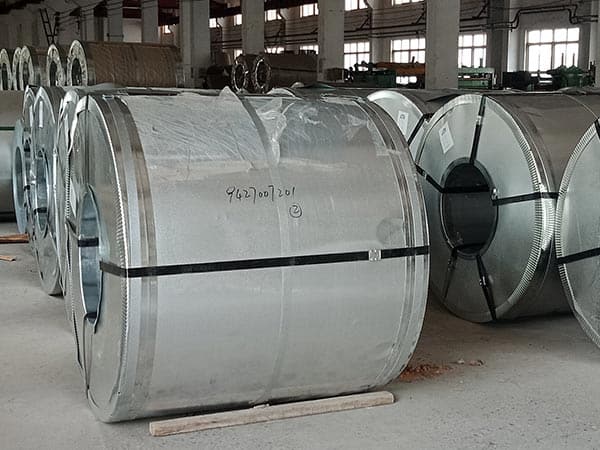
Defining S700MC: The Pinnacle of High-Strength Thermomechanical Steel
S700MC is a high-strength low-alloy (HSLA) structural steel specifically engineered for cold forming. The 'S' stands for structural steel, '700' denotes a minimum yield strength of 700 MPa, and 'MC' indicates it is thermomechanically rolled (M) and suitable for cold forming (C). When we discuss special-shaped S700MC automotive steel sheet, we are referring to steel that has been processed into specific geometries—such as U-profiles, C-channels, or custom cross-sections—designed to optimize the strength-to-weight ratio in vehicle architectures. This material represents a significant leap from traditional carbon steels, offering a unique combination of extreme toughness, weldability, and formability.
The Metallurgical Foundation: Micro-Alloying and Grain Refinement
The exceptional performance of S700MC stems from its precise chemical composition and the thermomechanical rolling process. Unlike traditional steels that rely on high carbon content for strength, S700MC utilizes micro-alloying elements such as Niobium (Nb), Vanadium (V), and Titanium (Ti). These elements promote grain refinement during the cooling process, resulting in a fine-grained microstructure that resists crack propagation and enhances yield strength without sacrificing ductility. The low carbon content (typically below 0.12%) is crucial for maintaining excellent weldability, a vital requirement in automated automotive assembly lines.
| Element | C (max) | Si (max) | Mn (max) | P (max) | S (max) | Al (min) |
|---|---|---|---|---|---|---|
| Content (%) | 0.12 | 0.50 | 2.10 | 0.025 | 0.015 | 0.015 |
Mechanical Superiority: Strength Meets Flexibility
The primary driver for adopting special-shaped S700MC in the automotive sector is its mechanical profile. With a yield strength of 700 MPa, it allows engineers to reduce the thickness of structural components by up to 30% compared to standard S355 steel while maintaining the same load-bearing capacity. This reduction is critical for the 'lightweighting' trend in both internal combustion and electric vehicles (EVs). High tensile strength (ranging from 750 to 950 MPa) ensures that the material can withstand high-impact forces, making it ideal for safety-critical components.
- Yield Strength (Reh): Minimum 700 MPa
- Tensile Strength (Rm): 750 - 950 MPa
- Elongation (A80): Minimum 10-12% (depending on thickness)
- Impact Toughness: Excellent performance even at low temperatures (-20°C or -40°C)
Advanced Processing: Cold Forming and Special Shapes
One of the most remarkable attributes of S700MC is its cold forming capability. Despite its high strength, the material can be bent, flanged, and cold-rolled into complex shapes without cracking. For special-shaped automotive sheets, this means that complex structural members can be manufactured with tighter tolerances. When bending S700MC, it is essential to respect the minimum bending radius, which is typically 1.5 to 2 times the material thickness for a 90-degree bend. This allows for the creation of streamlined, aerodynamic, and structurally rigid components that would be impossible with lower-grade steels.
Welding Integrity in Automotive Assembly
Welding is a cornerstone of automotive manufacturing, and S700MC excels here due to its low carbon equivalent (CEV). It can be welded using all standard methods, including MAG (Metal Active Gas), Laser Beam Welding, and Resistance Spot Welding. Because the steel is thermomechanically treated, it is important to control the heat input to prevent excessive softening in the Heat Affected Zone (HAZ). However, compared to quenched and tempered steels, S700MC offers a much wider processing window, ensuring that the integrity of the special-shaped component remains intact after joining.
Environmental Impact and Lifecycle Efficiency
The shift toward S700MC is deeply linked to environmental sustainability. By enabling thinner and lighter components, this steel directly contributes to reduced fuel consumption in heavy-duty trucks and increased battery range in EVs. Furthermore, S700MC is 100% recyclable. The energy saved during the vehicle's operational life far outweighs the energy used in the thermomechanical rolling process. This makes it a preferred choice for manufacturers aiming to meet stringent CO2 emission targets and Corporate Average Fuel Economy (CAFE) standards.
Expanding Industrial Applications
While the name highlights 'automotive,' the utility of special-shaped S700MC extends across various heavy-duty transportation sectors. Its application is not limited to passenger cars but is particularly dominant in the commercial vehicle industry. Manufacturers of truck chassis, trailers, and crane arms utilize S700MC to maximize payload capacity. By replacing heavier sections with high-strength special shapes, the dead weight of the vehicle is minimized, allowing for more cargo and higher operational efficiency.
- Truck Chassis Frames: Longitudinal and transverse beams that require high fatigue resistance.
- Crane Booms: Telescopic sections where weight reduction is vital for reach and stability.
- Safety Barriers: High-energy absorption profiles for road safety infrastructure.
- Agricultural Equipment: Load-bearing structures in harvesters and tractors.
Optimizing Surface Quality and Corrosion Resistance
For automotive applications, surface finish is paramount. S700MC is typically supplied with a pickled and oiled surface or a cold-rolled finish, ensuring it is ready for subsequent coating processes like E-coating (Electrophoretic deposition) or galvanizing. The fine grain structure provides a smooth substrate that enhances the adhesion of protective layers, protecting the special-shaped parts from the harsh environments of road salt, moisture, and debris. This durability ensures that the structural integrity of the vehicle is maintained over a decade or more of service life.
Future Trends: The Evolution of High-Strength Profiles
As the automotive industry moves toward more complex EV platforms, the demand for special-shaped S700MC is expected to grow. The integration of battery trays into the vehicle's structural frame requires materials that offer both high strength for crash protection and light weight for efficiency. Innovations in roll-forming technology are allowing for even more intricate 'special shapes' from S700MC coils, reducing the need for multiple welded joints and further simplifying the assembly process. The synergy between advanced metallurgy and precision forming technology continues to push the boundaries of what is possible in modern vehicle engineering.
Leave a message