
en 10149-2 hot rolled pickled and oiled steel coil with low and intermediate tensile strength
A comprehensive technical guide to EN 10149-2 hot rolled pickled and oiled steel coils, focusing on low to intermediate tensile strength grades like S315MC and S355MC.
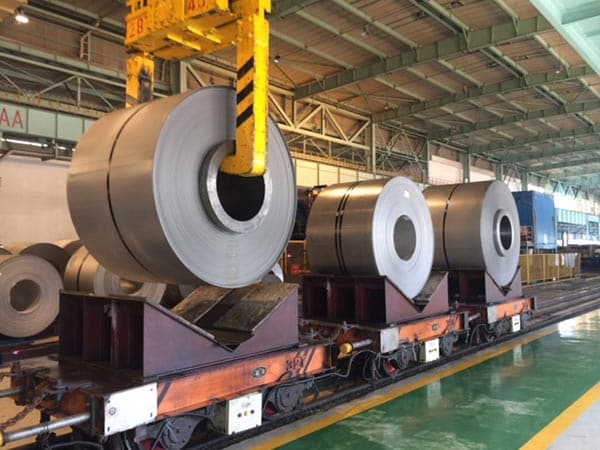
Technical Foundation of EN 10149-2 HRPO Steel
The EN 10149-2 standard specifies the technical delivery conditions for flat products made of high yield strength steels for cold forming. Specifically, Part 2 focuses on thermomechanically rolled steels. The thermomechanical rolling process (TMCP) is a sophisticated metallurgical technique that combines controlled rolling at specific temperatures with accelerated cooling. This process refines the grain structure of the steel, allowing it to achieve high strength and excellent toughness without the need for excessive alloying elements. When these steels are designated as Pickled and Oiled (HRPO), it means the hot-rolled scale has been removed through a chemical acid bath and a thin layer of oil has been applied to prevent oxidation during transport and storage.
Surface Quality and the Pickling Process
Pickling is a critical surface treatment for hot-rolled steel intended for precision fabrication. During the hot rolling process, a layer of iron oxide, commonly known as scale, forms on the surface of the steel. This scale is hard, brittle, and can interfere with subsequent processes like welding, painting, or laser cutting. By passing the steel coil through a series of hydrochloric acid tanks, the scale is chemically dissolved, leaving a clean, smooth, and greyish-metallic surface. The subsequent oiling stage is essential because the freshly cleaned steel is highly reactive to atmospheric moisture. The oil acts as a temporary corrosion inhibitor, ensuring the material reaches the fabrication floor in pristine condition. This makes HRPO steel particularly attractive for industries where surface aesthetics and coating adhesion are paramount.
Mechanical Performance of Low and Intermediate Tensile Strength Grades
Within the EN 10149-2 framework, the "low and intermediate" tensile strength categories typically encompass grades such as S315MC and S355MC. The 'S' denotes structural steel, the numerical value represents the minimum yield strength in Megapascals (MPa), 'M' indicates thermomechanical rolling, and 'C' signifies suitability for cold forming. These grades offer a balanced profile that bridges the gap between standard structural steels (like S235JR) and ultra-high-strength steels. They provide enough strength to reduce component weight while maintaining the high ductility required for complex shaping.
| Steel Grade | Yield Strength (min MPa) | Tensile Strength (MPa) | Elongation (min A80 %) | Bending Radius (180°) |
|---|---|---|---|---|
| S315MC | 315 | 390 - 510 | 20 | 0.25t |
| S355MC | 355 | 430 - 550 | 19 | 0.5t |
| S420MC | 420 | 480 - 620 | 16 | 0.5t |
Cold Forming and Ductility Advantages
One of the standout features of EN 10149-2 HRPO steel is its exceptional cold forming capability. Because the grain structure is extremely fine due to the TMCP process, the material can withstand significant deformation without cracking. This is vital for manufacturing complex automotive chassis components, brackets, and structural profiles. The low carbon content and the absence of large carbide precipitates ensure that the steel remains ductile even at the edges of sheared or punched holes. Fabricators benefit from consistent springback behavior, which allows for high-precision bending and stamping operations. The ability to use tighter bending radii compared to standard hot-rolled steels enables the design of more compact and efficient parts.
Weldability and Fabrication Efficiency
Welding is a primary joining method in the industries that utilize EN 10149-2 steel. These grades are designed with a low Carbon Equivalent (CEV), which significantly enhances their weldability. Unlike higher carbon steels, S315MC and S355MC do not require preheating or post-weld heat treatment in most standard thicknesses. This reduces energy consumption and shortens production cycles. The removal of scale through the pickling process also contributes to superior weld quality. Scale can cause arc instability and lead to inclusions or porosity in the weld bead; HRPO steel eliminates these risks, ensuring a clean fusion zone. Furthermore, the smooth surface of HRPO coils is ideal for automated laser cutting, as the absence of scale prevents the laser beam from scattering, resulting in cleaner edges and faster cutting speeds.
Environmental Adaptation and Service Life
While EN 10149-2 steels are not inherently corrosion-resistant like stainless steel, their surface preparation plays a major role in their environmental adaptation. The clean surface provided by the pickling process is an ideal substrate for protective coatings such as powder coating, liquid painting, or galvanizing. When a high-quality coating is applied to a pickled surface, the adhesion is significantly stronger than on a scaled surface, which prevents delamination and under-film corrosion. This extends the service life of components used in harsh environments, such as agricultural machinery or heavy-duty transport vehicles. Additionally, the high yield-to-tensile ratio of these steels allows for "lightweighting" designs, which reduces the overall carbon footprint of the end product by saving material and improving fuel efficiency in mobile applications.
Broad Spectrum of Industrial Applications
The versatility of EN 10149-2 HRPO steel makes it a staple in various heavy industries. In the automotive sector, it is used for truck frames, cross members, and suspension parts where strength and weight savings are critical. The construction industry utilizes these grades for cold-formed sections, purlins, and racking systems that require precise dimensions and high load-bearing capacity. In the field of heavy machinery, it is the preferred choice for crane booms, excavator parts, and agricultural implements. The combination of a clean surface, high strength, and excellent formability ensures that designers can push the limits of engineering while maintaining cost-effectiveness and manufacturing reliability.
Comparison with Conventional Hot Rolled Steels
Comparing EN 10149-2 grades to conventional hot-rolled structural steels like EN 10025-2 (e.g., s355jr) reveals distinct advantages for specific processes. While S355JR is excellent for general structural work and heavy plates, S355MC is specifically optimized for cold forming and weight reduction. The thermomechanical rolling of S355MC results in a more uniform microstructure and higher toughness at lower temperatures. Furthermore, the availability of these grades in HRPO condition provides a "ready-to-process" material that eliminates the need for in-house shot blasting or cleaning, thereby reducing operational costs for the fabricator. For any application involving stamping, intricate bending, or high-speed automated processing, the EN 10149-2 HRPO coil offers a superior technical and economic solution.
Leave a message