
How does the crack on the surface of s355mc steel equivalent cause
A comprehensive analysis of surface cracking in S355MC steel and its equivalents. Explore metallurgical, processing, and environmental causes with expert solutions.
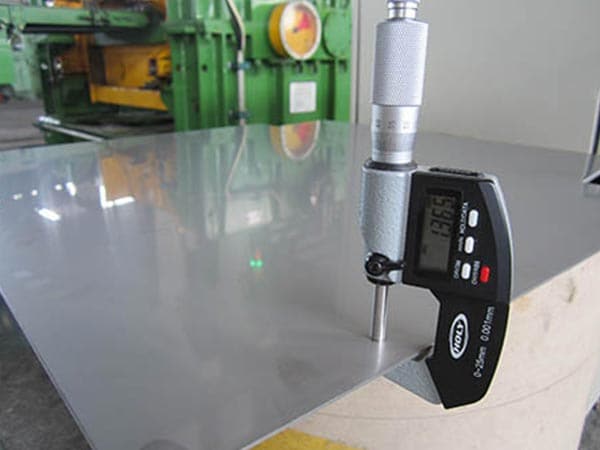
Understanding the Nature of S355MC and Its Structural Integrity
S355MC is a high-strength, low-alloy (HSLA) steel grade governed by the EN 10149-2 standard. It is specifically designed for cold-forming applications where weight reduction and high load-bearing capacity are critical. The "MC" designation indicates that the material is thermomechanically rolled (M) and suitable for cold forming (C). Its equivalents, such as ASTM A1011 HSLAS Grade 50 or JIS G3134 SPFH 540, share similar microstructural characteristics, relying on a fine-grained ferrite-pearlite matrix often strengthened by micro-alloying elements like niobium (Nb), vanadium (V), and titanium (Ti).
Despite its excellent ductility and strength, surface cracking remains a significant challenge for manufacturers and fabricators. These cracks are not merely aesthetic flaws; they represent localized stress concentrators that can lead to catastrophic structural failure under fatigue or impact loading. Identifying the root cause requires a multi-dimensional approach, looking at the metallurgical lifecycle from the continuous casting machine to the final bending press.
Metallurgical Factors: Chemical Composition and Inclusions
The chemical footprint of S355MC is tightly controlled, but even minor deviations can trigger surface vulnerabilities. One primary culprit is the presence of non-metallic inclusions, particularly sulfides and oxides. When sulfur levels are not sufficiently low, manganese sulfides (MnS) form and elongate during the rolling process. These elongated inclusions create internal "weak planes" that can open up as surface slivers or cracks during subsequent cold forming.
Furthermore, the balance of micro-alloying elements is vital. While Niobium and Titanium refine the grain size, excessive amounts can lead to the formation of coarse carbonitrides. These particles act as crack initiation sites. If the Carbon Equivalent (CEV) is too high, the steel becomes more susceptible to localized hardening, reducing the surface's ability to redistribute strain during deformation, thereby promoting brittle cracking.
The Role of the Continuous Casting Process
Surface cracks often originate long before the steel reaches the rolling mill. During continuous casting, the cooling rate of the slab is paramount. If the primary cooling in the mold is non-uniform, longitudinal or transverse cracks can form on the slab surface. These are known as oscillation marks or cooling cracks. If these defects are not properly removed via scarfing or grinding, they are flattened and elongated during the thermomechanical rolling process, manifesting as thin, linear surface cracks on the final hot-rolled coil.
Another critical factor is the peritectic reaction. S355MC often falls within the peritectic range (carbon content between 0.08% and 0.17%). During solidification, the transformation from delta-ferrite to austenite causes significant volume shrinkage. This shrinkage induces tensile stresses on the solidified shell, which can lead to deep longitudinal cracks if the mold flux and cooling parameters are not perfectly calibrated.
Thermomechanical Controlled Processing (TMCP) Irregularities
The TMCP process is what gives S355MC its superior strength and toughness without excessive alloying. However, it requires precise temperature control. If the finishing rolling temperature falls into the dual-phase (austenite + ferrite) region prematurely, the deformation becomes non-uniform. The ferrite phase, being softer, takes more strain, while the austenite remains harder. This strain partitioning can cause microscopic voids to form at the phase boundaries, which eventually coalesce into surface cracks.
Moreover, the cooling rate after rolling (Accelerated Cooling) must be managed. If the surface cools too rapidly compared to the core, a high-temperature gradient is established, leading to residual tensile stresses on the surface. These stresses can exceed the material's yield strength at that specific temperature, causing "thermal checking" or fine network cracking.
Mechanical Causes During Cold Forming and Bending
S355MC is frequently used for complex chassis components and structural frames requiring tight bends. Surface cracking during these operations is often a result of exceeding the minimum bend radius. Although S355MC is rated for cold forming, its high yield strength means it has less "reserve ductility" than lower-grade mild steels. If the inner bend radius is too sharp, the outer fibers of the steel are subjected to extreme tensile strain.
- Sheared Edge Sensitivity: If the edges of the steel plate are not cleanly cut (e.g., dull shears or improper punch clearance), micro-cracks and work-hardened zones are created. When the part is bent, these micro-cracks propagate rapidly across the surface.
- Surface Decarburization: If the slab was reheated in an oxygen-rich atmosphere for too long, the surface layer loses carbon. This decarburized layer has lower strength and can "craze" or crack differently than the underlying matrix during heavy deformation.
- Directional Properties: Despite TMCP refining the grain, there is still some anisotropy. Cracking is more likely to occur if the bend line is parallel to the rolling direction (longitudinal bending) rather than transverse.
Environmental and Chemical Triggers: Hydrogen and Corrosion
In some industrial environments, S355MC can suffer from Hydrogen-Induced Cracking (HIC) or Stress Corrosion Cracking (SCC). If the steel is exposed to acidic environments during pickling or is used in H2S-rich atmospheres without proper protection, atomic hydrogen can diffuse into the steel lattice. This hydrogen accumulates at grain boundaries and inclusion interfaces, creating internal pressure that manifests as surface blisters or cracks.
Additionally, improper storage of hot-rolled coils can lead to localized pitting corrosion. These pits act as stress raisers. When the material is eventually uncoiled or formed, the stress concentrates at the base of the pit, initiating a crack that might be mistaken for a rolling defect.
Comparative Analysis of S355MC and Equivalents
| Standard | Grade | Yield Strength (min MPa) | Tensile Strength (MPa) | Elongation (min %) | Typical Cracking Risks |
|---|---|---|---|---|---|
| EN 10149-2 | S355MC | 355 | 430-550 | 19-23 | Edge cracking during cold bending; TMCP cooling irregularities. |
| ASTM A1011 | HSLAS-F Gr 50 | 345 | 450 | 22 | Inclusion-related delamination; sensitivity to shear burrs. |
| JIS G3134 | SPFH 540 | 355 | 540 | 21 | Peritectic solidification cracks; surface decarburization. |
| GB/T 1591 | Q355B/C/D | 355 | 470-630 | 20-22 | Weld-affected zone cracking; low-temperature brittleness. |
Prevention and Mitigation Strategies
To eliminate surface cracking in S355MC, a holistic quality control strategy must be implemented. From the steelmaking perspective, Calcium treatment is often used for inclusion shape control, turning elongated MnS into spherical, less harmful particles. Vacuum degassing is also employed to minimize hydrogen and oxygen content.
During fabrication, several steps can be taken:
- Edge Preparation: Grinding or machining the sheared edges of the blank before bending significantly reduces the risk of crack initiation.
- Lubrication: High-pressure lubricants reduce the friction between the die and the steel surface, preventing localized overheating and surface tearing.
- Preheating: In extremely thick sections or cold environments, a mild preheat can increase the material's initial ductility, though this must be done carefully to avoid destroying the TMCP microstructure.
- Inspection: Utilizing Non-Destructive Testing (NDT) such as Magnetic Particle Inspection (MPI) or Eddy Current testing can identify surface-breaking defects before they lead to part failure.
By understanding that surface cracks in S355MC are often the result of a "perfect storm" of metallurgical heritage and mechanical stress, engineers can better specify processing parameters that preserve the integrity of this high-performance steel. Whether it is adjusting the mold flux in the casting stage or increasing the punch radius in the stamping shop, every step is vital to ensuring the durability of the final component.
Leave a message