
What is the 1.0980 alloy steel sheet extrusion technology
Explore the technical details of 1.0980 (S500MC) alloy steel sheet extrusion, covering mechanical properties, tool design, and industrial applications.
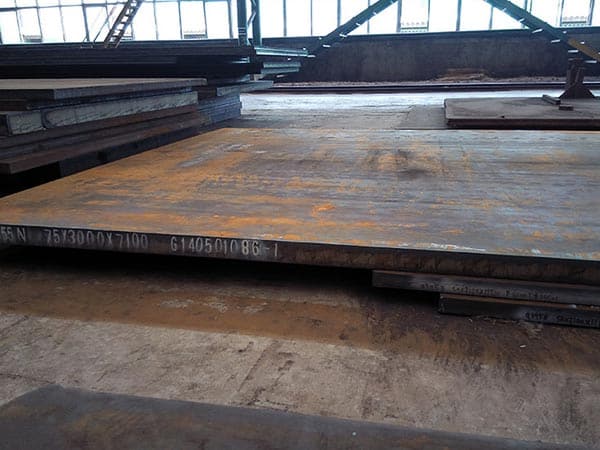
Understanding 1.0980 Alloy Steel in Industrial Contexts
1.0980, commonly identified by the EN 10149-2 designation as S500MC, is a high-yield-strength steel specifically engineered for cold forming. Unlike standard carbon steels, this alloy undergoes thermomechanical rolling. This process refines the grain structure, allowing the metal to handle significant deformation without cracking. When we talk about extrusion technology for 1.0980 sheet, we are usually discussing the transition from a flat blank into a complex three-dimensional component using high-pressure dies.
The Mechanics of Extruding High-Strength Sheet
Extruding a sheet differs from traditional billet extrusion. With 1.0980, the process involves forcing a pre-cut sheet blank through a die opening to reduce its thickness or create deep-drawn features that mimic extruded profiles. Because 1.0980 has a yield strength of at least 500 MPa, the press must exert massive force. The material resists flow, meaning the internal friction generates heat rapidly. Engineers must calculate the 'flow stress' accurately to prevent the press from stalling or the tool from shattering.
Chemical Composition and Its Impact on Formability
The performance of 1.0980 during extrusion depends on its chemistry. It contains low carbon (usually under 0.12%) to maintain weldability, but gains its strength from micro-alloying elements like Niobium (Nb), Vanadium (V), and Titanium (Ti). These elements pin the grain boundaries. During the extrusion stroke, these grains slide and rotate. If the chemistry is off, the material work-hardens too fast, leading to 'orange peel' surface defects or catastrophic splits at the edges of the extruded flange.
Tooling Requirements for 1.0980 Extrusion
You cannot use standard tool steels for 1.0980. The high contact pressure at the die radius will cause 'galling'—where the steel sheet literally welds itself to the tool. We use high-vanadium cold-work tool steels or powdered metallurgy (PM) steels like Vanadis 4 Extra. These tools undergo vacuum hardening and multiple tempering cycles to reach a hardness of 60-62 HRC. Surface coatings like TiAlN (Titanium Aluminum Nitride) are mandatory. These coatings act as a thermal barrier and reduce the coefficient of friction, allowing the 1.0980 sheet to glide into the die cavity.
Lubrication Strategies
Dry extrusion is impossible with 1.0980. The industry relies on heavy-duty chlorinated oils or, more recently, polymer-based synthetic lubricants. In extreme deformation cases, the sheet receives a zinc phosphate conversion coating. This coating acts as a carrier for soap-based lubricants, ensuring a physical separation between the sheet and the die even when pressures exceed 1000 MPa. Without this, the surface finish of the extruded part will look torn and rough.
Critical Process Parameters
To master 1.0980 extrusion, you must control three variables: speed, temperature, and clearance.
1. **Ram Speed:** Moving too fast causes adiabatic heating, which can degrade the lubricant. Moving too slow allows the material to cool and harden.
2. **Die Clearance:** For 1.0980, the gap between the punch and die is usually set at 10-12% of the material thickness. Tight clearances increase the extrusion force but provide better dimensional accuracy.
3. **Blank Orientation:** Since 1.0980 is thermomechanically rolled, it has a 'grain direction.' Extruding against the grain can lead to cracking. Engineers must nest the blanks on the sheet to align the primary stress with the rolling direction.
Applications in Heavy Industry
Why go through the trouble of extruding 1.0980? It’s about weight reduction. In the automotive sector, 1.0980 extruded components form the backbone of truck chassis and cross-members. By using a thinner sheet of 1.0980 and extruding structural ribs into it, manufacturers achieve the same stiffness as a thicker, heavier mild steel plate. It also finds use in crane booms and agricultural machinery where every kilogram saved translates to higher payload capacity.
Challenges and Troubleshooting
The most common failure in 1.0980 extrusion is 'springback.' Because the material is so strong, it wants to return to its original shape after the punch retracts. Tool designers must 'over-bend' or 'over-extrude' the geometry by a few degrees to compensate. Another issue is edge cracking. If the initial blank is sheared with a dull blade, the micro-cracks on the edge will propagate during extrusion. Using laser-cut or fine-blanked edges significantly improves the success rate of the extrusion process.
Future Trends in 1.0980 Processing
We are seeing a shift toward 'Warm Extrusion.' By heating the 1.0980 sheet to roughly 200-400°C, the yield strength drops temporarily, making it much easier to extrude complex shapes without the massive wear on the dies. Additionally, servo-press technology allows for variable ram speeds, slowing down at the point of maximum deformation to let the metal flow naturally. This level of control turns 1.0980 from a difficult-to-handle alloy into a versatile tool for modern lightweight engineering.
Leave a message