
What is the 1.8969 high yield strength alloy quality steel BBN Steel stock
Detailed guide on 1.8969 (S355J2W) weathering steel properties, chemical composition, and BBN Steel stock availability for high-strength infrastructure projects.
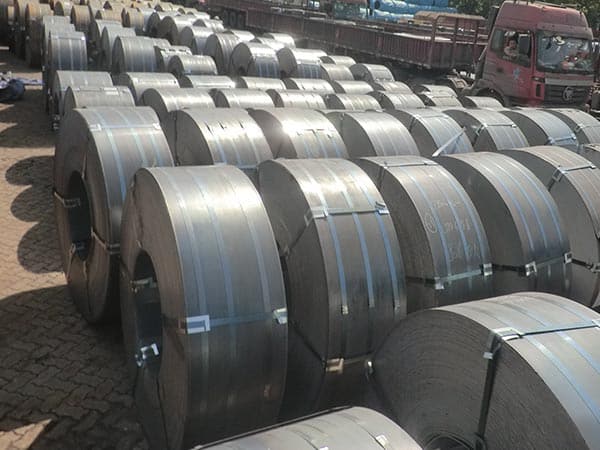
The Reality of 1.8969 Steel: A Weathering Powerhouse
1.8969 is not just another number in a catalog. In the EN 10025-5 standard, this alphanumeric code identifies S355J2W, a structural steel with improved atmospheric corrosion resistance. When you talk about BBN Steel stock, you are dealing with a material that thrives where others fail. This steel doesn't fear the rain; it uses it. Through a cycle of wetting and drying, 1.8969 develops a dense, protective oxide layer known as a patina. This isn't the destructive rust that flakes off and thins the metal. It is a locked-in barrier that prevents oxygen and moisture from penetrating the core. For engineers, this means skipping the paint shop and reducing maintenance costs over a 50-year lifespan.
Technical Breakdown: Chemical Composition and the Patina Mechanism
The performance of 1.8969 comes down to the melt. You can't just throw iron and carbon together and expect it to survive a coastal environment. BBN Steel ensures the 1.8969 plates in stock meet tight chemical tolerances. The presence of Copper (Cu), Chromium (Cr), and Nickel (Ni) is what separates this from standard s355jr carbon steel. Copper is the primary driver for corrosion resistance, but it needs Chromium to stabilize the oxide layer. Nickel improves the low-temperature toughness, ensuring the steel doesn't turn brittle when the thermometer drops. Manganese stays high enough to maintain the 355 MPa yield strength, while Carbon is capped to keep the steel weldable without cracking the heat-affected zone (HAZ).
| Element | C (max) | Si (max) | Mn | P (max) | S (max) | Cr | Cu | Ni (max) |
| Percentage | 0.16% | 0.50% | 0.50-1.50% | 0.030% | 0.030% | 0.40-0.80% | 0.25-0.55% | 0.65% |
Mechanical Properties: Strength Under Pressure
The '355' in the S355J2W designation (1.8969) refers to the minimum yield strength of 355 MPa for thicknesses up to 16mm. As the plate gets thicker, the yield strength naturally tapers off due to the grain structure, but BBN Steel's stock maintains rigorous standards for heavy plates. The 'J2' part of the name is critical for structural safety. It signifies that the steel has been impact tested at -20°C, requiring a minimum energy absorption of 27 Joules. This makes 1.8969 suitable for bridges, rail cars, and shipping containers that operate in freezing climates. If your project is in a sub-zero region, you don't gamble with J0 or JR grades; you demand J2.
Why BBN Steel Stock Matters for Fabricators
Inventory management in the steel industry is often a mess of lost mill test certificates (MTCs) and mixed-up heats. BBN Steel operates differently. Every plate of 1.8969 is traceable. When a fabricator pulls a 20mm plate from the BBN warehouse, they get the full history of that steel. This matters because 1.8969 requires specific handling. You can't just weld it with any rod. To maintain the weathering properties across the joint, you need electrodes that match the base metal's chemistry, like E8018-W2. BBN Steel provides the technical backing to ensure that the weld doesn't rust faster than the plate, which is a common failure point in poorly sourced projects.
Processing and Fabrication Realities
Working with 1.8969 high yield strength alloy requires a shop that knows its tools. Cutting this steel via plasma or oxy-fuel is straightforward, but the hardened edges must be ground down if you're going to cold-bend it. BBN Steel offers pre-processing services including CNC precision cutting, drilling, and shot blasting. Shot blasting is particularly vital for weathering steel. If you leave mill scale on the surface, the patina won't form evenly. You'll end up with a blotchy, ugly mess. BBN Steel can deliver plates blasted to Sa 2.5 standard, ensuring the weathering process starts uniformly the moment the steel hits the job site. This eliminates the 'zebra stripe' effect often seen on low-quality installations.
Applications: Where 1.8969 Dominates
You will find 1.8969 in the bones of the world's most durable infrastructure. It is the go-to for bridge girders where painting is logistically impossible or too expensive. It is used in heavy-duty exhaust stacks and chimneys because it handles flue gas corrosion better than standard structural steels. Architects also love it for building facades—not just for the strength, but for the evolving aesthetic. The color shifts from a bright orange-brown to a deep, dark chocolate over several years. BBN Steel supplies this grade to container manufacturers who need the high yield strength to stack boxes high while resisting the salt spray of the open ocean. If the environment is harsh and the load is heavy, 1.8969 is the answer.
Conclusion: Making the Right Call
Choosing 1.8969 from BBN Steel stock isn't just about buying metal; it's about buying a solution to corrosion and structural fatigue. You get a material that meets EN 10025-5, carries the J2 impact rating, and possesses the chemical 'teeth' to bite back at atmospheric decay. Whether you are building a bridge in a mountain pass or a sculpture in a city park, the yield strength and weathering profile of 1.8969 provide the security that the structure will stand long after the original engineers are gone. Don't settle for generic carbon steel when the environment demands an alloy that can take the punch.
Leave a message