
What is the 1.8976 special steel for automobiles cold bending
A deep dive into 1.8976 (S700MC) steel, focusing on its chemical composition, mechanical performance in cold bending, and why car manufacturers rely on it for structural weight reduction.
The Identity of 1.8976: More Than Just a Number
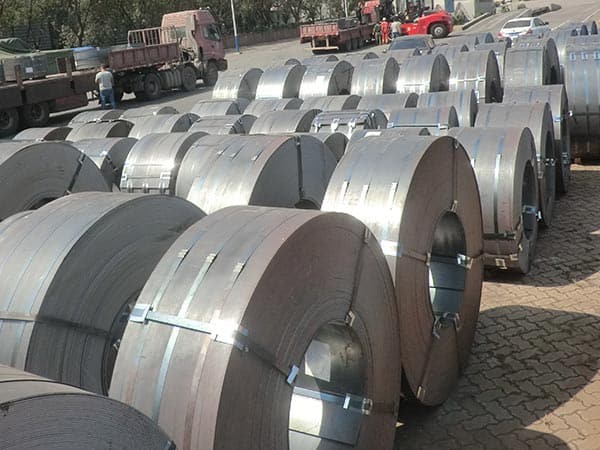
In the world of European standards, 1.8976 goes by the alias S700MC. It’s a thermomechanically rolled, high-yield strength steel designed specifically for cold forming. If you’re building a truck chassis or a crane arm, you don't just pick any metal. You pick something that won't shatter when you put it under a hydraulic press. 1.8976 fits this role because it balances extreme strength—700 MPa of yield strength—with enough ductility to survive a tight bend radius.
Automotive engineers chase weight reduction. Every kilogram saved in the frame means a higher payload or better fuel efficiency. 1.8976 allows for thinner walls without sacrificing the structural integrity of the vehicle. It belongs to the EN 10149-2 standard, which governs hot-rolled flat products made of high yield strength steels for cold forming.
The Metallurgy: How It Gets Its Strength
The strength of 1.8976 doesn't come from high carbon levels. In fact, keeping carbon low is the secret to its weldability and toughness. Instead, it relies on thermomechanical rolling (TMCP). During the rolling process, the temperature and deformation are tightly controlled to create a fine-grained microstructure.
Micro-alloying elements like Niobium (Nb), Vanadium (V), and Titanium (Ti) play the heavy hitters here. They form carbides and nitrides that pin the grain boundaries, preventing them from growing. Small grains mean a tougher metal that resists crack propagation. When you hit a pothole at 60 mph, you want your chassis to flex and hold, not snap like a dry twig.
Chemical Composition Breakdown
To understand why it bends so well, look at the chemistry. Here is a typical breakdown of what’s inside 1.8976:
- Carbon (C): Max 0.12% - Low carbon ensures the steel remains ductile and easy to weld.
- Manganese (Mn): Max 2.10% - Increases hardness and strength.
- Silicon (Si): Max 0.60% - Acts as a deoxidizer.
- Phosphorus (P) & Sulfur (S): Kept to a minimum (0.025% and 0.015%) to prevent brittleness and internal defects.
- Aluminium (Al): Min 0.015% - Used for grain refinement.
- Niobium, Vanadium, Titanium: Combined, these don't exceed 0.22%, but they provide the "backbone" for the 700 MPa yield strength.
Cold Bending: The Real Test of 1.8976
The term "cold bending" refers to shaping the steel at room temperature. For 1.8976, this is where the metal proves its worth. Because of its fine grain structure, it can handle significant deformation. However, you can't just bend it blindly. Engineers use a minimum bending radius to avoid surface cracking or "orange peel" effects.
For 1.8976 (S700MC), the bending radius depends on the thickness (t) of the plate and the direction of the bend (transverse or longitudinal). Generally, for a plate thickness under 3mm, the bending radius might be as tight as 1.0t to 1.5t. As the plate gets thicker, the radius must increase to distribute the strain. If you force a 10mm plate into a 5mm radius, the outer tension zone will fail. You’ll see micro-cracks that eventually lead to catastrophic frame failure.
Why the Automotive Industry Craves It
Why use 1.8976 instead of standard S355 or S235 steel? It comes down to the Strength-to-Weight Ratio.
- Weight Reduction: By switching from S355 to S700MC (1.8976), a designer can often reduce the thickness of a part by 30% while maintaining the same load-bearing capacity.
- Crash Performance: In a collision, the energy needs to be absorbed or diverted. 1.8976 has high energy absorption characteristics, making it ideal for longitudinal beams and cross members.
- Cost Efficiency: While the raw material per ton is more expensive than basic carbon steel, using less of it (thinner gauges) often offsets the cost, especially when considering lifetime fuel savings for the vehicle.
Processing and Fabrication Challenges
Working with 1.8976 isn't exactly like working with mild steel. You need to respect the material.
1. Springback:Because the yield strength is so high (700 MPa), the steel wants to return to its original shape after the bending force is removed. This is called springback. Operators must over-bend the part by a calculated degree to hit the final target angle. If you’re used to S235, the springback on 1.8976 will surprise you—it’s significantly more aggressive.
2. Edge Quality:Before bending, the edges of the blank should be clean. Laser cutting or plasma cutting is common, but if the edge has heavy burrs or notches, these will act as stress concentrators. During a cold bend, a notch can turn into a crack that zips through the entire flange. Grinding the edges smooth is a small step that prevents big losses.
3. Welding:1.8976 welds beautifully with standard MIG/MAG processes. However, you must avoid excessive heat input. Too much heat stays in the "Heat Affected Zone" (HAZ) for too long, which can coarsen the grains and drop the strength back down to S355 levels. Fast, clean passes are the way to go.
Applications in Modern Vehicles
Where will you find 1.8976? Look at the parts that do the heavy lifting:
- Truck Chassis Frames: The long rails that support the entire weight of the vehicle and cargo.
- Crane Booms: Telescopic sections that need to be light enough to extend but strong enough to lift tons.
- Cold Pressed Parts: Brackets, stiffeners, and cross members in SUVs and heavy-duty pickups.
- Agricultural Machinery: Plow frames and trailer chassis that endure constant vibration and stress.
Comparison Table: 1.8976 vs. Standard Grades
| Property | S235JR (Standard) | S355MC (Medium) | 1.8976 / S700MC |
|---|---|---|---|
| Yield Strength (min) | 235 MPa | 355 MPa | 700 MPa |
| Tensile Strength | 360-510 MPa | 430-550 MPa | 750-950 MPa |
| Elongation (min) | 24% | 19% | 12-14% |
| Typical Use | General construction | Light automotive frames | Heavy-duty structural parts |
Conclusion: The Future of Cold Formed Steel
1.8976 (S700MC) isn't just a trend; it's a necessity for the modern automotive and transport sectors. As regulations tighten on emissions and safety, the demand for high-strength, cold-formable steels will only climb. It bridges the gap between heavy, thick plates and brittle, high-carbon alloys. If you understand its bending limits and respect its metallurgy, 1.8976 allows you to build machines that are lighter, faster, and tougher than ever before. It is the backbone of the modern heavy-duty vehicle.
Leave a message