
What is the rate of en 10149-2 s700mc per ton in Singapore
Discover the current market factors influencing the rate of EN 10149-2 S700MC steel per ton in Singapore. This guide explores mechanical properties, industrial applications, and procurement strategies for high-yield strength steel.
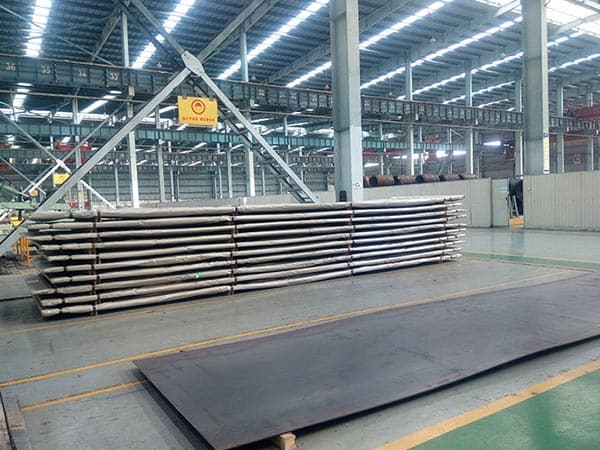
Current Market Landscape for EN 10149-2 S700MC in Singapore
The steel market in Singapore serves as a critical barometer for Southeast Asian industrial activity. When asking what is the rate of en 10149-2 s700mc per ton in Singapore, one must understand that this high-yield strength steel is not a commodity with a fixed daily price like gold. Instead, the rate is influenced by a complex interplay of global raw material costs, freight logistics to the Port of Singapore, and the specific technical requirements of the engineering project. S700MC is a thermomechanically rolled steel designed specifically for cold forming, offering a minimum yield strength of 700 MPa. In the current economic climate, prices typically fluctuate based on the origin of the mill—whether sourced from premium European producers or high-capacity Asian manufacturers.
For procurement managers in Tuas or Jurong, the rate per ton usually includes the base metal price plus surcharges for thickness, width, and specific certifications such as EN 10204 3.1 or 3.2. As of the current quarter, the price range is sensitive to energy costs and the availability of scrap and iron ore. Furthermore, Singapore's role as a regional hub means that local stockists often factor in warehousing and rapid-delivery premiums for immediate project needs.
Technical Specifications: The Foundation of S700MC Value
The value proposition of S700MC lies in its metallurgical excellence. Under the EN 10149-2 standard, this steel undergoes thermomechanical rolling, a process that refines the grain structure to achieve high strength without the need for excessive alloying elements. This results in a material that is both incredibly strong and remarkably easy to fabricate. Understanding these properties is essential for justifying the investment in S700MC over lower-grade structural steels.
| Chemical Element | Maximum Content (%) |
|---|---|
| Carbon (C) | 0.12 |
| Manganese (Mn) | 2.10 |
| Silicon (Si) | 0.60 |
| Phosphorus (P) | 0.025 |
| Sulfur (S) | 0.015 |
| Aluminum (Al) | 0.015 |
The low carbon content (max 0.12%) is a significant factor in the material's superior weldability. Unlike traditional high-strength steels that require extensive pre-heating, S700MC can often be welded using standard procedures, significantly reducing labor costs and time-to-market for Singaporean fabricators.
Mechanical Performance and Structural Integrity
When evaluating the rate per ton, the mechanical performance metrics provide the context for cost-efficiency. S700MC allows for the use of thinner sections to support the same loads as thicker, lower-grade steels (like S355). This weight reduction translates directly into lower transport costs and higher payload capacities for the end-user.
| Property | Value (Metric) |
|---|---|
| Minimum Yield Strength | 700 MPa |
| Tensile Strength | 750 - 950 MPa |
| Minimum Elongation (A80mm) | 10% - 12% (depending on thickness) |
| Bending Radius (90°) | Minimum 1.0t to 1.5t |
These mechanical properties ensure that the steel can withstand extreme stress while maintaining ductility. For Singapore's heavy machinery and lifting sectors, this balance is critical for safety and longevity. The ability to cold-form S700MC into complex shapes without cracking is a hallmark of the EN 10149-2 standard, making it a preferred choice for telescopic booms and chassis components.
Fabrication Advantages: Cold Forming and Welding
The economic benefit of S700MC extends beyond the initial purchase price. Its processing characteristics offer substantial savings during the manufacturing phase. Cold forming is one of the primary strengths of this grade. Due to its fine-grain structure, S700MC exhibits minimal springback and excellent surface quality after bending. This precision is vital for industries in Singapore that utilize automated laser cutting and CNC bending technologies.
- Excellent Weldability: The low carbon equivalent (CEV) ensures that the Heat Affected Zone (HAZ) retains its toughness, reducing the risk of cold cracking.
- Precision Cutting: S700MC is highly suitable for laser, plasma, and waterjet cutting, maintaining clean edges and dimensional stability.
- Surface Quality: The thermomechanical rolling process results in a tight mill scale, which is easier to remove during shot blasting and provides a better substrate for painting and galvanizing.
Environmental Adaptability in Tropical Climates
Singapore’s unique environment—characterized by high humidity, high temperatures, and proximity to the sea—requires materials that can perform under corrosive stress. While S700MC is not a stainless steel, its clean chemical composition and uniform microstructure provide a consistent base for advanced protective coatings. In offshore and marine-adjacent applications, S700MC is frequently used in conjunction with high-performance epoxy coatings or hot-dip galvanizing.
Furthermore, the fatigue resistance of S700MC is exceptional. In dynamic loading environments, such as the heavy-duty trailers used in Singapore's busy logistics corridors, the steel's ability to resist crack initiation and propagation ensures a longer service life compared to conventional structural steels. This durability effectively lowers the "total cost of ownership," making the initial rate per ton a wise long-term investment.
Key Factors Influencing Price Fluctuations in Singapore
Several localized factors impact the rate of S700MC per ton in Singapore. Understanding these can help procurement teams time their purchases more effectively:
- Import Duties and Trade Agreements: Singapore’s free trade status generally keeps prices competitive, but changes in regional trade policies or anti-dumping duties on specific origins can shift the market.
- Logistics and Freight: As a major transshipment hub, Singapore is sensitive to global shipping rates. Bulk orders may see lower per-ton freight costs compared to LCL (Less than Container Load) shipments.
- Inventory Availability: Local stockists in areas like Penjuru or Pioneer often hold S700MC in standard thicknesses (e.g., 3mm to 12mm). Non-standard sizes or extremely large plates may require custom indentation from overseas mills, affecting the lead time and price.
- Mill Brand and Certification: S700MC from reputable European mills (like SSAB, Thyssenkrupp, or Voestalpine) may command a premium over Asian alternatives due to tighter tolerance controls and extensive track records in safety-critical applications.
Strategic Procurement for Singaporean Industries
To secure the best rate for EN 10149-2 S700MC, it is recommended to work with suppliers who provide full traceability and technical support. Given the high-stress applications of this material, verifying the Mill Test Certificate (MTC) against the actual heat numbers on the steel is non-negotiable. For large-scale infrastructure or specialized vehicle manufacturing projects in Singapore, establishing long-term supply contracts can mitigate the volatility of the spot market.
In conclusion, while the numerical rate per ton of S700MC in Singapore is subject to change, its value is anchored in its ability to reduce weight, simplify fabrication, and enhance the structural integrity of the final product. By focusing on the material's high yield strength and excellent cold-forming properties, engineers can design more efficient and sustainable solutions that meet the rigorous demands of the modern industrial landscape.
Leave a message