
What is the difference between alloy steel and s550mc high strength steel auto plate
Discover the technical differences between general alloy steel and S550MC high-strength automotive plates, focusing on composition, processing, and application benefits.
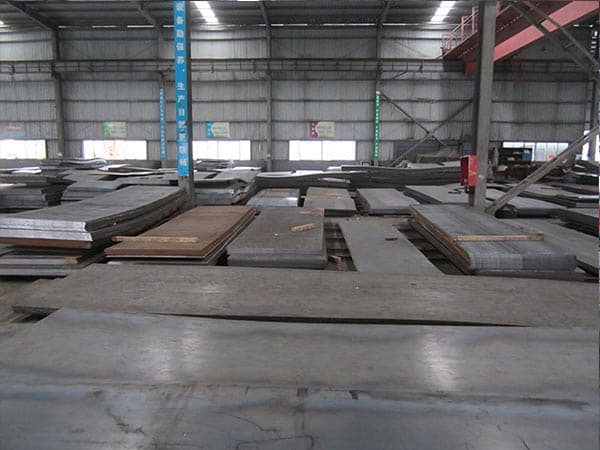
Understanding the Fundamental Distinction Between Alloy Steel and S550MC
In the complex world of metallurgy, selecting the right material for automotive or structural engineering requires a deep dive into material science. While alloy steel is a broad category encompassing any steel enhanced with elements like chromium, nickel, or molybdenum, S550MC is a highly specialized grade. S550MC is a high-yield-strength steel specifically designed for cold forming, governed by the EN 10149-2 standard. The primary difference lies not just in the chemistry, but in the thermomechanical rolling process that gives S550MC its unique performance profile.
Traditional alloy steels are often used for their hardenability or wear resistance, frequently requiring heat treatment like quenching and tempering (Q+T). In contrast, S550MC achieves its strength through a combination of fine-grain micro-alloying and controlled rolling temperatures. This makes S550MC a more efficient choice for high-volume automotive manufacturing where consistency and weldability are paramount.
Chemical Composition: Micro-alloying vs. Bulk Alloying
The chemical makeup of S550MC is a masterclass in precision. Unlike standard alloy steels that might contain high percentages of alloying elements, S550MC uses a "micro-alloying" strategy. It relies on minute additions of Niobium (Nb), Vanadium (V), and Titanium (Ti) to refine the grain structure. This refinement is what allows the steel to remain incredibly strong while maintaining a low carbon equivalent.
A lower carbon content is critical for the automotive sector. It ensures that the steel can be welded without the risk of cold cracking, a common issue with high-carbon alloy steels. By keeping the carbon content below 0.12%, S550MC offers a level of weldability that traditional structural alloy steels simply cannot match.
| Element | S550MC (Max %) | Typical Low-Alloy Structural Steel (Approx %) |
|---|---|---|
| Carbon (C) | 0.12 | 0.20 - 0.40 |
| Manganese (Mn) | 1.80 | 0.50 - 1.50 |
| Silicon (Si) | 0.50 | 0.15 - 0.35 |
| Niobium (Nb) | 0.09 | Trace |
| Titanium (Ti) | 0.15 | Trace |
Mechanical Performance: Yield Strength and Ductility
The "550" in S550MC stands for its minimum yield strength of 550 MPa. When comparing this to standard alloy steels, the focus shifts from raw hardness to the yield-to-tensile ratio. S550MC is engineered to provide a high yield point, which is essential for structural integrity in vehicle frames, while retaining enough elongation (typically 12-14%) to allow for complex cold-forming operations.
Standard alloy steels often face a trade-off: as strength increases, ductility drops sharply. S550MC bypasses this limitation through its thermomechanical rolling process (indicated by the "MC" suffix). This process creates a fine-grained ferrite-pearlite or bainitic microstructure that resists crack propagation more effectively than the coarse-grained structures found in many hot-rolled alloy steels.
Processing Advantages: Cold Forming and Fabrication
One of the most significant differences between these materials is how they behave in the workshop. S550MC is specifically optimized for cold forming. Engineers can bend, press, and fold S550MC into intricate shapes for truck chassis, cross members, and longitudinal beams without the material failing or exhibiting excessive springback.
- Excellent Bendability: S550MC allows for tight bending radii, which is crucial for compact automotive designs.
- Consistent Weldability: Due to its low carbon equivalent (CEV), it can be welded using MIG, TIG, or laser welding without pre-heating.
- Weight Reduction: Because of its high strength, thinner sections of S550MC can replace thicker sections of standard carbon or alloy steel, leading to significant vehicle weight savings.
Environmental Adaptability and Fatigue Resistance
Automotive components are subjected to harsh environments, from road salts to constant vibration. S550MC demonstrates superior fatigue resistance compared to many traditional alloy steels. The fine grain structure helps distribute stress more evenly across the material, preventing the localized stress concentrations that lead to fatigue cracks.
Furthermore, while some high-alloy steels are prone to hydrogen embrittlement or stress corrosion cracking, the controlled chemistry of S550MC makes it relatively stable in varied atmospheric conditions. This durability ensures that the structural components of a vehicle remain safe throughout its lifecycle, even under heavy load-bearing conditions.
Industry Applications: Beyond the Passenger Car
While the name suggests "auto plate," the utility of S550MC extends into several heavy-duty industries. Its high strength-to-weight ratio makes it a favorite for mobile cranes, agricultural machinery, and trailer manufacturing. In these sectors, the ability to reduce the tare weight of a machine directly translates to higher payloads and better fuel efficiency.
Traditional alloy steels are still preferred for components requiring high surface hardness, such as gears or shafts. However, for structural components that require a balance of strength, toughness, and ease of fabrication, S550MC is increasingly becoming the industry standard. The transition from heavy, hard-to-process alloy steels to high-strength low-alloy (HSLA) grades like S550MC represents a major shift toward sustainable and efficient engineering.
Choosing Between Alloy Steel and S550MC
The choice between these two materials depends on the final application's requirements. If the goal is to create a component that needs to be through-hardened or requires extreme wear resistance, a high-carbon alloy steel might be necessary. However, if the project involves manufacturing structural parts that must be light, weldable, and capable of being formed into complex shapes, S550MC is the superior choice.
S550MC offers a predictable performance that simplifies the design process. Its adherence to the EN 10149-2 standard provides engineers with the confidence that the material will perform consistently across different batches, a critical factor in automated production lines. By understanding these technical nuances, manufacturers can optimize their material usage, reduce costs, and improve the overall quality of their products.
Leave a message