
What is s355mc steel, s355jr steel, s355j0 steel steel grade
A comprehensive guide to S355MC, S355JR, and S355J0 steel grades. Explore their mechanical properties, chemical compositions, and industrial applications for optimal material selection.
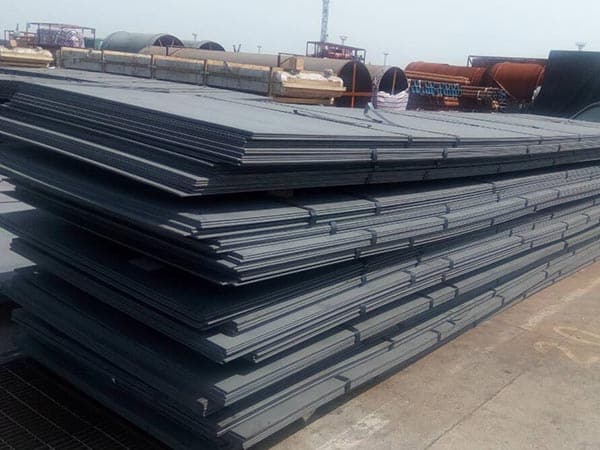
Decoding the S355 Steel Family: Nomenclature and Standards
The designation S355 represents a cornerstone in the European structural steel framework, governed primarily by the EN 10025 and EN 10149 standards. The 'S' prefix identifies the material as structural steel, while the number '355' denotes its minimum yield strength of 355 megapascals (MPa) for thicknesses up to 16mm. However, the suffixes JR, J0, and MC introduce critical distinctions in manufacturing processes, impact toughness, and formability that dictate their suitability for specific engineering challenges.
Understanding these nuances is essential for engineers and procurement specialists. While they share a common yield strength baseline, their behavior under thermal stress, dynamic loading, and cold fabrication varies significantly. s355jr and S355J0 fall under the EN 10025-2 standard for hot-rolled non-alloy structural steels, whereas S355MC is defined by EN 10149-2, focusing on high-yield strength steels for cold forming, produced via thermomechanical rolling.
S355JR Steel: The Versatile Standard for General Construction
S355JR is perhaps the most widely utilized grade within the S355 family. The 'JR' suffix indicates that the steel has undergone a Charpy V-notch impact test at room temperature (20°C), achieving a minimum energy absorption of 27 Joules. This makes it an ideal candidate for environments where extreme cold is not a primary concern and where the structures are subjected to static or moderate dynamic loads.
From a metallurgical perspective, S355JR is a low-carbon, manganese-rich steel. Its popularity stems from its excellent balance of weldability and strength. It is commonly found in the skeleton of commercial buildings, transmission towers, and general machinery components. Because it is a non-alloy steel, it offers a cost-effective solution for projects requiring high load-bearing capacity without the premium price of specialized alloying elements.
S355J0 Steel: Enhanced Toughness for Temperature-Sensitive Projects
When engineering requirements move toward colder climates or environments with higher risk of brittle fracture, S355J0 becomes the preferred choice. The 'J0' suffix specifies that the 27 Joule impact test is conducted at 0°C. This lower testing temperature ensures that the material maintains its ductility and resistance to cracking even when the thermometer drops to freezing levels.
The transition from JR to J0 involves tighter control over impurities such as phosphorus and sulfur, which can adversely affect toughness. S355J0 is frequently specified for offshore structures, bridges in temperate zones, and heavy equipment operating in outdoor environments where seasonal temperature fluctuations are significant. It provides an added safety margin over S355JR, ensuring structural integrity during winter months or in refrigerated industrial settings.
S355MC Steel: The Engineering Marvel of Thermomechanical Processing
S355MC stands apart from the JR and J0 grades due to its unique manufacturing route. The 'MC' indicates 'Thermomechanically Rolled' (M) and 'Cold Forming' (C). Unlike traditional hot rolling, thermomechanical rolling (TMCP) involves precise control of the temperature and deformation during the rolling process. This results in an exceptionally fine-grained microstructure that cannot be achieved through heat treatment alone.
The primary advantage of S355MC is its superior weight-to-strength ratio and exceptional cold-forming properties. It is designed to be bent, folded, and pressed into complex shapes without cracking. This makes it a staple in the automotive industry for chassis components, as well as in the production of cold-pressed profiles and longitudinal beams for trucks. By using S355MC, manufacturers can reduce the thickness of components without sacrificing strength, leading to lighter vehicles and improved fuel efficiency.
Comparative Chemical Composition and Metallurgical Influence
The chemical makeup of these grades is engineered to optimize their respective performance profiles. While S355JR and J0 focus on basic structural stability, S355MC utilizes micro-alloying elements like Niobium (Nb), Vanadium (V), and Titanium (Ti) to achieve grain refinement.
| Element (Max %) | S355JR | S355J0 | S355MC |
|---|---|---|---|
| Carbon (C) | 0.24 | 0.20 | 0.12 |
| Manganese (Mn) | 1.60 | 1.60 | 1.50 |
| Silicon (Si) | 0.55 | 0.55 | 0.50 |
| Phosphorus (P) | 0.035 | 0.030 | 0.025 |
| Sulfur (S) | 0.035 | 0.030 | 0.020 |
As observed, S355MC has a significantly lower carbon content compared to S355JR. This lower carbon level, combined with TMCP, enhances its weldability and toughness while maintaining high strength. The reduction in phosphorus and sulfur in S355MC and S355J0 is critical for preventing hot cracking and improving the steel's internal cleanliness.
Mechanical Properties: Strength, Ductility, and Impact Resistance
The mechanical performance of these steels is the primary driver for their selection. While they all target a 355 MPa yield strength, their tensile strength and elongation characteristics reflect their intended use cases.
| Property | S355JR | S355J0 | S355MC |
|---|---|---|---|
| Min Yield Strength (MPa) | 355 | 355 | 355 |
| Tensile Strength (MPa) | 470 - 630 | 470 - 630 | 430 - 550 |
| Min Elongation (%) | 20 - 22 | 20 - 22 | 19 - 23 |
| Impact Test Temp (°C) | +20 | 0 | -20 (Optional) |
| Min Impact Energy (J) | 27 | 27 | 40 |
Note that S355MC often exceeds the impact requirements of JR and J0, frequently reaching 40J at -20°C or even -40°C, despite its primary classification as a cold-forming steel. This makes it incredibly robust for dynamic applications in harsh environments.
Fabrication Excellence: Welding, Cutting, and Bending
Welding is a critical process for structural steels. S355JR and S355J0 are highly weldable using standard methods such as SMAW, GMAW, and SAW. However, due to their higher carbon equivalent (CEV) compared to S355MC, thicker sections may require preheating to prevent hydrogen-induced cracking in the heat-affected zone (HAZ).
S355MC, with its ultra-low carbon content, offers exceptional weldability. It generally does not require preheating even in thicker plates, and the HAZ remains tough and ductile. When it comes to cutting, all three grades respond well to laser, plasma, and oxy-fuel cutting. However, the fine-grained structure of S355MC provides a cleaner edge finish, which is beneficial for components requiring high precision.
Bending performance is where S355MC truly shines. While S355JR and J0 can be bent, they have larger minimum bend radii to avoid surface cracking. S355MC is specifically engineered for tight bending radii, allowing for more compact and complex designs in mechanical engineering and automotive frames.
Strategic Application: Matching Steel Grades to Industrial Demands
The choice between these grades depends on the specific stresses the final product will encounter. For general structural work where the primary concern is load-bearing capacity at a low cost, S355JR is the industry standard. It is the backbone of warehouses, simple bridges, and support frames.
For infrastructure projects in regions with cold winters or for machinery that operates outdoors, S355J0 provides the necessary security against brittle failure. It is widely used in the construction of large-scale cranes, excavators, and agricultural machinery where safety factors are paramount.
S355MC is the go-to material for high-performance manufacturing. Its use is prevalent in:
- Automotive Industry: Truck chassis, cross members, and suspension parts where weight reduction is vital.
- Heavy Machinery: Telescopic booms and light-weight containers.
- Cold Profiles: Production of C and Z purlins for modern roofing systems.
- Pipe Manufacturing: High-strength tubes for structural and fluid transport.
Longevity and Environmental Adaptation
While these grades are not inherently "weathering steels" like Corten, their durability can be enhanced through various surface treatments. Hot-dip galvanizing is a common practice for S355JR and S355J0 to provide long-term corrosion resistance in outdoor environments. The chemical composition of these steels is compatible with the galvanizing process, though silicon levels must be monitored to control the thickness of the zinc coating.
S355MC is often used in applications where it will be painted or powder-coated. Its smooth surface finish, a result of the thermomechanical rolling process, provides an excellent substrate for coatings, ensuring superior adhesion and a high-quality aesthetic finish. In environments where atmospheric corrosion is a major factor, selecting a grade with higher internal purity, like S355MC or S355J0, can slightly improve the longevity of the base metal by reducing the sites for localized corrosion initiation.
Economic and Technical Evaluation for Material Selection
Selecting the right S355 grade involves balancing performance requirements against project budgets. S355JR offers the lowest initial material cost, making it attractive for high-volume structural projects. However, the potential for weight savings offered by S355MC can lead to lower total project costs when considering transportation, fuel consumption of the final vehicle, and ease of fabrication.
Furthermore, the increased safety margin provided by S355J0's impact toughness can reduce long-term liability and maintenance costs for structures in cold climates. Engineers must evaluate the entire lifecycle of the component—from the ease of cold forming and welding to the environmental conditions it will face over decades of service. By choosing the specific S355 variant that aligns with these factors, one ensures not only structural integrity but also economic efficiency and manufacturing excellence.
Leave a message