
How en 10149-2sheet s355mc pdf properties differ A36 steel properties
A detailed technical comparison between EN 10149-2 S355MC and ASTM A36 steel, focusing on mechanical properties, chemical composition, and industrial applications.
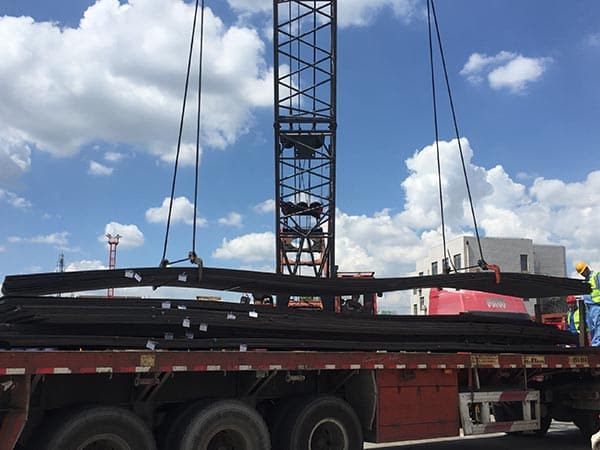
Understanding the Fundamental Differences Between S355MC and A36
When selecting materials for structural or mechanical engineering, the choice between European standards like EN 10149-2 S355MC and American standards like ASTM A36 is rarely about simple equivalence. These two grades represent different philosophies in steel production and application. S355MC is a thermomechanically rolled, high-yield strength steel designed specifically for cold forming, whereas A36 is a classic hot-rolled carbon structural steel used for general construction. Understanding the nuances in their PDF specifications is critical for optimizing weight, cost, and structural integrity.
Chemical Composition: Micro-Alloying vs. Carbon-Manganese Balance
The primary difference begins at the molecular level. ASTM A36 relies heavily on a relatively high carbon content to achieve its strength. This makes it a robust, general-purpose steel but limits its performance in complex fabrication scenarios. In contrast, S355MC utilizes a Thermomechanically Controlled Processing (TMCP) route, which allows for a significantly lower carbon content while achieving higher strength through micro-alloying elements like Niobium (Nb), Vanadium (V), and Titanium (Ti).
| Element (%) | EN 10149-2 S355MC | ASTM A36 (Plates up to 20mm) |
|---|---|---|
| Carbon (C) max | 0.12 | 0.25 |
| Manganese (Mn) | 1.50 max | 0.80 - 1.20 |
| Silicon (Si) max | 0.50 | 0.40 |
| Phosphorus (P) max | 0.025 | 0.040 |
| Sulfur (S) max | 0.020 | 0.050 |
| Micro-alloys (Nb, Ti, V) | Present (Sum ≤ 0.22) | Not Required |
The lower carbon content in S355MC (max 0.12%) compared to A36 (up to 0.25%) drastically improves its weldability and toughness. The addition of Niobium and Titanium in S355MC facilitates grain refinement, which is the key to its superior strength-to-weight ratio.
Mechanical Properties: Yield Strength and Ductility
The name S355MC itself denotes a minimum yield strength of 355 MPa. ASTM A36, by definition, has a minimum yield strength of 36,000 psi, which converts to approximately 250 MPa. This 40% difference in yield strength is the most significant factor when engineers look to reduce the weight of a structure.
- Yield Strength: S355MC offers 355 MPa min, while A36 offers 250 MPa min.
- Tensile Strength: S355MC ranges from 430 to 550 MPa, whereas A36 ranges from 400 to 550 MPa.
- Elongation: S355MC provides excellent ductility for its strength class, typically 19-23% depending on thickness, while A36 offers around 20-23%.
Because S355MC has a higher yield-to-tensile ratio, it allows for higher design stresses. Using S355MC instead of A36 can lead to a reduction in material thickness by up to 30% without compromising the load-bearing capacity, which is a major advantage in the transport and automotive industries.
Fabrication and Cold Forming Performance
S355MC is specifically engineered for cold forming. The "MC" suffix indicates it is suitable for cold flanging and folding. Its fine-grained structure prevents cracking during tight-radius bending, a common issue with standard hot-rolled plates like A36. If a project requires complex shapes, chassis components, or pressed parts, S355MC is the technically superior choice.
ASTM A36 is more "forgiving" in general workshop environments due to its lower strength, making it easier to cut and drill with basic equipment. However, its weldability is inferior to S355MC. The Carbon Equivalent Value (CEV) of S355MC is much lower, meaning it is less susceptible to cold cracking in the Heat Affected Zone (HAZ) and often requires no preheating, unlike thicker sections of A36.
Environmental Adaptability and Surface Quality
The TMCP process used for S355MC results in a very fine and consistent microstructure throughout the thickness of the sheet. This provides better impact toughness at lower temperatures compared to standard A36. While A36 is often used in static structural applications like buildings and bridges where thickness provides the necessary safety margin, S355MC is preferred for dynamic environments where vibration and low-temperature impact are factors.
Surface quality also differs. S355MC is typically supplied as a hot-rolled strip or sheet with a very tight mill scale, making it ideal for subsequent laser cutting and high-quality painting. A36 plates can have a heavier, more irregular scale that may require shot blasting before processing.
Application Spectrum: Where Each Grade Excels
The choice between these two grades often depends on the specific industry requirements. S355MC is the backbone of the automotive and heavy machinery sectors. It is used for:
- Truck chassis and frames where weight reduction is critical for fuel efficiency.
- Crane arms and telescopic booms requiring high strength and low weight.
- Agricultural equipment components that undergo significant cold forming.
- Cold-pressed profiles and sections.
ASTM A36 remains the dominant force in civil engineering and construction. Its applications include:
- Bolted, riveted, or welded construction of bridges and buildings.
- Base plates and structural shims.
- General purpose manufacturing where high strength-to-weight ratios are not the primary concern.
- Oil and gas platforms (standard structural components).
Economic Considerations and Global Availability
While S355MC offers superior technical properties, A36 is often more readily available in the North American market in a wider variety of shapes, including I-beams, channels, and angles. S355MC is primarily available as flat-rolled sheets or coils. From a cost perspective, S355MC might have a higher price per ton, but the total cost of ownership is often lower because less steel is required to achieve the same structural performance, leading to savings in transport, welding consumables, and labor.
Engineers must consult the specific EN 10149-2 PDF or ASTM A36 datasheets to confirm exact tolerances and testing requirements, as S355MC often carries more stringent testing protocols for yield and elongation consistency than the more generic A36 standard.
Summary of Key Performance Indicators
| Feature | S355MC (EN 10149-2) | A36 (ASTM) |
|---|---|---|
| Processing Method | Thermomechanical Rolling (TMCP) | Hot Rolling | Excellent (Optimized) | Moderate |
| Weight Saving Potential | High (approx. 30%) | Low |
| Weldability | Superior (Low CEV) | Good (Higher CEV) |
| Typical Thickness Range | 1.5mm to 20mm | 6mm to 200mm+ |
By analyzing these differences, it becomes clear that while A36 is a reliable standard for heavy, static structures, S355MC represents the modern engineering approach to high-efficiency, high-performance steel design. Choosing S355MC allows for a leap in design sophistication, particularly in industries where every kilogram of weight saved translates directly into performance gains.
Leave a message