
What is the forecast trend of s500mc steel equivalent astm in the coming week
Explore the upcoming market trends, mechanical properties, and ASTM equivalents for S500MC high-yield steel. Detailed analysis of welding, forming, and industry applications.
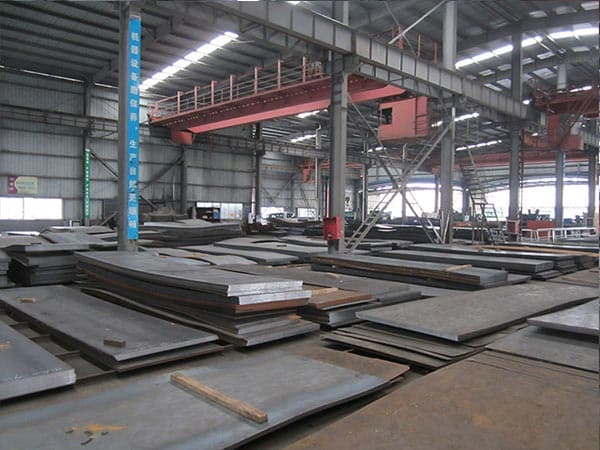
Understanding S500MC and Its ASTM Equivalents in the Current Market
S500MC is a high-yield strength steel specifically designed for cold forming, governed by the European standard EN 10149-2. As global supply chains tighten and infrastructure projects accelerate, identifying the ASTM equivalents for S500MC becomes crucial for engineers and procurement specialists. The most common ASTM counterparts include ASTM A572 Grade 65, ASTM A1011 HSLAS Grade 70/80, and ASTM A656 Grade 70/80. Each of these standards serves a specific thickness range and application, but they all share the common goal of providing high strength-to-weight ratios.
Predicting the forecast trend for the coming week requires a deep dive into the raw material costs and the demand from heavy machinery sectors. S500MC and its ASTM equivalents are primarily used in automotive chassis, crane booms, and structural components where weight reduction is vital without compromising safety. The market currently shows a stable yet sensitive pricing structure influenced by iron ore fluctuations and energy costs in manufacturing hubs.
Chemical Composition and Material Integrity
The performance of S500MC is rooted in its precise chemical composition. Unlike traditional carbon steels, S500MC utilizes thermomechanical rolling (TMCP) to achieve its strength. This process allows for a lower carbon equivalent (CEV), which significantly enhances weldability. Below is a comparison of the typical chemical components found in S500MC and its ASTM A572 Grade 65 equivalent:
| Element (Max %) | S500MC (EN 10149-2) | ASTM A572 Grade 65 | ASTM A656 Grade 70 |
|---|---|---|---|
| Carbon (C) | 0.12 | 0.23 | 0.18 |
| Manganese (Mn) | 1.60 | 1.65 | 1.65 |
| Silicon (Si) | 0.50 | 0.40 | 0.60 |
| Phosphorus (P) | 0.025 | 0.04 | 0.035 |
| Sulfur (S) | 0.015 | 0.05 | 0.035 |
The low carbon content of S500MC makes it superior for cold bending and complex forming operations compared to some ASTM grades that might have higher carbon levels. This chemical purity ensures that the steel maintains its structural integrity even when subjected to high-stress environments.
Mechanical Performance and Structural Advantages
When analyzing the forecast trend, the demand for specific mechanical properties often dictates the price premium. S500MC offers a minimum yield strength of 500 MPa. In the ASTM world, A572 Grade 65 provides a minimum yield of 450 MPa, while A656 Grade 70 reaches approximately 485 MPa. The slight variations in yield and tensile strength mean that substitution must be handled with engineering oversight.
- Yield Strength: S500MC guarantees 500 MPa, making it ideal for load-bearing structures.
- Tensile Strength: Typically ranges between 550 and 700 MPa, providing a safe margin for dynamic loads.
- Elongation: Excellent ductility (min 12-14% depending on thickness) allows for tight bending radii without cracking.
- Impact Toughness: Often tested at -20°C or -40°C, ensuring performance in arctic or high-altitude conditions.
These properties allow manufacturers to use thinner plates, reducing the overall weight of vehicles and machinery. This "lightweighting" trend is a major driver for the S500MC market, especially as the transport industry seeks to improve fuel efficiency and payload capacity.
Processing Performance: Welding and Cold Forming
The processing capabilities of S500MC are what set it apart in the workshop. Because it is a thermomechanically rolled steel, it responds exceptionally well to modern fabrication techniques. Welding S500MC does not typically require preheating, provided the thickness is within standard ranges and low-hydrogen consumables are used. This reduces labor costs and speeds up production cycles.
Cold forming is another area where S500MC excels. Its fine-grained microstructure prevents the "orange peel" effect and cracking during sharp bends. When comparing this to ASTM A572, S500MC often permits a smaller inside bend radius, which is essential for compact component designs in the automotive industry. Laser cutting and plasma cutting also yield clean edges with minimal heat-affected zones, further enhancing its appeal for precision engineering.
Environmental Adaptability and Longevity
S500MC is engineered to withstand diverse environmental stressors. Its resistance to atmospheric corrosion is standard for HSLA (High Strength Low Alloy) steels, but its real strength lies in its fatigue resistance. Components made from S500MC can endure millions of stress cycles, which is critical for the chassis of heavy-duty trucks and trailers that traverse uneven terrain.
In terms of environmental impact, the ability to use less steel to achieve the same structural strength directly contributes to lower CO2 emissions during both production and the lifecycle of the finished product. As green building and manufacturing regulations tighten, the forecast for high-strength grades like S500MC remains positive, as they are seen as a sustainable choice for modern infrastructure.
Market Forecast: Price and Supply Trends for the Coming Week
Looking at the coming week, the forecast for S500MC and its ASTM equivalents suggests a period of price consolidation. Several factors are at play:
- Raw Material Costs: Iron ore prices have shown slight volatility, which usually reflects in the flat steel market with a one-week lag.
- Inventory Levels: Service centers report moderate stock levels, meaning any sudden surge in infrastructure demand could lead to localized price spikes.
- Energy Surcharges: In European and North American mills, energy costs remain a significant portion of the production overhead, keeping a firm floor under the current price levels.
- Import/Export Dynamics: Trade policies and shipping costs for high-grade coils are currently stable, preventing major price drops from imported materials.
Buyers should expect stable lead times, but those looking for specific ASTM equivalents like A656 Grade 80 might face slightly longer wait times due to specialized rolling schedules. The overall trend indicates that while prices may not drop significantly, the availability of S500MC remains robust for large-scale industrial buyers.
Strategic Applications in High-Growth Industries
The versatility of S500MC ensures its presence in multiple high-growth sectors. In the construction machinery industry, it is the preferred material for telescopic booms and frames for excavators. The high yield strength allows for longer reach and higher lift capacities. In the renewable energy sector, S500MC is increasingly used in the structural supports for solar arrays and wind turbine internal components where high vibration resistance is required.
Furthermore, the agricultural equipment sector utilizes S500MC for plow frames and harvester components. These parts must be light enough to prevent soil compaction but strong enough to withstand the immense torque and abrasive forces of farming operations. The coming week's market will likely see continued steady orders from these sectors, supporting the price stability of this high-performance steel grade.
When selecting between S500MC and an ASTM equivalent, it is essential to consult with a technical expert who understands the nuances of the application. Whether it is the superior forming properties of S500MC or the specific thickness availability of ASTM A572, choosing the right grade is the key to engineering excellence and cost-efficiency.
Leave a message